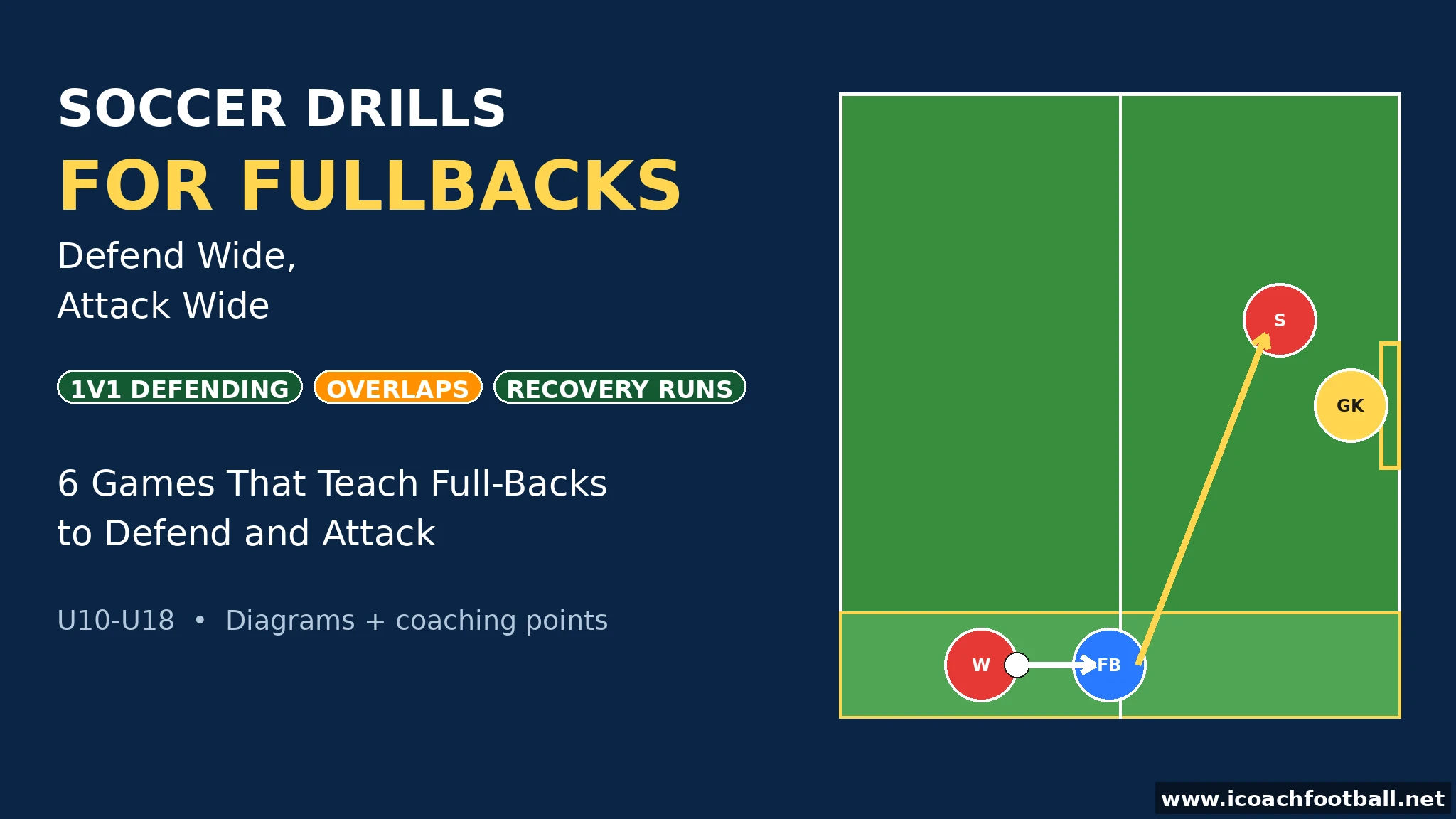
Soccer Drills for Fullbacks: 6 Games That Teach Defending Wide, Overlapping and Delivering
Quick answer
A full-back’s job is two jobs at once: stop the winger, then become the winger. These six soccer drills for fullbacks train both halves — the wide 1v1, the overlap, the recovery run and the delivery — in one 60-minute session.
Suitable for: U10–U18
In soccer — football to most of the world — the full-back covers more ground than any other outfield position, and the modern game asks them to do it at both ends. A team with a full-back who can win the 1v1 and then arrive at the byline with a good cross creates chances and kills counters at the same time. The six games below build the position in order: defend first, then attack, then recover, then do it all at full speed in a real game.
Session snapshot
- Players: 12–16 (plus keepers where noted)
- Area: Wide channel to half a pitch, depending on the drill
- Duration: 60 minutes
- Focus: 1v1 defending wide, overlapping and underlapping, recovery runs, and crossing from the byline
- Age: U10–U18 (see Age adaptations)
The five full-back rules
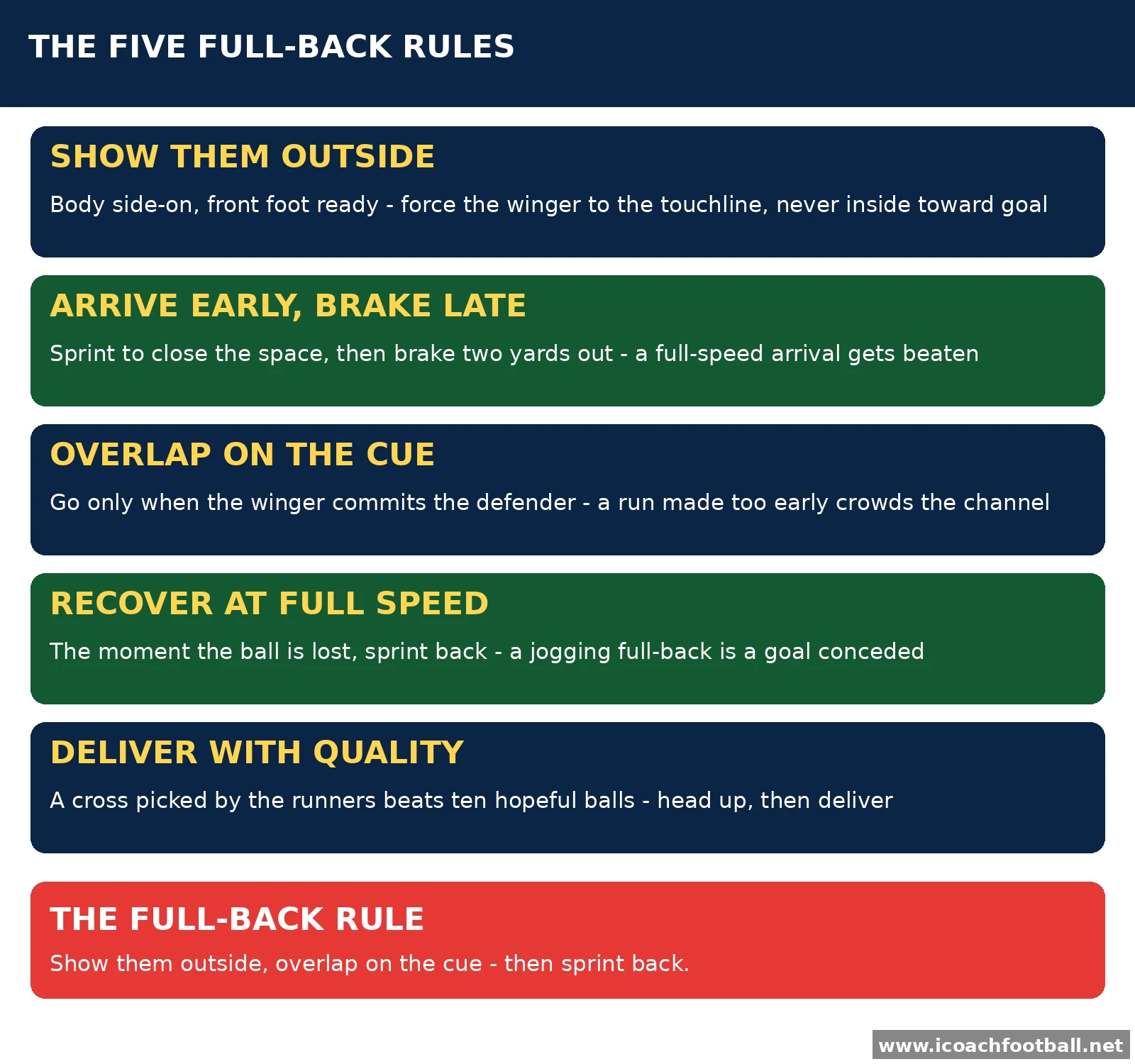
Every drill below is built on five rules. Teach them once, then repeat them in every game until the full-backs say them back to you.
| Rule | What it means |
|---|---|
| Show them outside | Body side-on, front foot ready — force the winger toward the touchline and never let them cut inside toward goal |
| Arrive early, brake late | Sprint to close the space, then slow down two yards out — a full-back who arrives at full speed gets beaten by one touch |
| Overlap on the cue | Go only when the winger commits the defender — a run made too early crowds the channel and kills the space |
| Recover at full speed | The moment the ball is lost, sprint back — a jogging full-back is a goal conceded |
| Deliver with quality | A cross picked by the runners beats ten hopeful balls into the box — head up, then deliver |
Drill 1: The Wide 1v1
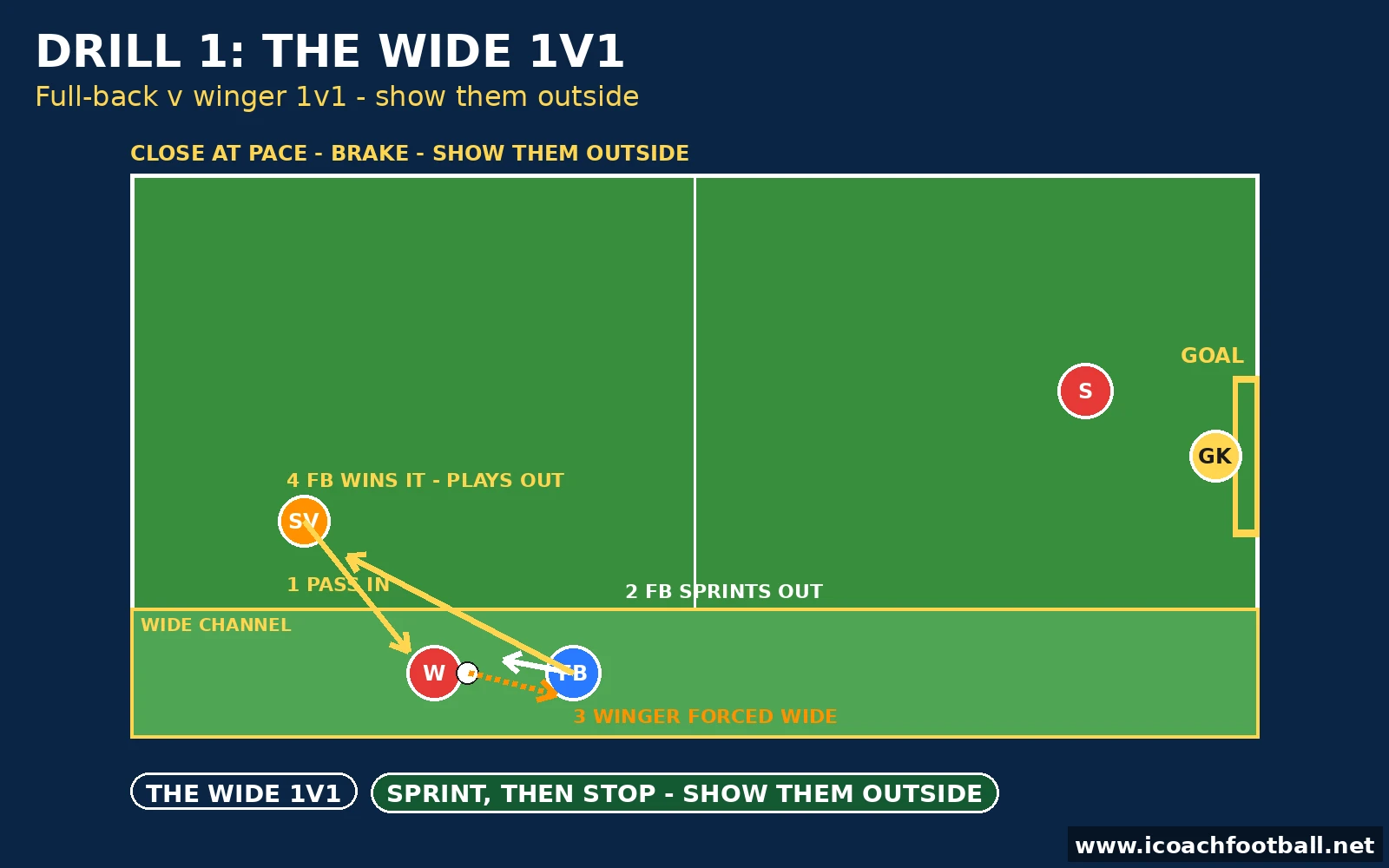
The foundation of the position. A full-back defends the winger 1v1 in the channel and must show them outside, stay on their feet, and win the ball or force the mistake. In line with the FIFA Training Centre’s wide-channel attack v. defence exercise — this drill coaches the same duel from the defender’s side, where the full-back’s job is to deny the drive inside and force the play wide.
Setup
- A 15-yard-wide, 35-yard-long channel down the touchline into the box, one full-size goal with a keeper, 1 winger, 1 full-back, 1 server with balls.
How to Play
- The server plays the winger into the channel, 30 yards from goal.
- The full-back starts goal-side, 5 yards inside the channel, and sprints out as the ball travels.
- The full-back brakes two yards from the winger, body side-on, and shows them toward the touchline.
- The winger tries to beat the full-back inside or outside, then cross or finish.
- If the full-back wins the ball, they play it back to the server and the next rep starts at once.
Coach’s note: Watch the braking point — if the full-back arrives at full speed, one touch beats them; the cue is “sprint, then stop” every single rep, and our soccer tackling drills build the clean challenge this duel ends with.
Progressions: The winger starts tighter, so the full-back must turn and recover; the full-back must win the ball, not just force it wide; add a second attacker arriving after three seconds.
Drill 2: The Overlap Run
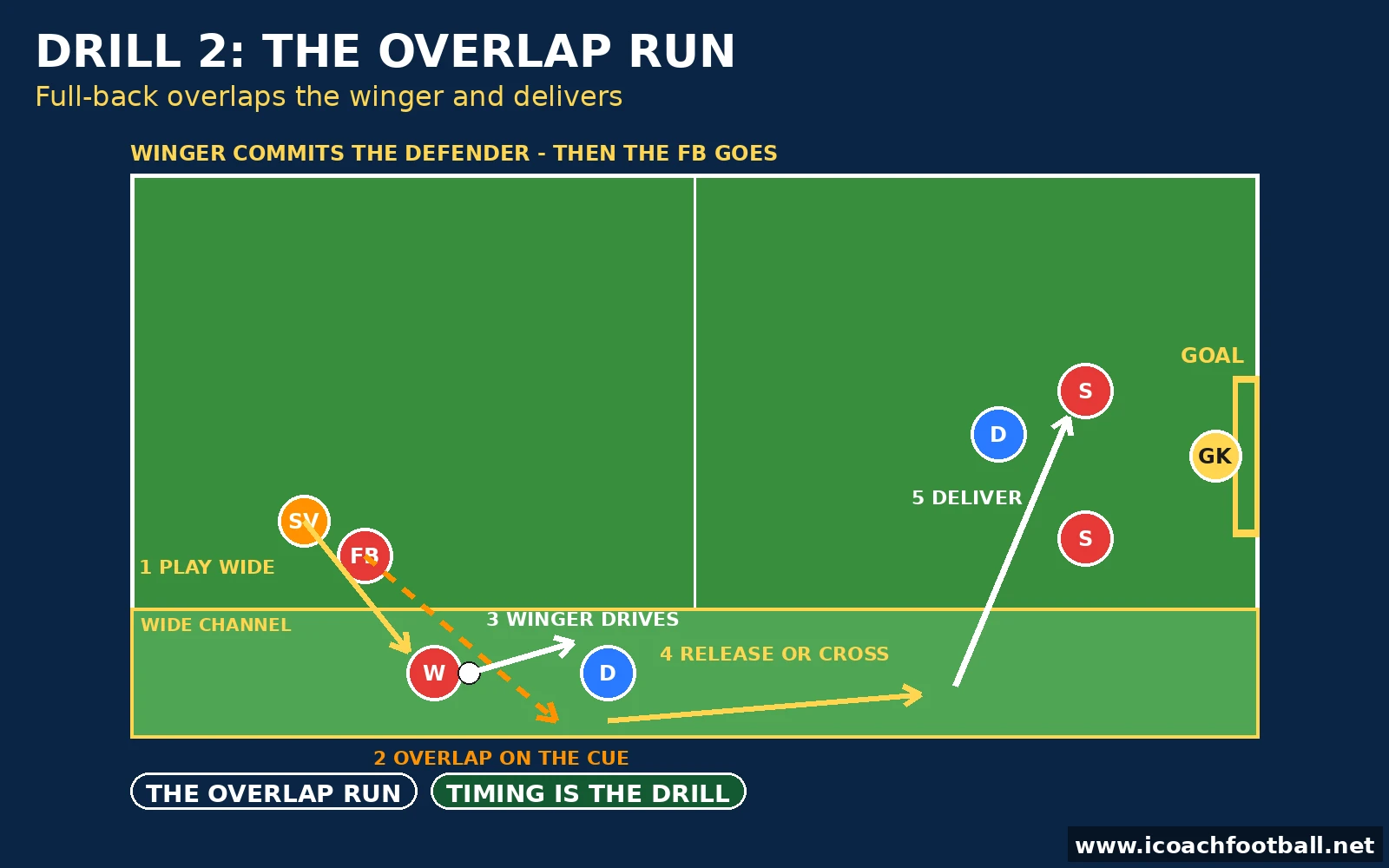
The attacking half of the job. The full-back overlaps the winger at the right moment, receives in space, and delivers from the byline. Based on the FIFA Training Centre’s attacking-in-wide-areas session, where the full-back’s overlap creates the overload on the wing and the cross or cut-back comes from the byline.
Setup
- One half of the pitch, full-size goal with a keeper, 2v2 plus a server — winger and full-back against a full-back and a centre-back — with a striker in the box.
How to Play
- The server plays the winger wide, 35 yards from goal.
- The winger drives at the full-back while the full-back makes an overlapping run outside them.
- The winger chooses: beat the defender and cross, or release the overlap and underlap into the box.
- The full-back arrives at the byline and delivers — near post, penalty spot or far post.
- Rotate the pair every four reps so both players learn both roles.
Coach’s note: Shout “go!” the moment the winger commits the defender — the timing is the drill, and an early overlap arrives before the space exists; our soccer drills for wingers train the same combination from the winger’s side.
Progressions: The full-back underlaps instead of overlapping; the full-back must deliver first time; the defending pair may press the server too.
Drill 3: The Recovery Run
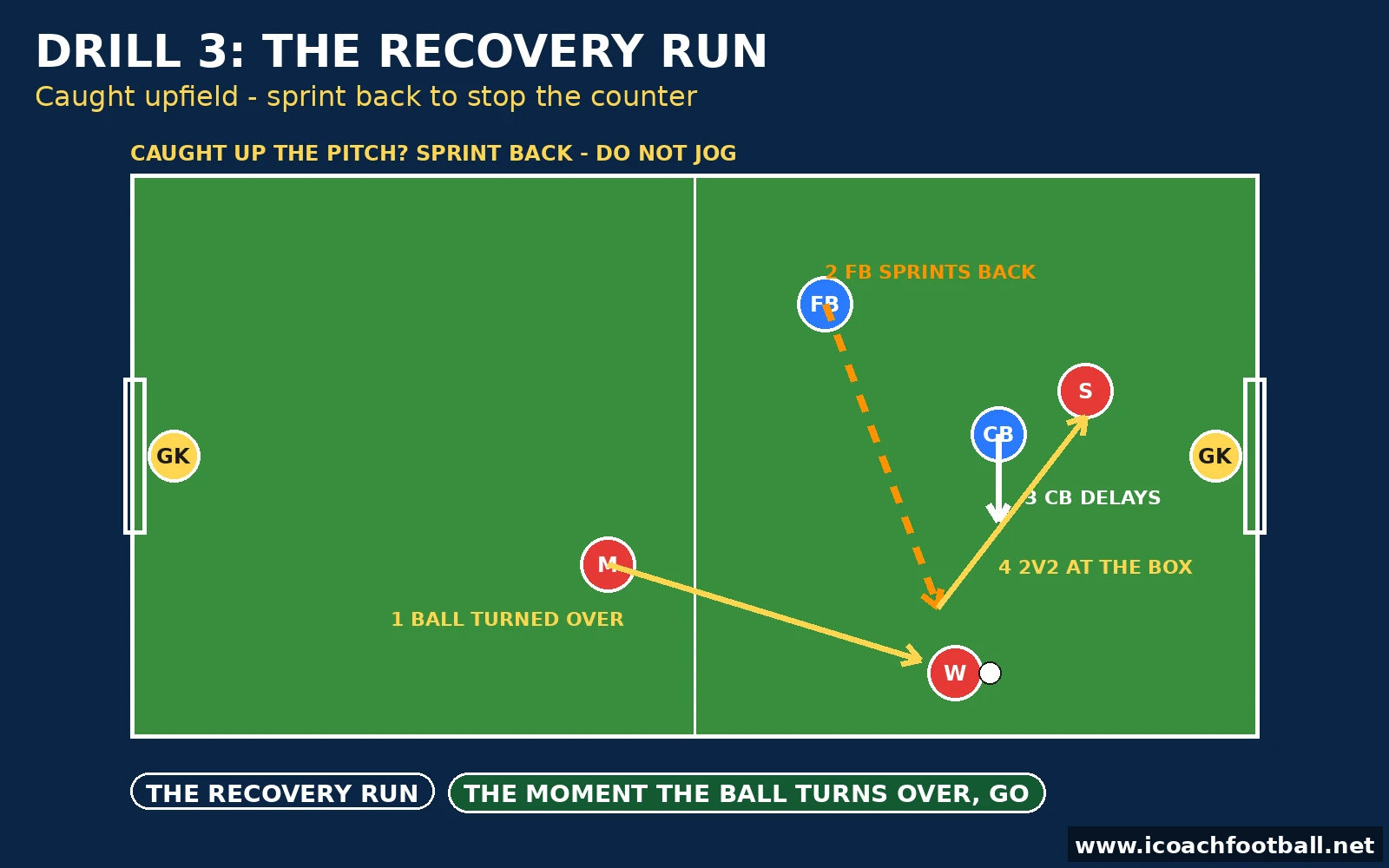
The run nobody applauds and every coach notices. The full-back is caught upfield when the ball is lost and must sprint back to stop the counter before it reaches the box. In line with the FIFA Training Centre’s wide-areas work: when the full-back is high, the recovery run is the first line of defence, not an afterthought.
Setup
- One half of the pitch, full-size goal with a keeper, 3v2 — winger, striker and midfielder against a full-back and a centre-back — balls with the coach.
How to Play
- The full-back starts high, level with the winger, as if they have just overlapped.
- The coach plays the ball to the opposition winger, who attacks the space the full-back has left.
- The full-back sprints back at full speed, aiming to arrive goal-side before the winger reaches the box.
- The centre-back delays the attack until the full-back recovers, then the pair defends 2v2.
- If the full-back recovers in time and the attack is stopped, the full-back’s team wins the point.
Coach’s note: Time the recovery, not the effort — a full-back who jogs the first five yards never catches the winger, and the cue is “sprint the moment the ball turns over”; our soccer scanning drills teach the shoulder check that starts the recovery a second earlier.
Progressions: The full-back starts even higher, level with the striker; the winger may play a through ball to the striker; the recovering full-back must win the ball, not just get goal-side.
Drill 4: The Underlap
The overlap’s quieter cousin, and often the more dangerous one. When the winger holds the width, the full-back runs inside them, receives in the half-space, and plays the final ball. Based on the FIFA Training Centre’s attacking-in-wide-areas session, where the full-back’s inside run creates the overload when the defence has already covered the outside.
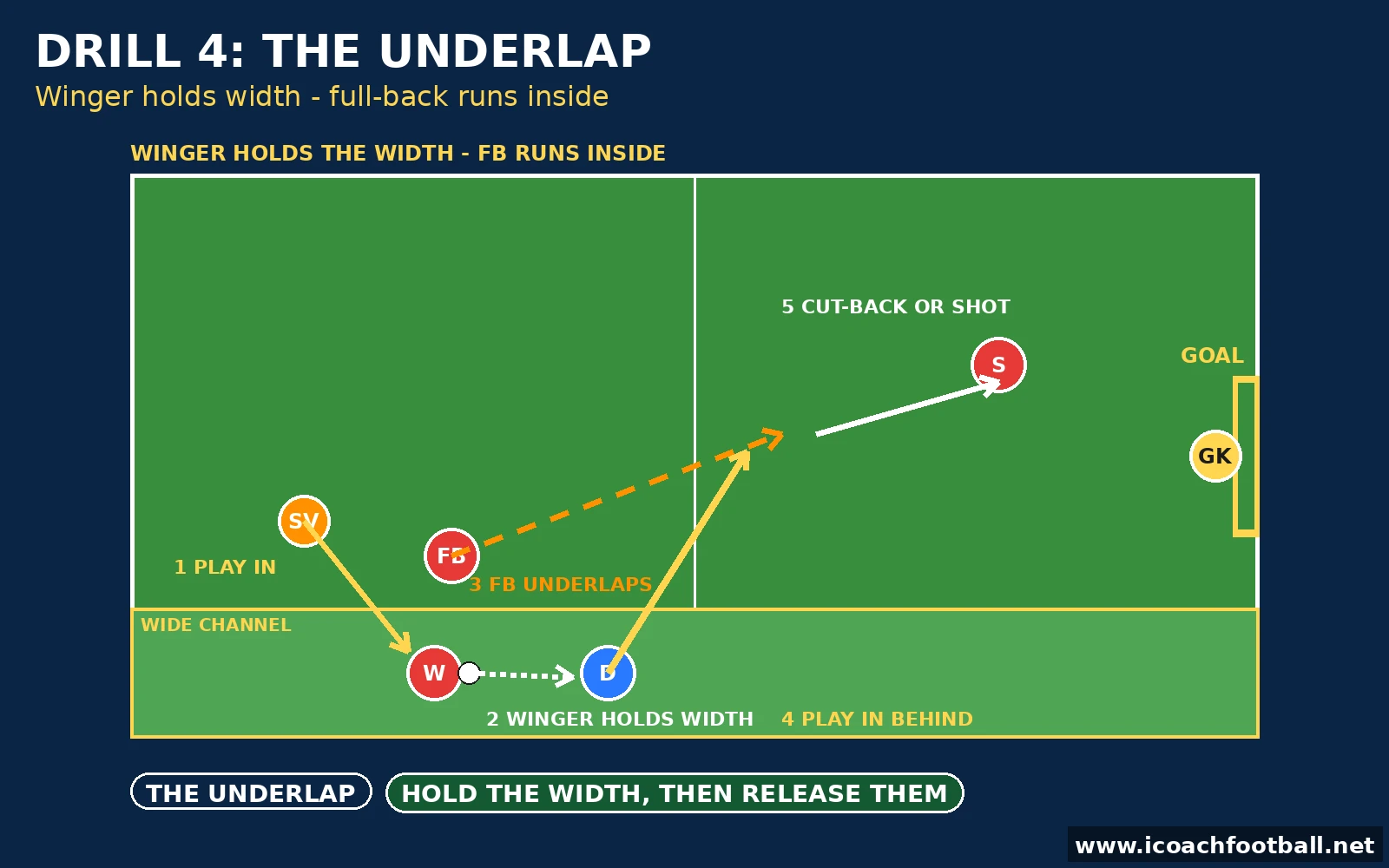
Setup
- One wide channel into the box, full-size goal with a keeper, 3 attackers (winger, full-back, striker), 1 defender, balls at the server.
How to Play
- The server plays the winger into the channel, 30 yards from goal.
- The winger holds the width and draws the full-back toward the touchline.
- The full-back underlaps inside the winger, into the half-space, at full speed.
- The winger plays the full-back in behind the defence for a cut-back or a shot.
- The striker attacks the near post on a low ball and the far post on a high one.
Coach’s note: Watch the winger’s patience — if they drive inside too early, the underlap has nowhere to go; the cue is “hold the width, then release them,” and our weak foot drills matter here, because the underlapping full-back often finishes with their weaker foot.
Progressions: The underlapping full-back must shoot first time; the defender may track the underlap; the winger must decide overlap or underlap from the defender’s body shape.
Drill 5: The 2v2 Wide Duel
The pair drill. Full-back and centre-back defend together against a winger and a striker — one presses, one covers, and the cross never comes in unopposed. In line with the FIFA Training Centre’s wide-channel exercise, where the defending pair must decide together who engages and who protects the space behind.
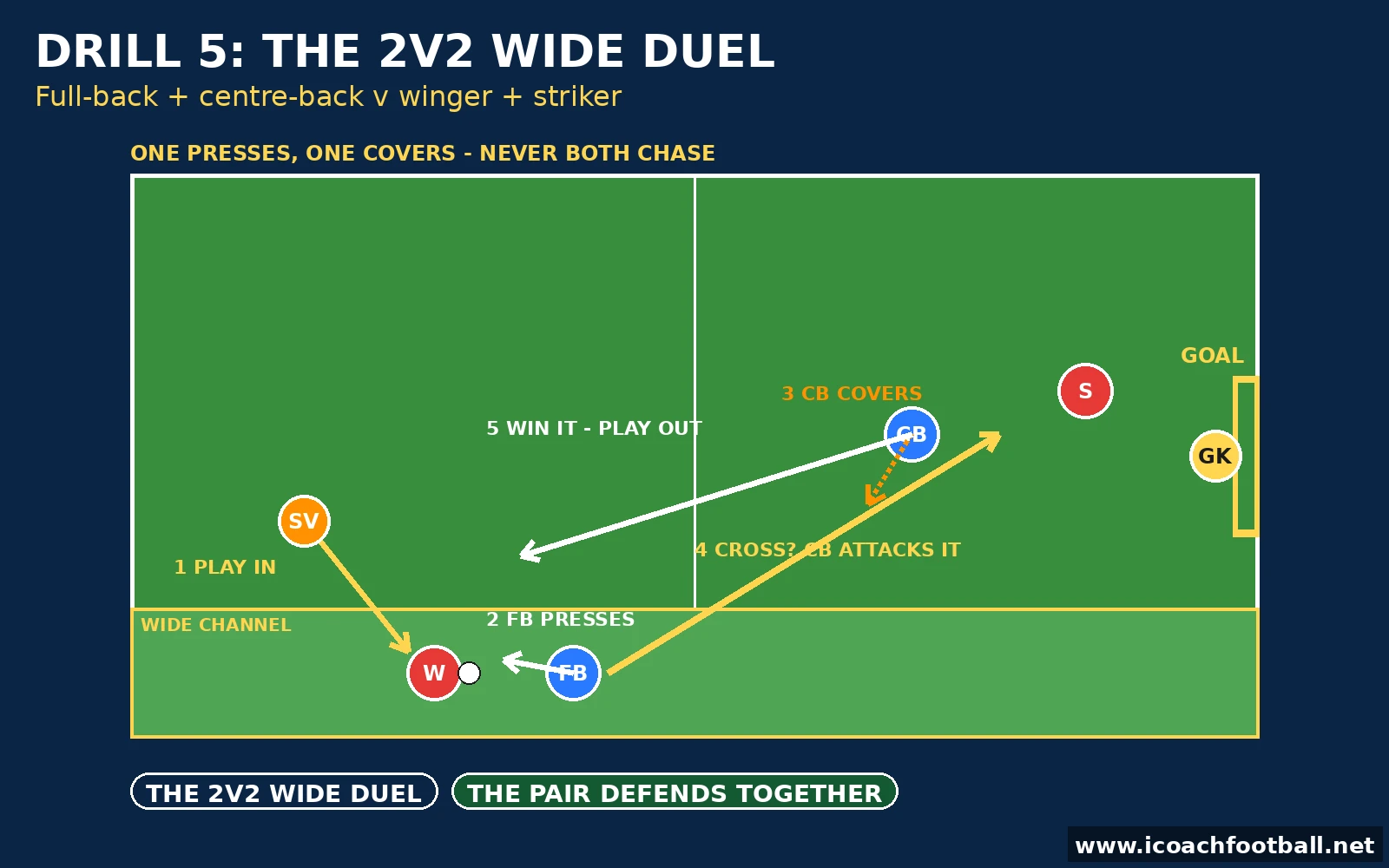
Setup
- A 20-yard-wide channel from halfway to the box, full-size goal with a keeper, 2 attackers against 2 defenders, balls with the coach.
How to Play
- The coach plays the winger into the channel, 35 yards from goal.
- The full-back presses the winger while the centre-back drops goal-side to cover.
- The winger tries to cross or combine with the striker; the pair must stop both.
- If the cross comes in, the centre-back attacks the first ball and the full-back picks up the second.
- If the defenders win it, they play out to the coach and the next pair attacks.
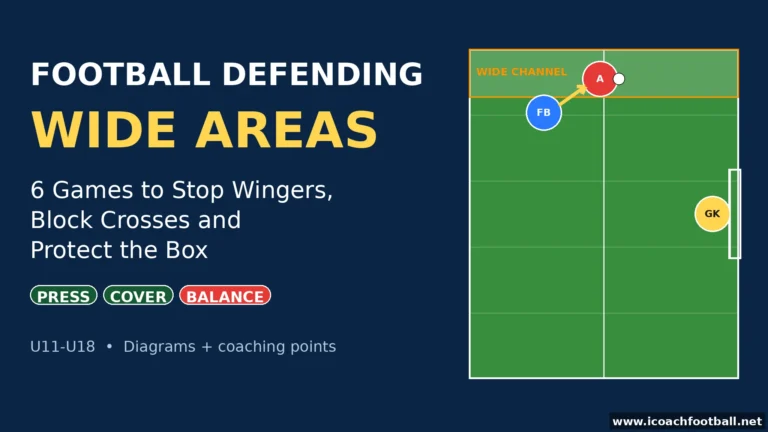
Coach’s note: Freeze the play the first time both defenders chase the ball — the duel is lost when nobody covers; the cue is “one presses, one covers,” and our football defending wide areas drills train this exact partnership.
Progressions: The attackers may switch the ball to the far side; the striker may make a run in behind the centre-back; the defenders must play out through the full-back after winning it.
Drill 6: The Full-Backs’ Game
The match-real finish. A conditioned 7v7 where a goal only counts if a full-back is involved in the build-up or delivers the final ball — so every attack must go through the position. Based on the FIFA Training Centre’s wide-areas session, which finishes in a game where the wide areas are the only route to goal.
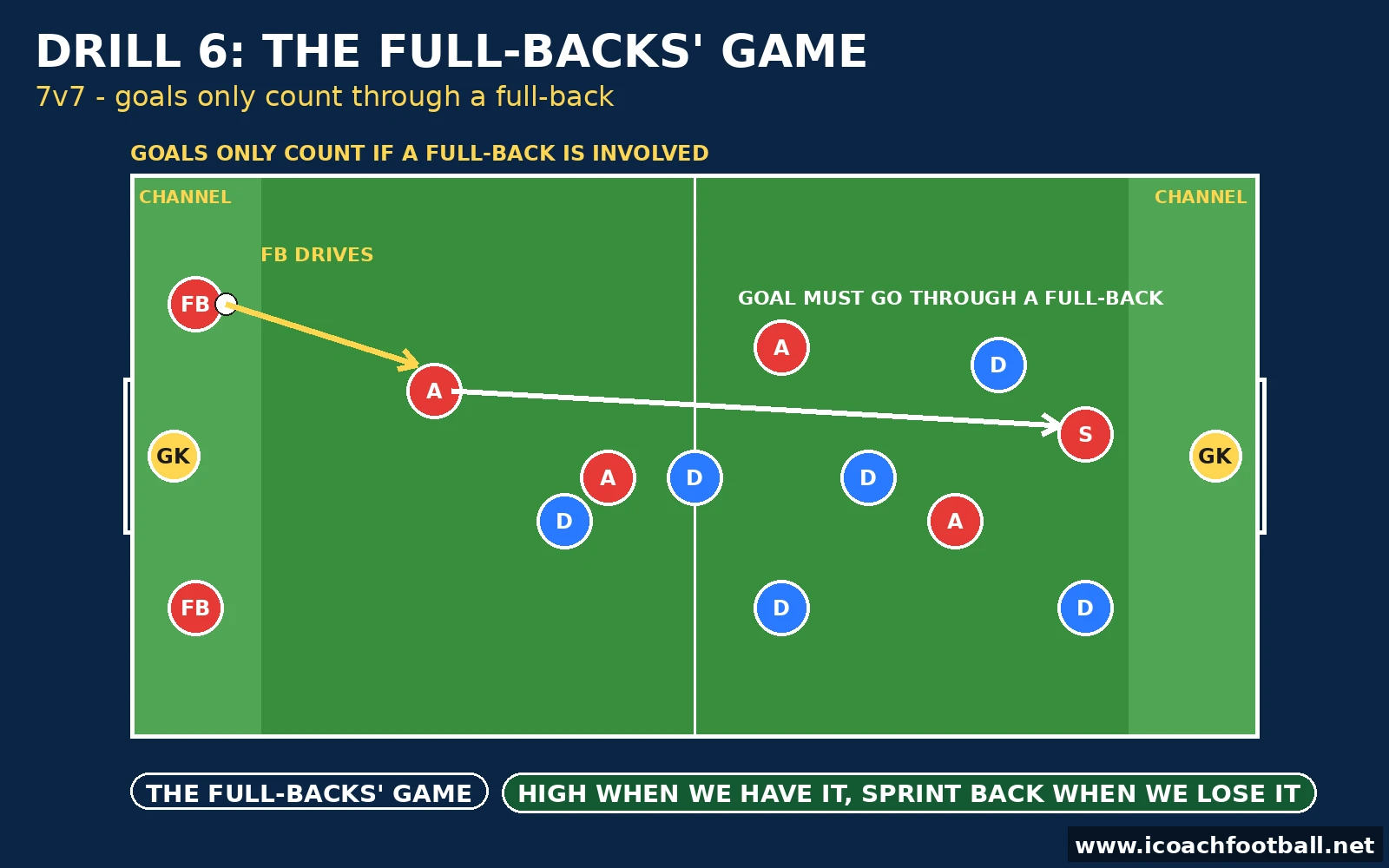
Setup
- Half a pitch, two full-size goals with keepers, 7v7, wide channels marked 10 yards in from each touchline.
How to Play
- Play a normal 7v7 game, but a goal only counts if a full-back touched the ball in the build-up or delivered the final pass or cross.
- Goals scored after a switch of play count double.
- Full-backs must recover to their own half when the ball is lost.
- A goal conceded on a counter down the full-back’s side costs the team two goals.
- Play two 8-minute halves, then swap the full-backs to the other side.
Coach’s note: Watch the full-backs’ starting positions — if they hide in the back line, the game turns into a central scrap; the cue is “get high when we have it, sprint back when we lose it,” and our soccer 6v6 drills teach the same shape habit in a smaller game.
Progressions: Goals only count from a full-back cross; the channels narrow to 8 yards; a goal scored by the full-back themselves counts double.
Coaching points
- Defend the duel first, attack second: A full-back who cannot win the 1v1 never gets to overlap — our football defending wide areas drills train the defending half this session starts with.
- Body shape decides the duel: Side-on, low, front foot ready — a full-back who faces the winger square gets beaten either way; our soccer tackling drills and soccer dribbling drills both build the pieces this duel needs.
- Scan before you receive: A full-back who checks over their shoulder knows whether the winger is tight or off before the ball arrives — our soccer scanning drills teach that shoulder check.
- The switch is the full-back’s friend: A full-back isolated 1v1 with the whole channel to attack is the best chance in the game — our switching play drills teach the pass this game depends on, and our the wide channel game trains the same crossing finish.
- Recover like it matters, because it does: The recovery run is the full-back’s most important sprint of the game — a full-back who jogs back after losing the ball leaves the centre-back 2v1.
Common mistakes
- Arriving at full speed and getting beaten by one touch: A full-back who never brakes gives the winger a free duel — sprint to close, then slow down two yards out.
- Showing the winger inside: A full-back who stands square lets the winger cut toward goal — body side-on, force them to the touchline, every time.
- Overlapping too early: A full-back who runs before the winger commits the defender crowds the channel and kills the space — wait for the cue, then go.
- Forgetting to track back: A full-back who watches the attack after losing the ball leaves the centre-back exposed — sprint back the moment the ball turns over, no exceptions.
Age adaptations
| Age | Area | Touches | What changes |
|---|---|---|---|
| U10–U11 | Channel 12 yards wide, 25 long | Three touches | No live winger in Drill 1 at first — use a cone, then a passive winger; overlaps only, no underlaps yet; recovery runs at half speed |
| U12–U14 | Channel 15 yards wide, 35 long | Two touches | Full live wingers, overlap and underlap both live in Drills 2 and 4, recovery runs timed in Drill 3 |
| U15–U18 | Channel 15 yards wide, 40 long | One or two touches | Wingers press from the first touch, recovering full-back must win the ball in Drill 3, weak-foot crosses count double in Drill 6 |
60-minute session plan
| Block | Minutes | What to run |
|---|---|---|
| Warm-up | 0–10 | Drill 1, the wide 1v1, walking pace then half speed |
| Overlap | 10–20 | Drill 2, the overlap run |
| Recover | 20–30 | Drill 3, the recovery run |
| Underlap | 30–40 | Drill 4, the underlap |
| Defend together | 40–50 | Drill 5, the 2v2 wide duel |
| Match-real finish | 50–60 | Drill 6, the full-backs’ game |
For a full guide to building the hour around these blocks, see our 60-minute session plan.
FAQ
What is the best drill for fullbacks?
The wide 1v1: a full-back against a live winger in a 15-yard channel, with a goal to defend. It is the only drill that trains the whole full-back’s job — close at pace, brake, show them outside, win it — in one rep, and every other drill in this session is a variation of it.
How do you coach a full-back to defend 1v1?
Coach the approach, not the tackle. Sprint to close the space, brake two yards out, stand side-on and low, and show the winger toward the touchline. The tackle comes last — most 1v1s are won by the body shape, not by the challenge.
When should a full-back overlap?
When the winger commits the defender. If the full-back runs before that moment, the channel is crowded and the space does not exist yet. The cue is the winger’s first touch at the defender — that is the moment to go.
At what age should players start training as full-backs?
U10 is the right time. In 7v7 the full-back position already exists, and players that age can learn the two basics — show them outside, and get forward when the ball is safe. Before U10, keep it simple: let every player defend and attack everywhere and save the position for later.
How do you stop a full-back getting caught upfield?
Two habits: the recovery sprint the moment the ball is lost, and a team rule that someone covers the space — usually the nearest midfielder drops in, or the centre-back slides across. Drill 3 trains the sprint; the cover is a team agreement you coach in the game.
Sources
- FIFA Training Centre — “Attack v. defence: Outplaying defenders in wide channels” (a wide-channel attack v. defence exercise: the winger creates goalscoring chances by solo runs or three-player combinations, prioritising driving inside towards goal and adapting if the 1v1 does not offer the desired outcome). Drills 1 and 5 in this post are based on and in line with that exercise, coached from the defender’s side.
- FIFA Training Centre — “Attacking in wide areas (Gygax)” (Daniel Gygax, FC Zurich youth coach: wing play is ball circulation, penetration and shifting play into wide areas; the session builds from a passing circuit through an 8v8 possession game, a 10v1 attacking-through-wing-play set-up and a 9v9 in an octagon, with overloads on the wings and crosses and cut-backs from the byline). Drills 2, 4 and 6 in this post are based on and in line with that session.
If your team plays with three centre-backs, the wide player is a wing back, not a full-back — our soccer drills for wing backs train the whole flank, from the overlap to the recovery sprint, in six games.