Soccer Speed Training: 5 Drills to Improve Acceleration, Agility, & Game Speed
“Speed kills.” It is the one attribute that terrifies every defender. But in soccer, speed is not just about running 100 meters in a…
Availability is the best ability. The Injury Prevention & Recovery section provides protocols to keep your squad healthy and ready to perform.
Learn the science behind effective warm-ups (like the FIFA 11+), cool-down routines, and active recovery strategies. We also cover load monitoring—how to recognize when your players are in the “Danger Zone” of overtraining and how to adjust your sessions to prevent soft tissue injuries like hamstring strains.
Active recovery involves low-intensity exercise (like light jogging, rondo, or cycling) to flush out metabolic waste products (lactate) from the muscles. It is often more effective than “Passive Recovery” (doing nothing).
Common signs include persistent muscle soreness, decreased sleep quality, irritability, and a drop in performance or motivation. If you see this, reduce the training volume (time) but keep the intensity (speed) high.

“Speed kills.” It is the one attribute that terrifies every defender. But in soccer, speed is not just about running 100 meters in a…

What is Training Load in Soccer? Training Load is the quantitative measurement of the physical work performed by a player (“External Load”) and the…
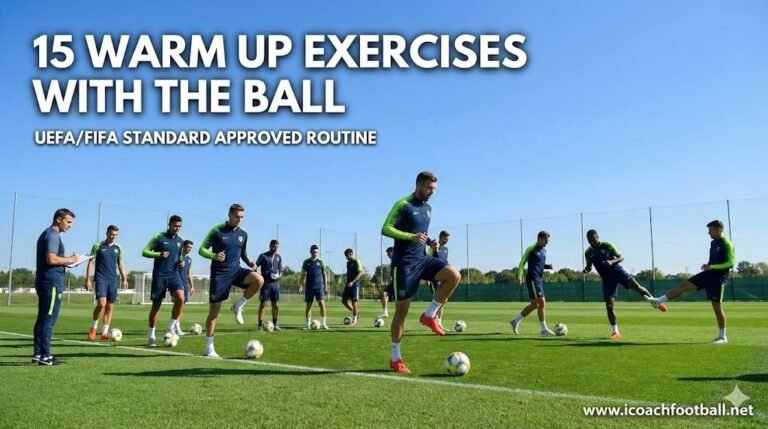
The days of static stretching and slow laps around the field are over. Modern football demands a warm-up that is dynamic, intense, and, most…

The hamstring strain is the single most common injury in modern soccer. It accounts for nearly 40% of all non-contact injuries. When a player…
End of content
End of content
