Thiago Motta’s Tactical Analysis: The 2-7-2 Formation & Juventus Blueprint [Explained]
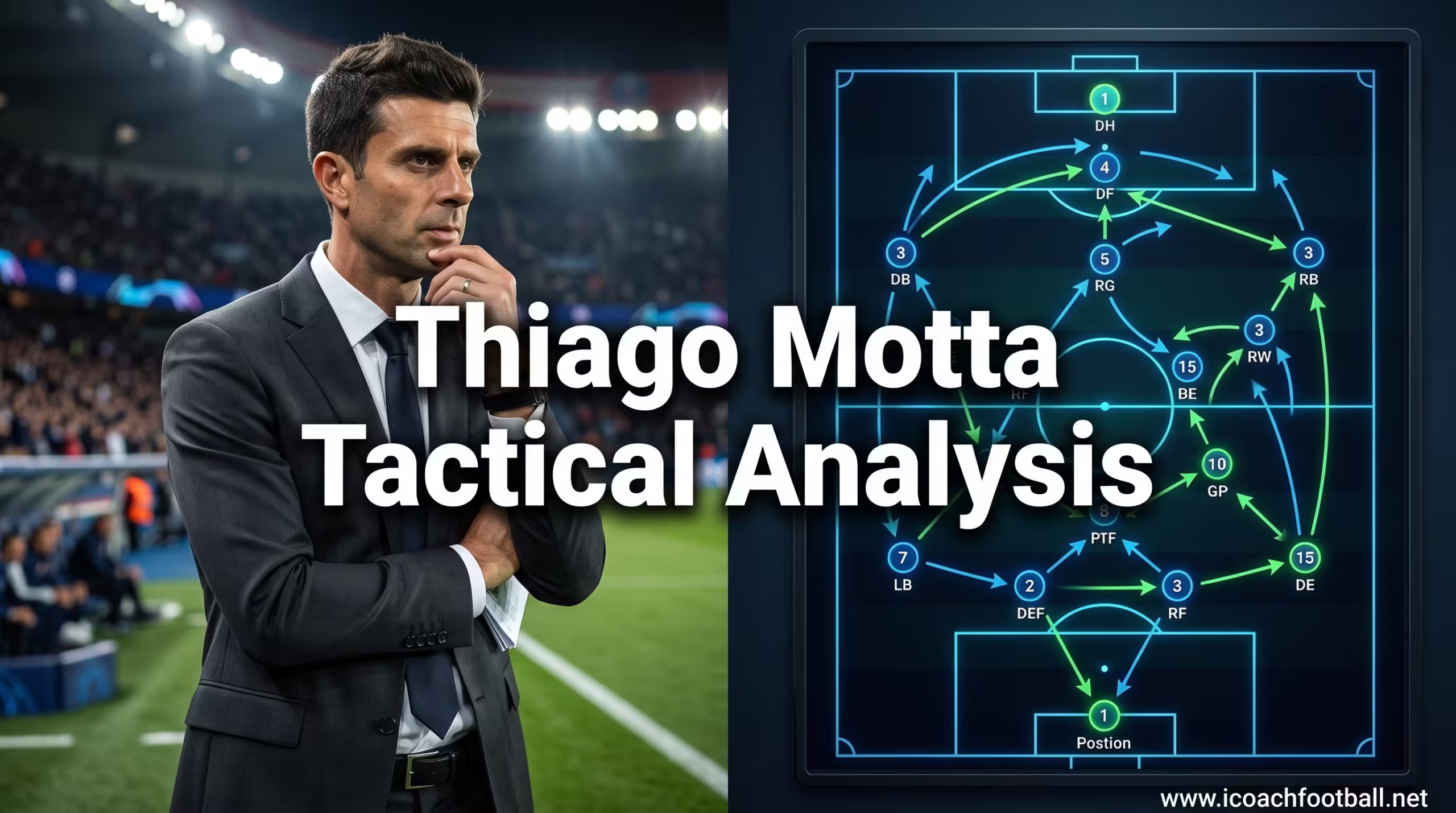
Quick answer: Thiago Motta’s tactical style relies on fluid positional play, his famous 2-7-2 horizontal structure, and aggressive midfield overloads. After building a successful blueprint at Bologna, Motta now applies these relational play principles as the head coach of Juventus, utilizing ball-playing center-backs, artificial transitions, and high-intensity counter-pressing to dominate possession.
Thiago Motta is rapidly emerging as one of the most innovative minds in modern soccer. After completely transforming Bologna and leading them to historic Champions League qualification, Motta has taken his progressive tactical blueprint to Juventus, blending possession-based dominance with unpredictable attacking fluidity.
While many coaches rely on rigid positional play (Juego de Posición), Motta leans heavily into relational play. His teams focus on proximity, short passing combinations, and overloading specific zones of the pitch to break down opposition blocks.
This comprehensive tactical analysis breaks down Thiago Motta’s coaching philosophy, his famous 2-7-2 formation, how his Bologna blueprint translates to Juventus, and how you can apply his key principles to your own team.
Tactical Overview and Profile
CoachThiago Motta
Current ClubJuventus (Formerly Bologna)
Base Formations4-2-3-1 or 4-3-3
Core PhilosophyRelational play & possession
Key PrinciplesOverloads, Rest-Defence, Fluidity
Create Your OwnUse our Lineup Builder
The 4 Phases of Motta’s Game Model
| Game Phase | Tactical Structure | Main Objective |
|---|---|---|
| Build-up Play | 2-4-4 / 3-2-5 | Attract high pressure to exploit space left behind the pressing lines. |
| Midfield Progression | Relational Overloads | Use short combinations, third-man runs, and proximity to break lines. |
| Final Third Attack | Fluid 5-Lane Occupation | Create isolations out wide (1v1s), quick cut-backs, and box overloads. |
| Defensive Transition | High Counter-Press | Immediate ball recovery using a strong, compact rest-defence structure. |
To successfully run this fluid system, players must possess high technical quality and elite decision-making. If you want to develop these traits in your team, incorporating exercises from our advanced rondo blueprint is essential.
What is Thiago Motta’s 2-7-2 Formation?
When Thiago Motta first mentioned the 2-7-2 formation during his time managing PSG’s youth setup, it caused massive confusion. Critics assumed he was playing without a goalkeeper. However, Motta reads the game horizontally, not vertically.
The Horizontal 2-7-2 Breakdown
- Left Flank (2): The left-back and left-winger.
- Central Corridor (7): The two center-backs, the goalkeeper, the central midfielders, and the striker.
- Right Flank (2): The right-back and right-winger.
How it Works on the Pitch
- The goalkeeper is actively integrated into the build-up, acting as an extra center-back or deep-lying playmaker.
- By viewing the field in these three vertical columns (flanks and center), Motta ensures numerical superiority in the middle of the pitch.
- Players are not fixed to rigid zones. A full-back can invert into the midfield, while a central midfielder pushes wide to maintain the 2-7-2 balance.
Coach’s note: The 2-7-2 is not a starting lineup—it is a conceptual map for spacing. When organizing your team, focus on occupying the central zones heavily to dominate possession and control defensive transitions.
Tactical Application: To train this concept, use dynamic small-sided games where the goalkeeper must touch the ball before the team can progress past the halfway line.
Relational Play: Overloads and Proximity
Unlike Pep Guardiola’s strict positional play, where players maintain maximum width and distance to stretch the opposition, Motta’s teams at Bologna and Juventus utilize relational play. As analyzed by The Coaches’ Voice, his players intentionally move close together around the ball carrier to create dense passing networks.
Key Principles of Relational Play
- Ball-Oriented Movement: Players migrate toward the ball carrier to offer multiple short passing options.
- Artificial Transitions: The team intentionally invites pressure to one side of the pitch to artificially create a transition-like open space on the opposite side.
- Third-Man Runs: Using wall passes to bypass defenders who are aggressively pressing the ball carrier.
Executing the Overload
- The center-back steps out with the ball, triggering the winger, full-back, and two midfielders to collapse into the same zone.
- The team executes quick 1-touch and 2-touch combinations in tight spaces.
- Once the opponent commits defenders to this side, a switch of play is triggered to the isolated winger on the far side (the 1v1 specialist).
Coach’s note: Relational play requires elite technical execution under pressure. Players must be highly proficient in quick combinations. Utilizing our Y passing drills is a great way to develop these exact third-man passing sequences before introducing opposed defenders.
How Motta’s Bologna Blueprint Translates to Juventus
Moving from Bologna to Juventus comes with higher expectations, but Motta’s game model remains intact. At Juventus, he has access to elite ball-playing defenders and highly technical midfielders, allowing the system to operate at a faster tempo.
Inverted Full-backs: At Juventus, Motta frequently uses his full-backs to invert alongside the defensive midfielder, creating a 3-2 or 2-3 build-up structure that protects the center from counter-attacks.
Fluid Front Line: Just as Joshua Zirkzee dropped deep to link play at Bologna, Juventus forwards are instructed to drop into the midfield to create numerical overloads, allowing the wingers to make penetrating diagonal runs in behind.
Aggressive Rest-Defence: Because Motta’s teams overload zones in possession, they naturally have a high density of players around the ball when possession is lost. This allows Juventus to execute an immediate, suffocating counter-press.
Frequently Asked Questions
What is Thiago Motta’s 2-7-2 formation?
Thiago Motta’s 2-7-2 formation is a conceptual way of reading the pitch horizontally rather than vertically. It consists of 2 players on the left flank, 7 players in the central corridor (including the goalkeeper), and 2 players on the right flank.
What tactics does Thiago Motta use at Juventus?
At Juventus, Motta uses a possession-based, relational style of play. His team builds from the back using the goalkeeper, overloads one side of the pitch with short passes, and relies on aggressive high-pressing and compact rest-defence when they lose the ball.
What is relational play in soccer?
Relational play is a tactical approach where players move closer together around the ball to combine with short, quick passes. Unlike positional play which relies on rigid spacing, relational play allows fluid movement and heavy overloads in specific zones.
How does Thiago Motta’s team press?
Motta’s teams use an aggressive counter-press. Because their offensive style brings many players close to the ball, they are perfectly positioned to immediately swarm the opponent and win the ball back within seconds of losing it.
Take your tactics to the pitch: Now that you understand the theory behind Motta’s system, map out how your own squad fits into this model using our free Football Lineup Builder & Formation Creator.