What Does a Yellow Card Mean in Soccer? Rules & Suspensions Explained
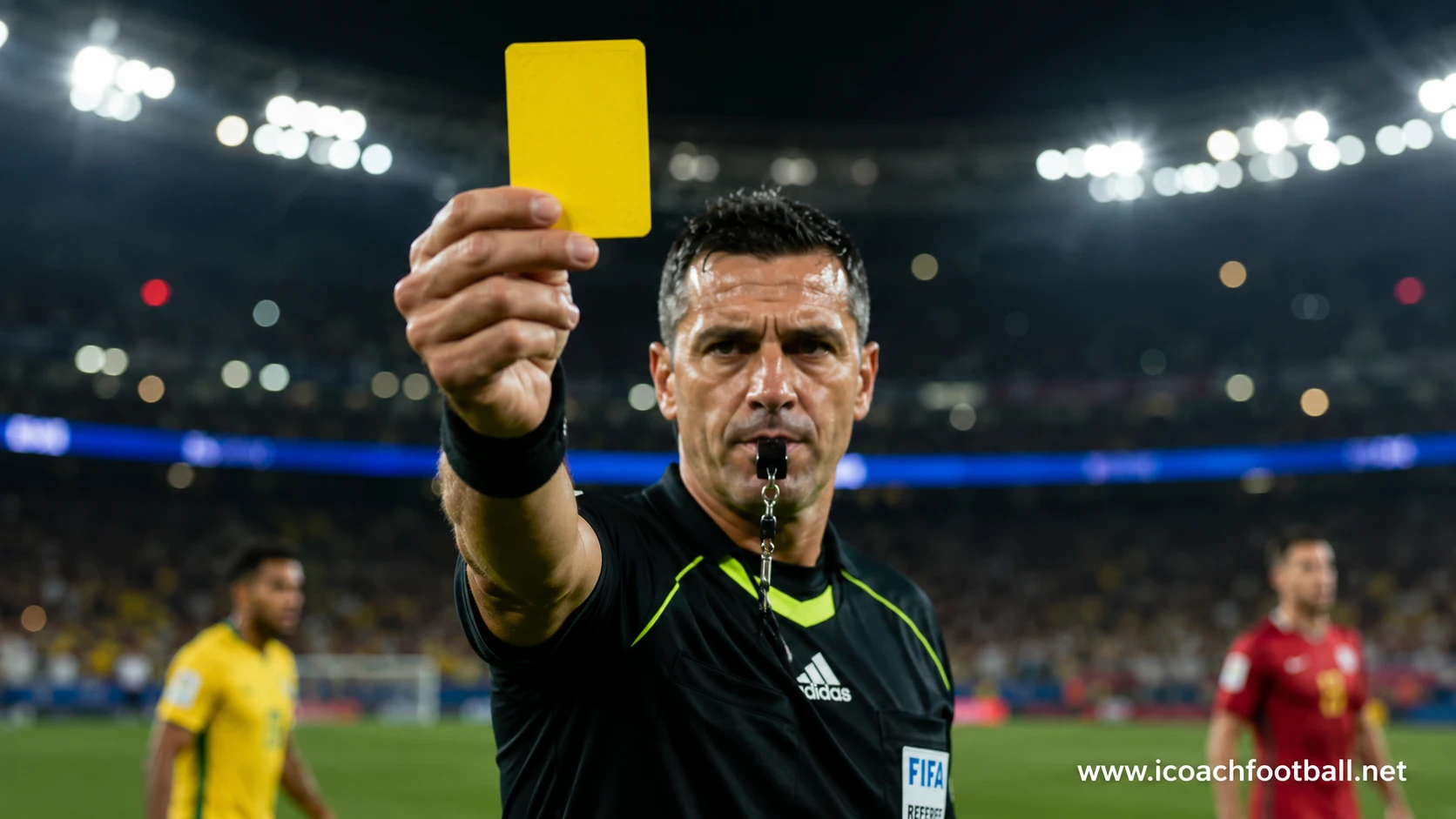
If you are watching a tense, high-stakes match and the referee suddenly blows the whistle to flash a small yellow piece of plastic in a player’s face, you might be wondering exactly what just happened.
Soccer flows continuously, but the referee has specific tools to keep the game safe and fair. The most common tool is the yellow card. Whether you are a new fan trying to understand the rules or a player looking to avoid a suspension, here is everything you need to know about what a yellow card means in soccer.
The Short Answer: What is a Yellow Card?
In soccer, a yellow card is an official disciplinary warning—or caution—issued by the referee. It signals that a player, substitute, or coach has committed a foul or broken a rule of conduct.
When the referee shows the card, they also write the offender’s jersey number down in a small notebook. Because of this note-taking, receiving a yellow card is universally referred to as being “booked.”
Unlike a red card, which is a hard stop, a yellow card allows the player to remain on the pitch and continue playing. However, it places them on thin ice; it is a strict final warning that a second offense will end their match.
Top 7 Reasons a Player Gets a Yellow Card
Referees do not hand out cards for simple, accidental fouls. According to the official Laws of the Game, a player will be booked for committing one of these specific offenses:
- Unsporting Behavior: This is a broad category that covers reckless physical challenges, aggressive tackles, tripping, or committing a foul specifically to stop a promising attacking play.
- Dissent by Word or Action: Arguing aggressively with the referee, making angry gestures, or excessively using the “TV signal” to demand a VAR review will earn an instant booking.
- Persistent Infringement: A player cannot repeatedly commit minor fouls. If they continually break the rules after being warned, the referee will book them for accumulation.
- Delaying the Restart of Play: Time-wasting tactics—such as purposefully kicking the ball away after the whistle blows, or taking far too long to take a free kick—are yellow card offenses.
- Failing to Respect the Distance: During a free kick, corner kick, or throw-in, defenders must stand at least 10 yards away. Encroaching on this space leads to a card.
- Entering or Leaving Without Permission: A player cannot walk onto or off the pitch without the referee’s explicit permission.
- Excessive Goal Celebrations: While celebrating is encouraged, taking off a jersey, covering the face with a mask, or jumping into the crowd after scoring violates the rules and results in a yellow card.
The Consequences: Two Yellows Equal a Red

The immediate consequence of a yellow card is that the player’s margin for error completely vanishes. Referees will watch that player much more closely for the remainder of the game.
If a player commits a second bookable offense in the exact same match, the referee will show them a second yellow card, immediately followed by a red card.
When this happens:
- The player is instantly ejected from the game and must leave the field.
- The ejected player cannot be replaced by a substitute.
- Their team is punished by having to play the rest of the match with one less player.
Long-Term Suspensions and Accumulation Rules
Yellow cards do not just impact a single game; they follow players throughout a season or tournament.
- League Suspensions: In major domestic leagues like the English Premier League, Spain’s La Liga, and the United States’ MLS, accumulating five yellow cards across different matches results in an automatic one-game suspension.
- Tournament Amnesties: In major tournaments, governing bodies often “wipe” yellow cards clean at specific stages so players do not miss grand finals for minor offenses. For example, during the 2026 FIFA World Cup, all yellow cards are wiped clean after the group stage, and then wiped clean again after the quarterfinals.
Can Coaches Get Yellow Cards?
Yes! In 2019, the rules were amended to allow referees to formally discipline team officials. Head coaches and bench staff can be shown a yellow card for acting aggressively, repeatedly leaving their designated technical area, entering the opponent’s technical area, or excessively complaining about referee decisions. Just like players, if a coach receives two yellow cards in a game, they are ejected from the sideline.
Frequently Asked Questions (FAQ)
Do yellow cards carry over to the next game?
Yes, yellow cards accumulate over the course of a season or tournament. In most major domestic leagues, such as the English Premier League, La Liga, Ligue 1, Serie A, MLS etc., a player receives an automatic one-match suspension after accumulating five yellow cards across different games. In knockout tournaments like the World Cup, receiving two yellow cards in separate matches results in a suspension, though they are typically wiped clean after the quarter-finals to prevent players from missing the final.
What is the difference between a yellow card and a red card?
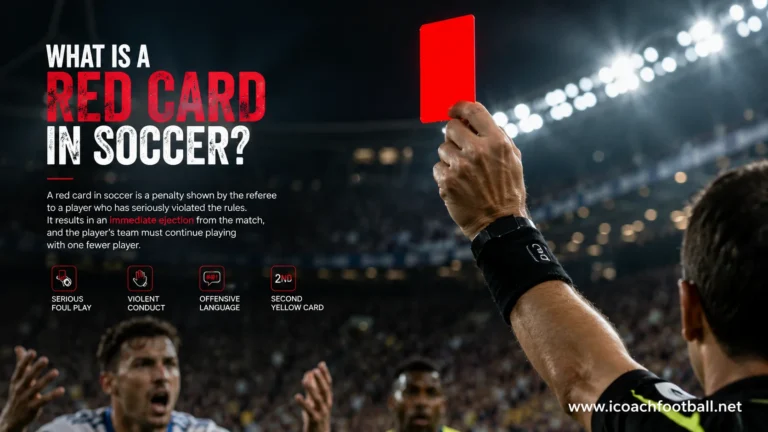
A yellow card acts as a strict official warning; the offending player is allowed to stay on the pitch and continue playing. A red card is an immediate ejection from the match. When a player receives a red card, they must leave the field, and their team is forced to play the remainder of the game with one less player. If a player receives two yellow cards in the exact same match, it automatically converts into a red card.
Can a goalkeeper get a yellow card?
Yes, goalkeepers are subject to the exact same disciplinary rules as outfield players. Goalkeepers are most frequently booked for delaying the restart of play (time-wasting during goal kicks) or for committing a reckless foul when an attacker is advancing toward the goal. If a goalkeeper receives a second yellow card and is ejected, the team must substitute a backup goalkeeper into the game, sacrificing an outfield player to do so.
Do coaches and managers get yellow cards?
Yes. Since the rules were updated in 2019, referees can officially show yellow and red cards to head coaches and bench staff. A coach will receive a yellow card for aggressive behavior, excessive complaining, sarcastic clapping at match officials, or leaving their designated technical area. Just like players, a coach who receives two yellow cards is ejected and sent to the stands.