What Does a Red Card Mean in Soccer? Rules & Suspensions Explained
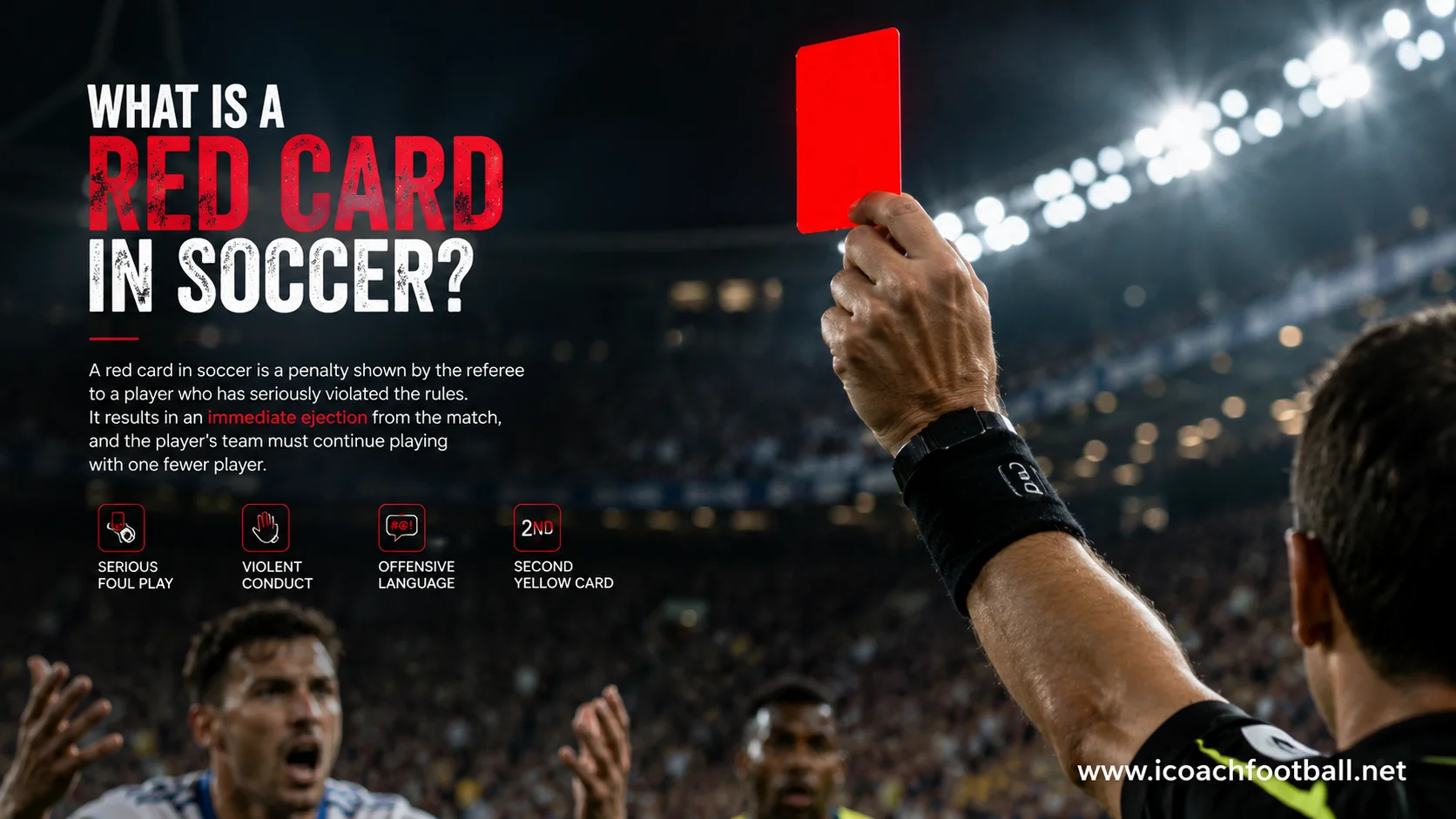
There is no sight in world sports quite as dramatic as a soccer referee reaching into their back pocket, pulling out a red card, and pointing firmly toward the exit tunnel. The stadium erupts, players swarm the official, and the entire tactical landscape of the match changes in a split second.
But if you are new to the sport, you might be asking: What does a red card mean in soccer, and how exactly does it impact the team?
Unlike a yellow card—which is simply a strict warning—a red card is the ultimate disciplinary punishment. Here is your complete guide to soccer’s ejection rules, why red cards are given, and what happens to a team when they are forced to play a man down.
The Short Answer: What is a Red Card?
In soccer, a red card means a player, substitute, or coach has been officially ejected (or “sent off”) from the match for committing a severe offense.
When a player receives a red card, three things happen instantly:
- Immediate Ejection: The player must leave the pitch immediately and head straight down the tunnel to the locker room. They are not allowed to sit on the bench.
- No Replacements: The offending player cannot be substituted. Their team is forced to play the remainder of the match with one fewer player (usually dropping from 11 men to 10).
- Automatic Suspension: The player is automatically suspended for their team’s next game.
Note: A team can theoretically receive multiple red cards. However, if a team receives five red cards and is reduced to fewer than seven players on the pitch, the referee will immediately abandon the match, resulting in an automatic forfeit.
How Do You Get a Red Card? (The Two Methods)
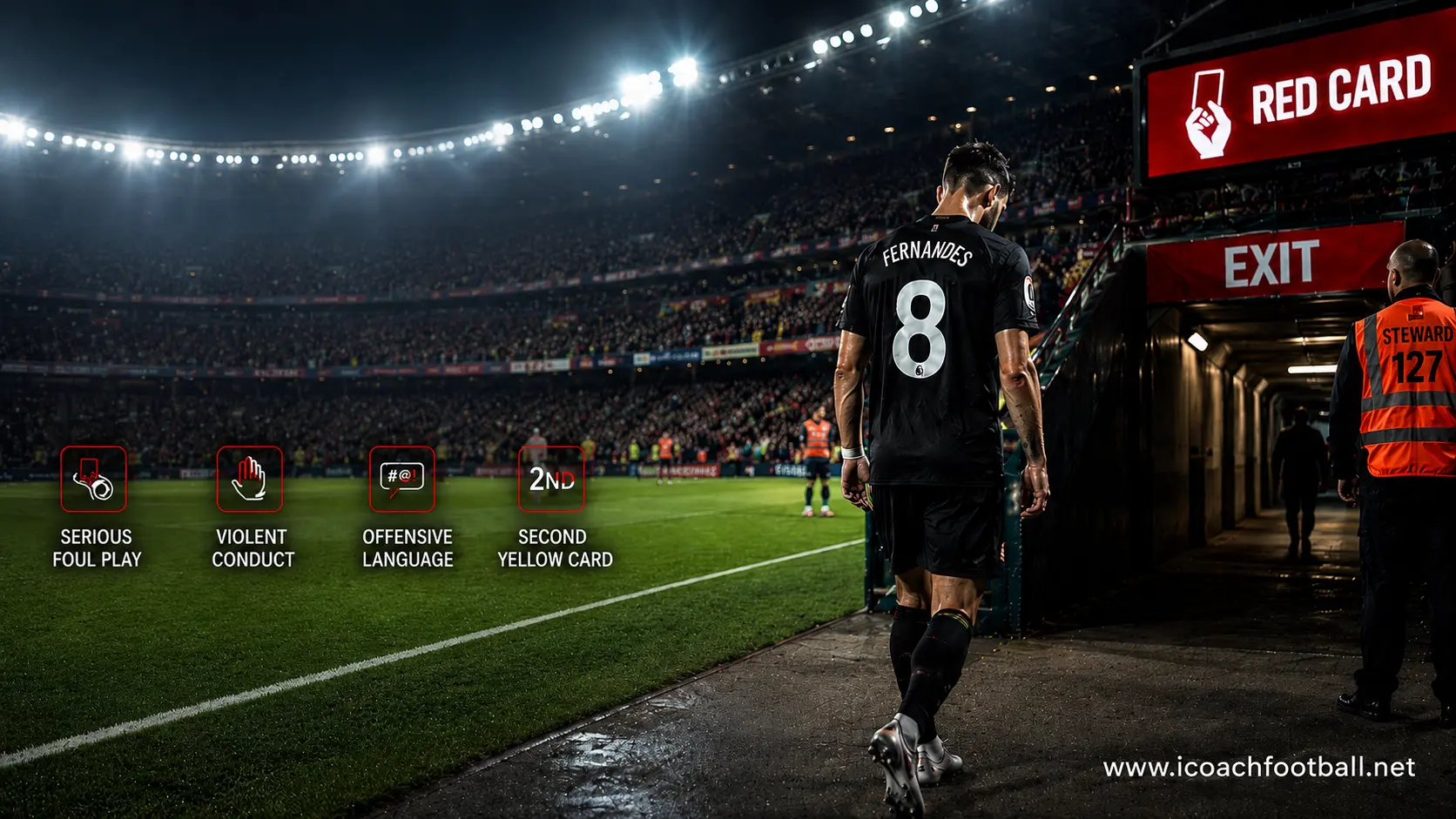
A referee can send a player off in one of two ways:
1. The “Second Yellow” (Indirect Red)
If a player commits a minor bookable offense (like a reckless tackle or time-wasting) and receives a yellow card, they are on thin ice. If that exact same player commits a second bookable offense later in the game, the referee will show them a second yellow card, immediately followed by a red card.
2. The Straight Red Card
For extreme offenses, the referee will bypass the yellow card warning entirely and issue a “straight red.” According to the Laws of the Game, straight reds are given for:
- Serious Foul Play: Lunging tackles with cleats exposed that endanger the safety of an opponent.
- Violent Conduct: Punching, kicking, biting, head-butting, or spitting at anyone on the field.
- DOGSO (Denying an Obvious Goal-Scoring Opportunity): Often called the “last man rule.” If a defender commits a foul to stop an attacker who has a clear, one-on-one path to the goal, they are sent off. This also applies to a field player deliberately using their hands to block a shot from going into the net.
- Offensive Language: Using abusive, insulting, or discriminatory language or gestures toward the referee or other players.
(Fun Fact: Referees can issue red cards before the match even begins, during halftime, or after the final whistle if players brawl on the pitch!)
New Era Rules: The 2026 World Cup Changes
Soccer rules are constantly evolving to crack down on poor sportsmanship. During the 2026 FIFA World Cup, a new disciplinary rule led to a sharp spike in straight red cards: Covering the mouth during confrontations.
To prevent players from secretly hurling abusive language at referees or opponents, FIFA ruled that covering your mouth to hide what you are saying during a heated argument is an automatic sending-off. Paraguay’s Miguel Almirón and Ecuador’s Piero Hincapié were both famously sent off for this exact infraction during the 2026 tournament.
The Goalkeeper Dilemma: What if the Goalie is Sent Off?
When a striker or defender gets a red card, the team simply adjusts their formation to play with 10 men. But what happens if the goalkeeper gets a red card?
A team must have a designated goalkeeper on the field at all times. The manager has two options:
- Use a Substitute: The manager can substitute a backup goalkeeper into the game from the bench. However, because they are still down a man, the manager must take a field player off the pitch to make room for the new goalie.
- Put a Field Player in Goal: If the team has already used all their allotted substitutions, a field player currently on the pitch must put on a goalkeeper jersey and play in the net for the rest of the game.
Suspensions: Do Red Cards Carry Over?
Yes, the punishment for a red card extends beyond the current match.
At a minimum, any red card carries an automatic one-match suspension. However, disciplinary committees review straight red cards after the game and can extend the suspension based on the severity of the offense. For example, violent conduct—such as throwing a punch—routinely results in a three-match ban (or more) across major leagues like MLS and the Premier League.
Frequently Asked Questions (FAQ)
What does a red card mean in soccer?
A red card is an official dismissal from a soccer match. It means the offending player has committed a severe foul or broken the rules of conduct. They must leave the field immediately, they cannot be substituted, and their team must play the rest of the match with one less player.
How many yellow cards equal a red card?
Two. If a player receives two yellow cards in the exact same match, the referee will show them a second yellow, instantly followed by a red card, resulting in their ejection.
Can a soccer coach get a red card?
Yes. Referees can show red cards to head coaches and bench staff. A coach will be sent off if they leave their technical area to aggressively confront a referee, enter the opposing team’s technical area to start a fight, use unauthorized communication devices, or throw objects onto the pitch. If a coach is sent off, they must leave the sideline and watch the rest of the game from the stadium stands or locker room.
What happens if a goalkeeper gets a red card?
If a goalkeeper is sent off, the team must still designate someone to play in goal. The coach will usually substitute a backup goalkeeper into the game, but to do so, they must remove one of their field players to ensure the team remains a man down. If the team is out of substitutions, a field player must put on goalie gloves and finish the match in the net.