U13 Soccer Practice Plan: Technical and Tactical Training
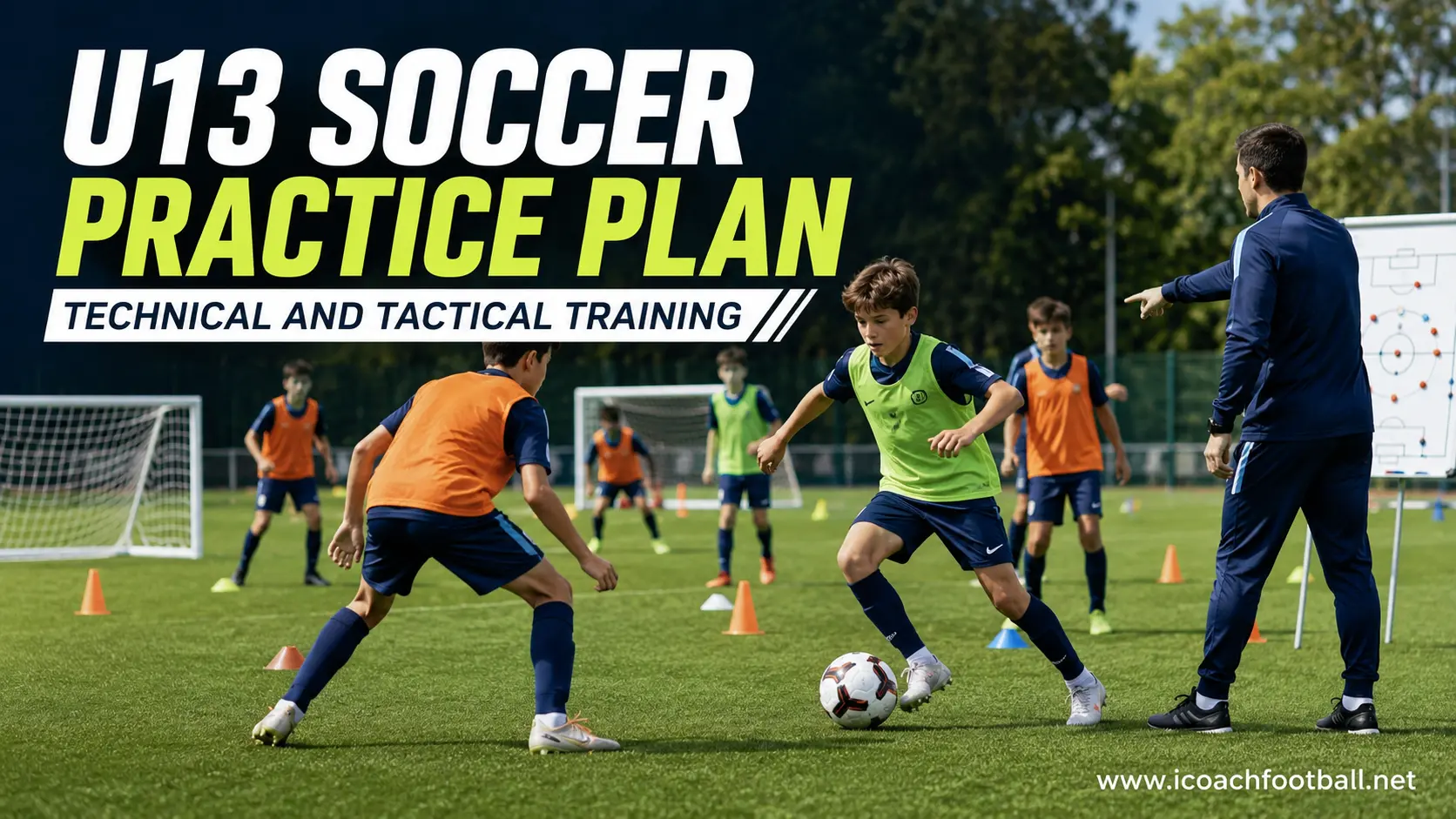
Quick answer: A U13 practice should progress from technical activation into positional and tactical game problems. Use third-player passing, a positional rondo, build-up against pressure, transition games and a final 7v7 or 8v8 match linked to one clear team principle.
U13 players are entering a stage where technical actions must increasingly serve tactical intentions. They can begin understanding how team shape, pressing, support and transitions connect across larger areas.
This 70-minute session uses a progressive structure. The early activities refine technique, while the middle and final games introduce realistic decisions with teammates and opponents.
Physical maturity can vary greatly at this age. Adjust distances, work periods and contact expectations according to individual players rather than chronological age alone.
For sessions organized around exact attendance, use our soccer practice plans by number of players. Related age-group sessions include U12 Soccer Practice Plan and U14 Soccer Practice Plan.
Equipment and Setup
PlayersApproximately 14–18 players
Session duration70 minutes
Recommended ageU13
Maximum areaMaximum 56 × 40 yards
Ball sizeSize 3 for U6–U8, size 4 for U9–U14 and size 5 for U15–U16; follow local competition rules
EquipmentSize 4 or size 5 balls, cones, bibs, mini goals and full-size goals when available
Complete 70 minutes Session
| Time | Activity | Main objective |
|---|---|---|
| 0–8 minutes | Dynamic Activation With the Ball | Movement preparation, technique and scanning |
| 8–16 minutes | Third-Player Passing Network | Timing, communication and forward play |
| 16–25 minutes | 6v3 Positional Rondo | Positional support and counter-pressing |
| 25–34 minutes | 4v4 Plus Three Positional Neutrals | Playing through lines and maintaining shape |
| 34–43 minutes | 5v4 Build-Out Against Press | Build-up structure and pressing organization |
| 43–52 minutes | 4v4 Plus Two Transition Neutrals | Transition decisions and support |
| 52–61 minutes | 6v6 High-Press Game | Pressing triggers and playing through pressure |
| 61–70 minutes | 7v7 or 8v8 Tactical Match | Game application and collective understanding |
Age-Appropriate Coaching Priorities
Use a clear session theme: Every activity should prepare the same game problem from a different angle.
Progress from simple to realistic: Add direction, opponents and transition demands gradually.
Develop individual and collective solutions: Players need technical freedom within team principles.
Manage physical differences: Do not let early maturation become the only route to success.
Use reflection: Short questions between rounds can help players explain what they saw and chose.
FIFA’s progressive methodology for ages 12–15 recommends moving logically from simpler activities into more complex, game-like situations. Read FIFA Ages 12–15: Progressive Methodology.
Drill 1: Dynamic Activation With the Ball
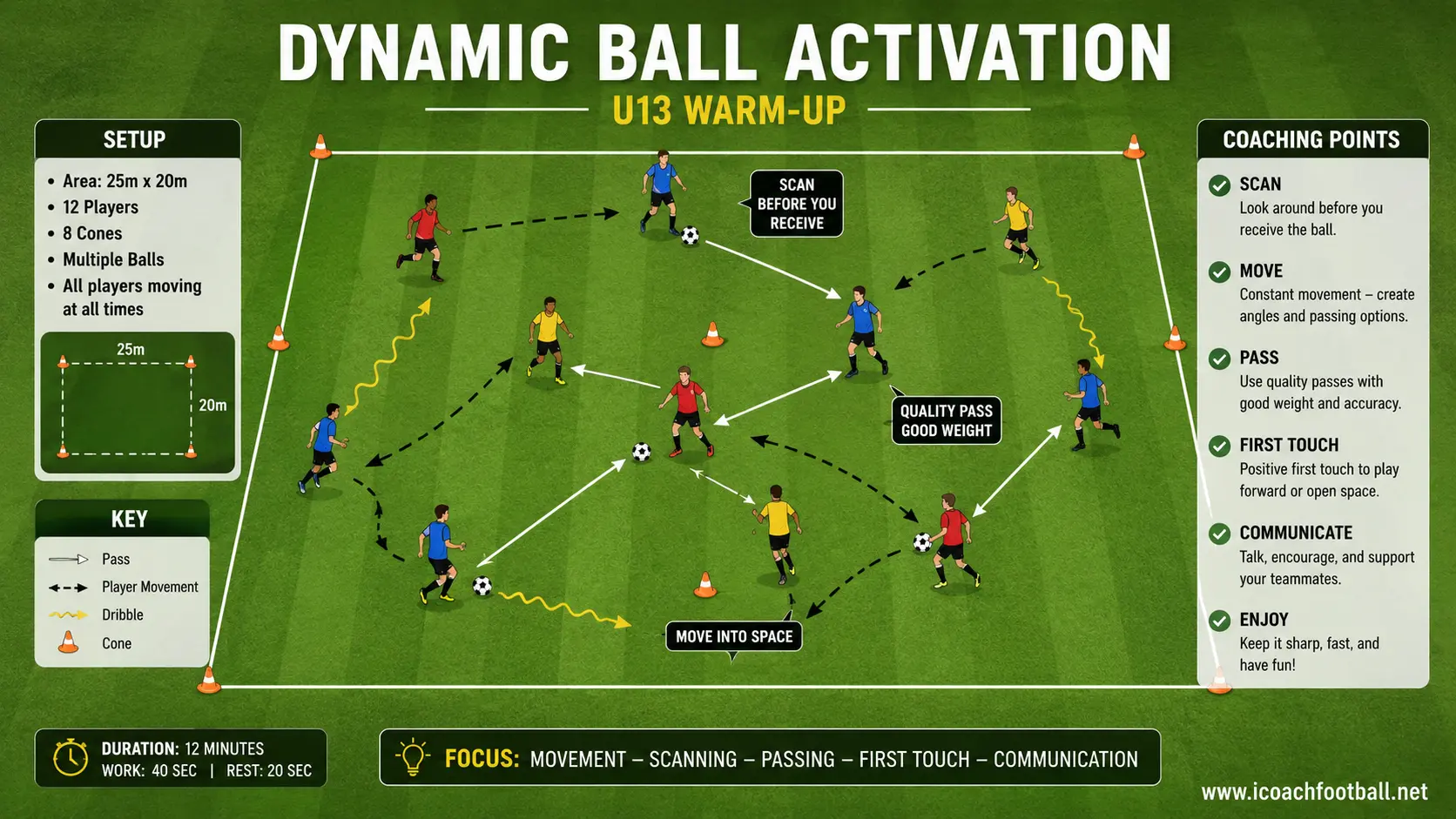
Players combine dynamic movement with passing and receiving in a flowing area.
Setup
- Create a 24 × 22-yard area.
- Position four outside servers.
- Place remaining players inside in pairs.
- Use four balls.
- Rotate servers regularly.
How to Play
- Inside players perform dynamic movements before receiving.
- Scan, receive across the body and pass to a different server.
- Change pace after the pass.
- Include mobility, short accelerations and decelerations.
- Progress intensity gradually.
Coach’s note: The warm-up should prepare the movement and technical theme rather than becoming a separate fitness block.
Progressions: Add passive pressure, one-touch returns or a short combination between two central players.
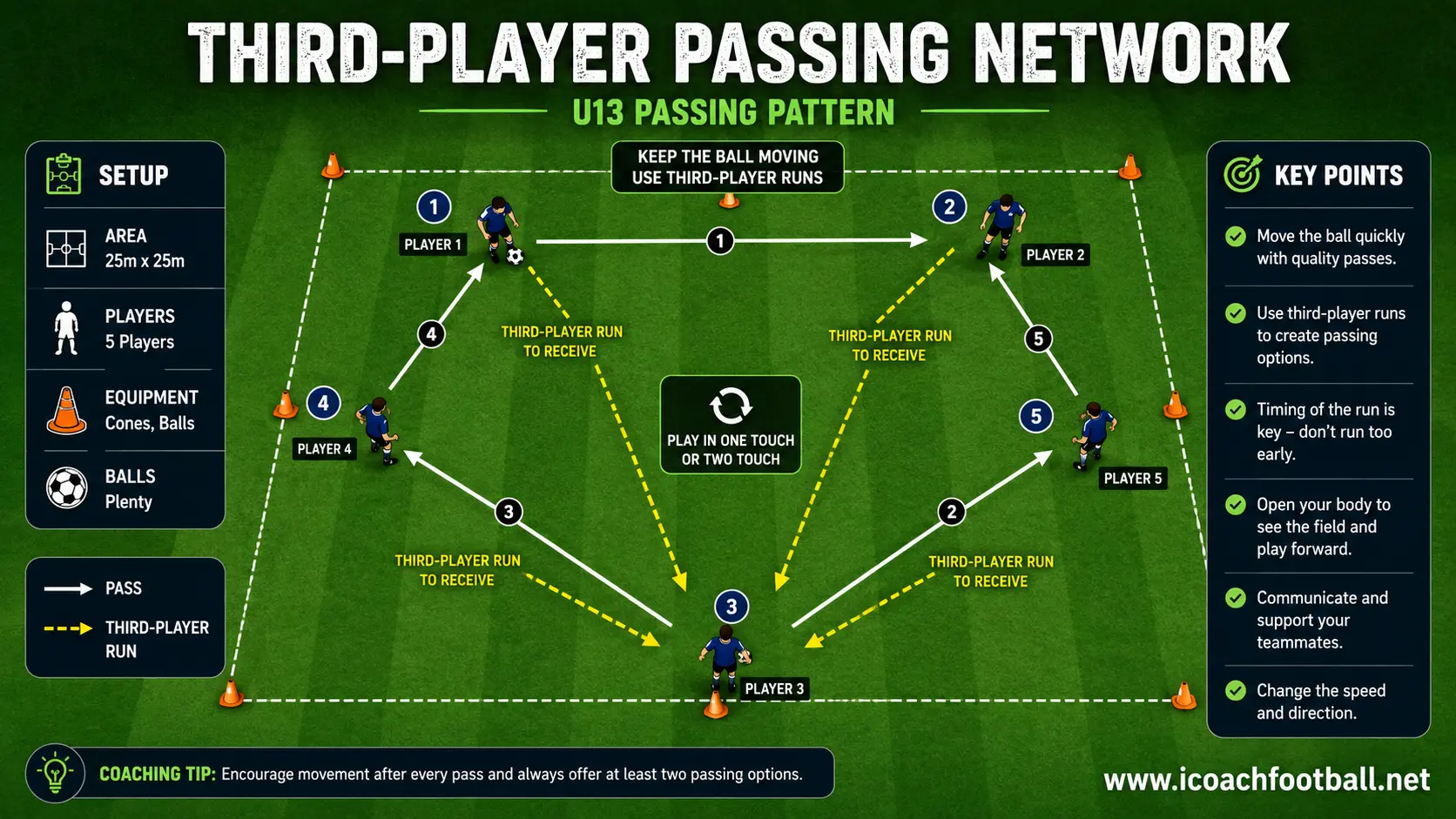
Drill 2: Third-Player Passing Network
Players work in a passing network with more than one possible third-player route.
Setup
- Create two 22 × 18-yard rectangles.
- Use seven to nine players in each.
- Position players at six reference points.
- Use one ball per group.
How to Play
- Start with a pass into a checking player.
- Set the ball to a supporting teammate.
- Play forward to a third player moving beyond.
- Players rotate through the network.
- Allow either side to be used.
Coach’s note: Players should scan and choose the available route rather than follow a fixed choreography every time.
Progressions: Add a passive defender, require one-touch sets or allow the receiver to turn when unopposed.
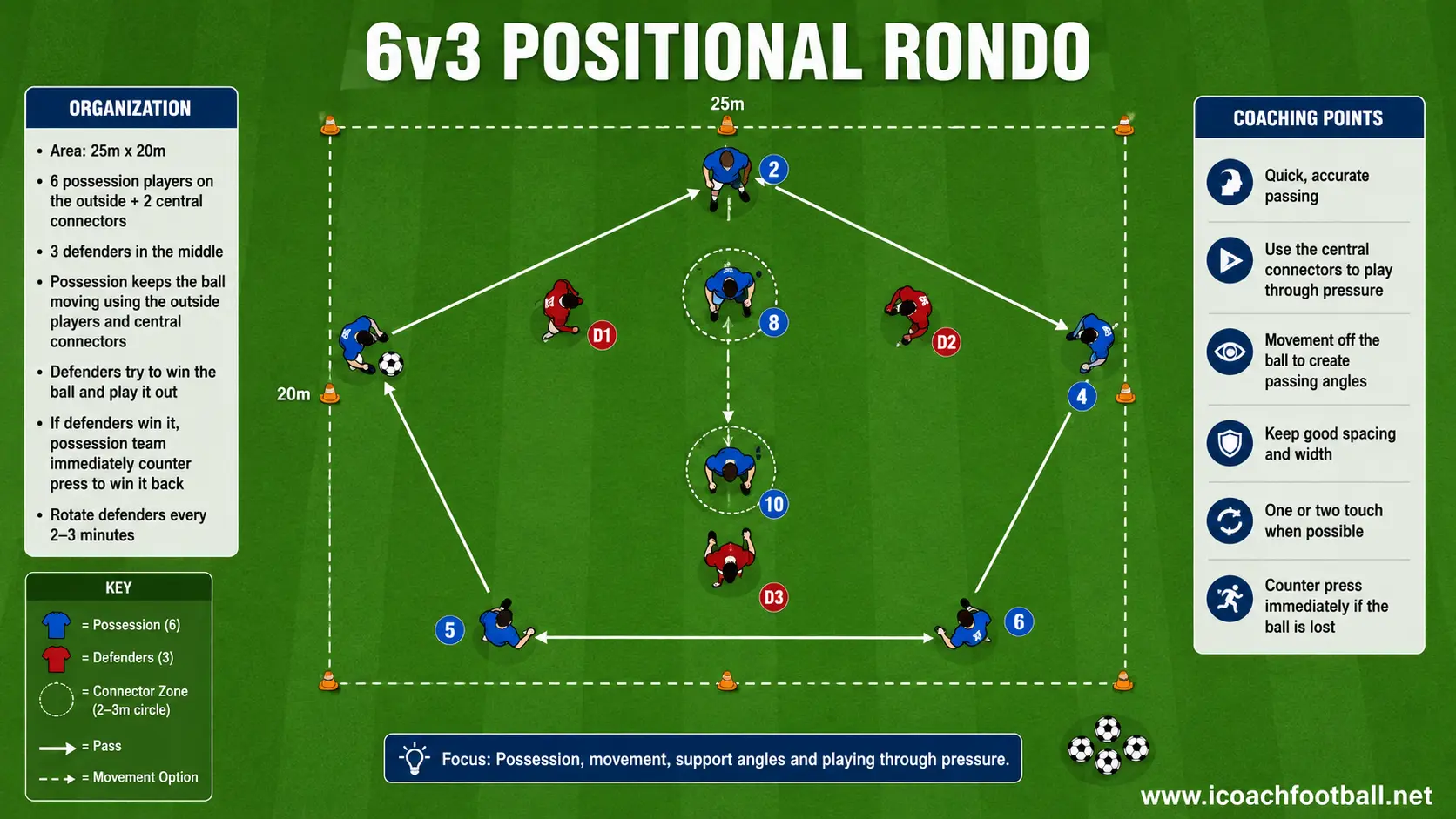
Drill 3: 6v3 Positional Rondo
Six attackers occupy outside and inside positions against three defenders.
Setup
- Create a 20 × 18-yard rectangle.
- Use four outside players and two inside connectors.
- Add three defenders.
- Keep spare balls close.
How to Play
- Attackers keep possession.
- A pass into one connector and out through the other earns a point.
- On a turnover, attackers counter-press for five seconds.
- Defenders score by dribbling out.
- Rotate roles.
Coach’s note: The inside players should occupy different lines and adjust to open passing lanes. Counter-press with control, not reckless contact.
Progressions: Use two touches, add end targets or reduce the counter-press period.
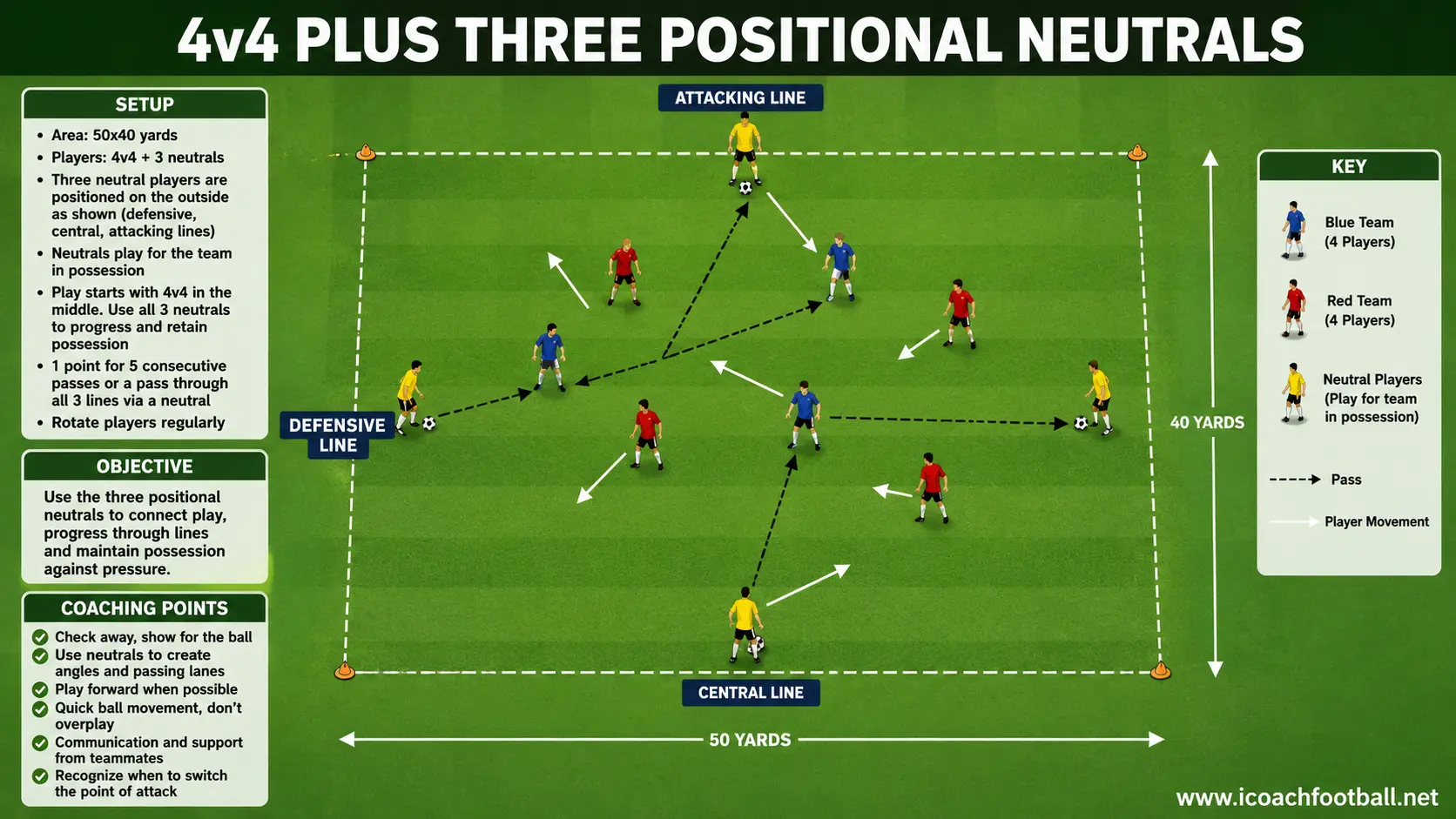
Drill 4: 4v4 Plus Three Positional Neutrals
Three neutrals create central and outside connections in a directional possession game.
Setup
- Create a 32 × 24-yard field.
- Play 4v4 inside.
- Use one central neutral and one neutral on each end.
- Neutrals support possession.
- Rotate roles every three minutes.
How to Play
- Teams score by transferring the ball from one end neutral to the other.
- The central neutral can connect through pressure.
- On a turnover, roles change immediately.
- End neutrals have two touches.
- Play continuous rounds.
Coach’s note: The team in possession should create width around the ball and depth beyond it while protecting against the transition.
Progressions: Limit neutrals to one touch, add side zones or require the central neutral before scoring.
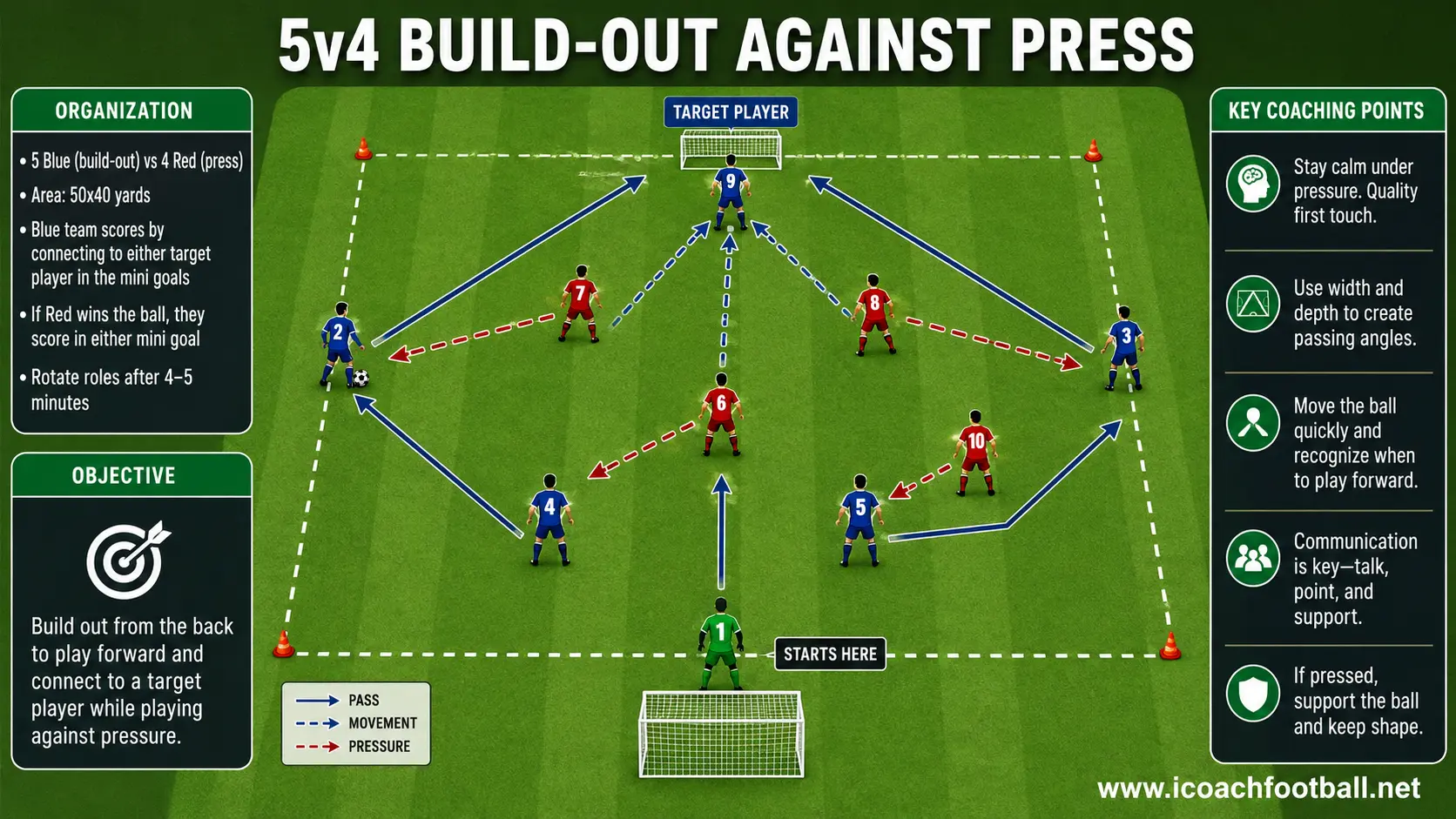
Drill 5: 5v4 Build-Out Against Press
Five players build from the back against four pressing opponents.
Setup
- Use half a field or a 42 × 34-yard area.
- Place two exit gates near halfway.
- Use five build-up players and four pressers.
- Add a goalkeeper when available.
- Keep restarts with the coach or goalkeeper.
How to Play
- The build-up team scores by passing or dribbling through an exit gate.
- The pressing team scores in the main goal or mini goals after regaining.
- Restart from the back.
- Rotate teams.
- Use short high-quality repetitions.
Coach’s note: Build-up players should create width and a clear central option. Pressers should move together and protect the most dangerous route.
Progressions: Add a recovery player, narrow the exit gates or allow the press only after the first pass.
Drill 6: 4v4 Plus Two Transition Neutrals
Two neutrals support the team that regains possession and help create the first pass out of pressure.
Setup
- Create a 30 × 24-yard field.
- Play 4v4 inside.
- Place one neutral on each touchline.
- Use two mini goals at each end.
- Rotate neutrals.
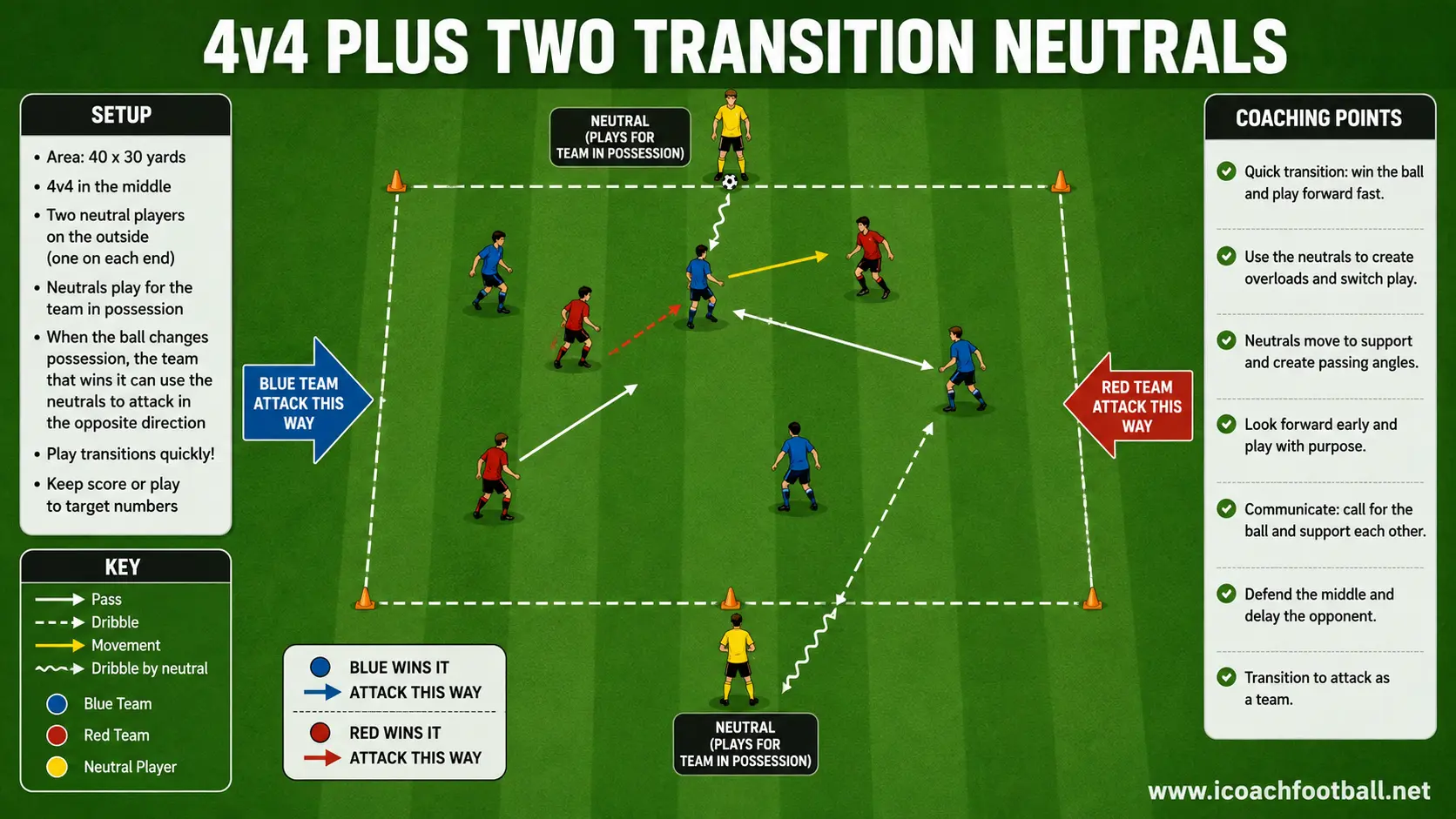
How to Play
- Teams attack two goals.
- Neutrals support possession.
- A goal within eight seconds of a regain counts double.
- On turnovers, neutrals switch immediately.
- Restart quickly.
Coach’s note: The first action after the regain should secure or exploit the moment according to pressure, not automatically force a pass forward.
Progressions: Make neutrals one-touch, remove the time bonus or reward a switch after the regain.
Drill 7: 6v6 High-Press Game
One team builds while the other uses coordinated pressing triggers.
Setup
- Create a 48 × 36-yard field.
- Play 6v6.
- Use goals, mini goals or end zones.
- Mark a build-up line.
- Use goalkeepers when available.
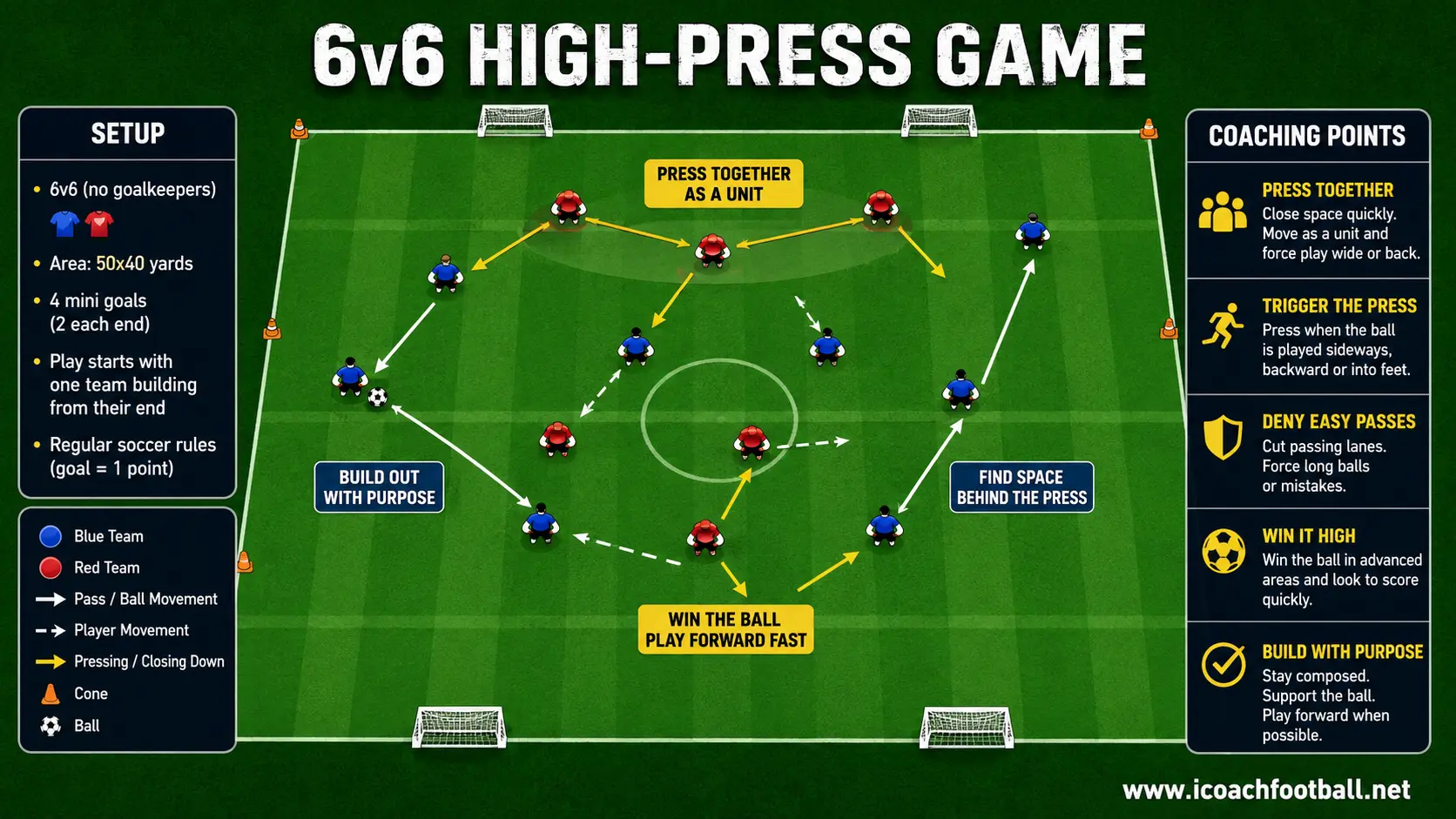
How to Play
- The team in possession starts from the back.
- The opponent presses after a chosen trigger.
- Score normally.
- A high regain and goal counts double.
- Switch starting roles after each round.
Coach’s note: Use two or three shared cues: poor touch, backward pass and ball near the touchline. The second defender must provide cover.
Progressions: Move the pressing line, add a neutral goalkeeper or reward successful play through the press.
Drill 8: 7v7 or 8v8 Tactical Match
The final match applies the session theme in realistic space.
Setup
- Create a 56 × 40-yard field.
- Play 7v7 or 8v8.
- Use goals and goalkeepers when available.
- Organize a basic team shape.
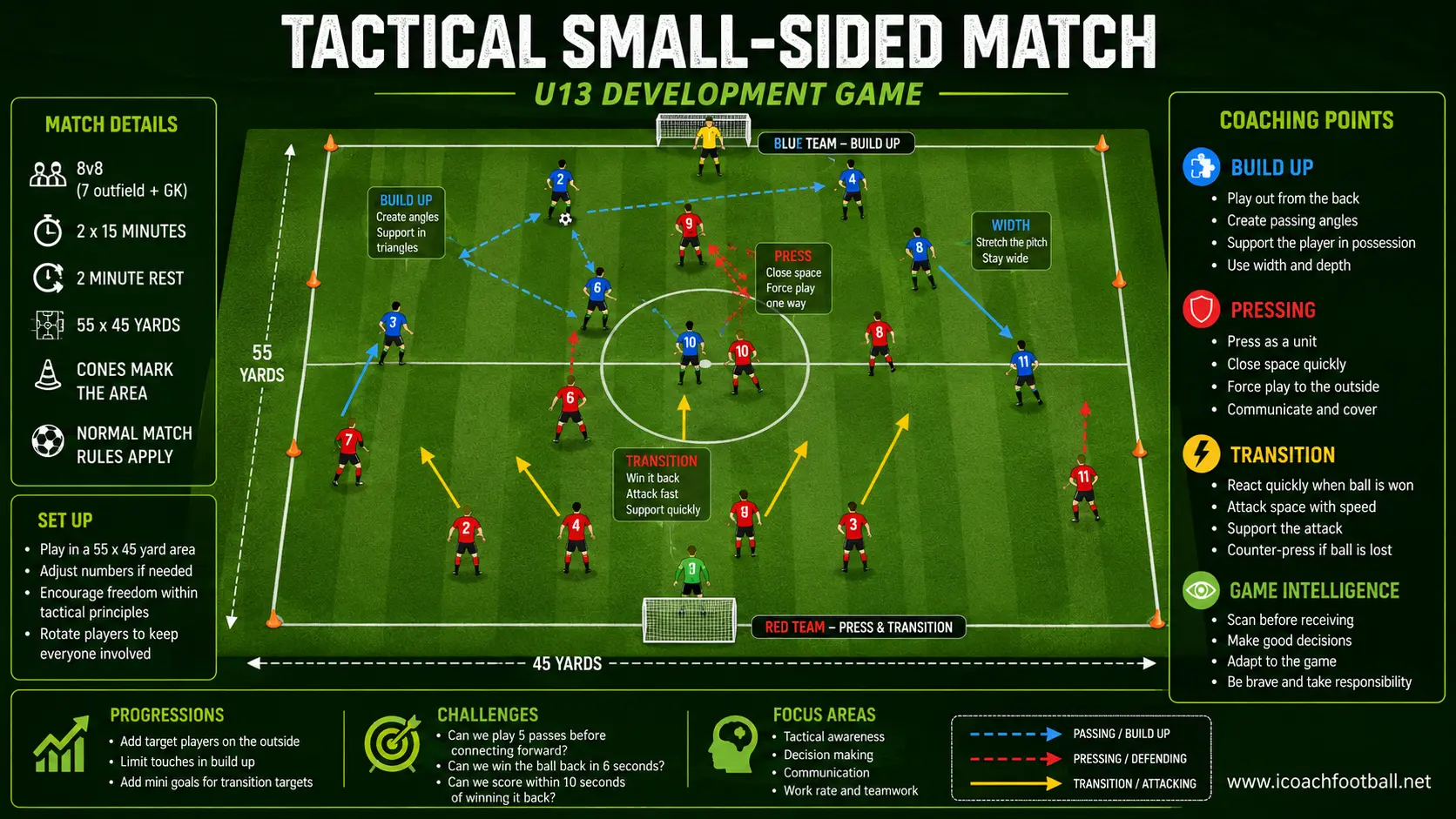
How to Play
- Play normal soccer.
- Use one bonus linked to the theme, such as a goal after playing through pressure or winning high.
- Play two rounds.
- Use brief reflection between rounds.
- Keep substitutions rolling.
Coach’s note: Do not script every action. Look for shared principles and allow different technical solutions.
Progressions: Remove the bonus, change the pressing height or adjust the field width.
How to Adapt the Session
For a physically mixed group: Use smaller teams and adjust work-to-rest periods rather than rewarding only speed and strength.
For 14 players: Play 7v7 in the final game and use targets during earlier activities.
For 18 players: Use 8v8 plus goalkeepers or rotate a short third team.
For a developing tactical group: Use one team principle and remove unnecessary scoring conditions.
Common Coaching Mistakes
- Treating U13 players as physically mature adults.
- Using tactical diagrams without enough game practice.
- Fixing players permanently into one position.
- Adding pressing instructions without teaching cover and balance.
- Ignoring individual technical development inside team tactics.
- Using fitness running disconnected from the ball and session theme.
Frequently Asked Questions
How long should a U13 soccer practice last?
A U13 session can last approximately 65–75 minutes depending on frequency, intensity and player needs.
What should U13 players work on?
Develop technical quality under pressure, positional support, build-up, pressing, transitions and communication.
How tactical should U13 training be?
Tactical principles can become clearer, but they should be learned through progressive, game-like activities.
Should U13 players specialize in positions?
Players can spend more time in likely roles while still experiencing related positions and broad game problems.
How should physical differences be managed at U13?
Adjust groups, space, contact and work periods so early-maturing players do not dominate every activity.
Are positional rondos useful for U13?
Yes. They can develop support between lines, scanning and counter-pressing when connected to the session theme.
What game size is useful for U13?
6v6, 7v7, 8v8 and larger formats can be used depending on the tactical objective and available players.
Continue the age-group series: Compare this session with U12 Soccer Practice Plan and U14 Soccer Practice Plan and use the player-number practice-plan hub when attendance changes.