Rainy-Day Soccer Practice Plan: 8 Safe Drills for Wet Conditions
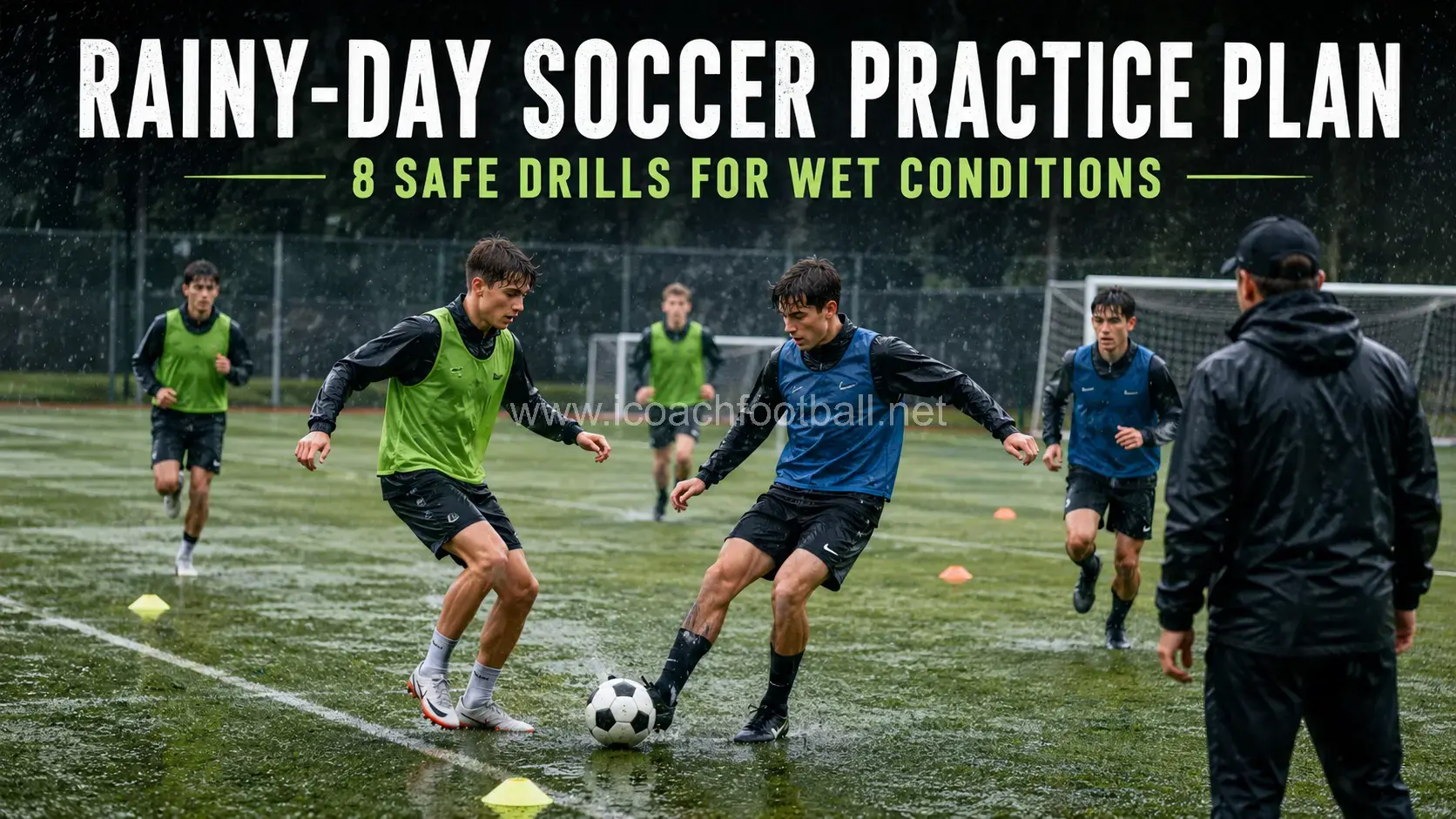
Quick answer: A rainy-day soccer practice should use short technical activities, compact possession games and small-sided matches that keep players moving. Inspect the surface first, reduce unnecessary contact and sharp changes of direction, and stop immediately if thunder, lightning, flooding or unsafe conditions develop.
Rain does not always mean soccer training must be cancelled. A safe wet-weather session can develop close control, passing accuracy, balance, communication and decision-making under realistic match conditions.
This complete 60-minute rainy-day soccer practice is designed for approximately 8–12 players. The activities use compact areas, simple organization and short coaching interventions so players remain active instead of standing in wet clothing.
The session develops ball control, first touch, passing, possession, pressing, attacking support and transition reactions. The drills avoid long queues, repeated long-range shooting and unnecessary high-speed contact on a slippery surface.
Before training, inspect the field for standing water, deep mud, damaged turf, hidden holes, slippery painted lines and poor drainage. Cancel, relocate or move indoors when the surface cannot support safe movement.
Thunder and lightning are different from ordinary rain. Stop outdoor activity immediately when thunder is heard or lightning is seen. Move everyone to a substantial building or hard-topped vehicle and do not resume until at least 30 minutes after the last thunder or lightning. Read the National Weather Service guidance for outdoor sports.
When outdoor conditions are unsafe, switch to our indoor soccer practice plan. Coaches with restricted field space can use these small-space soccer drills.
Equipment and Setup
PlayersApproximately 8–12 players
GoalkeepersOptional
Session duration60 minutes
Recommended agesU9 to senior
Maximum area34 × 26 yards
EquipmentBalls, flat markers, bibs and mini goals or cone gates
Complete 60-Minute Rainy-Day Soccer Practice
| Time | Activity | Main objective |
|---|---|---|
| 0–7 minutes | Close-Control Rain Traffic | Activation, balance and ball control |
| 7–14 minutes | Partner Pass, Cushion and Move | Passing weight and first-touch control |
| 14–22 minutes | 4v2 Wet-Weather Rondo | Possession, support angles and pressing |
| 22–30 minutes | 3v3 Plus Two End Targets | Directional possession and communication |
| 30–38 minutes | 4v4 Safe Line-Ball Game | Penetration and controlled transitions |
| 38–46 minutes | 3v2 Controlled Overload Attack | Passing decisions and accurate finishing |
| 46–53 minutes | 4v4 Four-Gate Possession Game | Scanning and switching play |
| 53–60 minutes | 5v5 Rainy-Day Small-Sided Match | Game understanding and competition |
Rainy-Day Safety Checklist
- Check the forecast: Review the expected rain, wind, temperature and thunderstorm risk before players arrive.
- Inspect the entire area: Look for standing water, deep mud, holes, damaged turf and slippery surfaces.
- Identify shelter: Know where players, staff and parents will go if thunder or lightning begins.
- Use suitable footwear: Players should wear footwear appropriate for the surface and permitted by the facility.
- Keep players active: Use short explanations and game-based activities rather than leaving players standing in wet clothing.
- Reduce unnecessary contact: Avoid sliding tackles, reckless challenges and exercises that encourage uncontrolled collisions.
- Watch player temperature: Stop and assist players who become excessively cold, confused, unusually quiet or unable to stop shivering.
- Stop for poor visibility: Heavy rain, darkness or fog may make it difficult for players to see the ball, other players and field hazards.
The Football Association’s winter-weather coaching guidance recommends using small games to keep players active during wet and cold sessions.
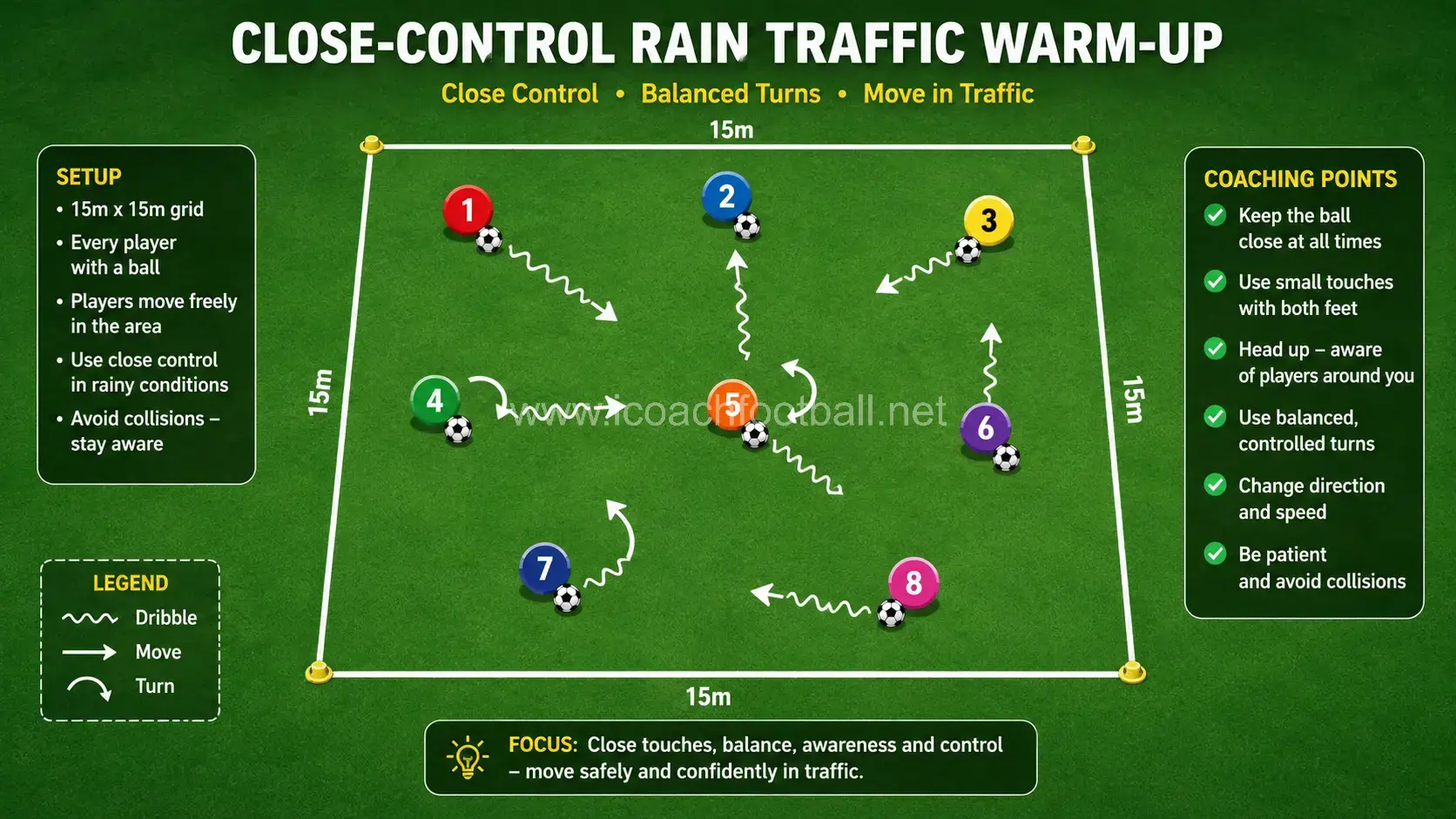
Drill 1: Close-Control Rain Traffic
This technical warm-up helps players adjust to the speed of the wet ball and surface. Each player dribbles inside a compact area while practising balanced turns and controlled changes of direction.
Setup
- Create a 16 × 16-yard square using flat markers.
- Give every player one ball when enough balls are available.
- Use two or three players per ball when equipment is limited.
- Inspect the area before beginning.
- Avoid placing the square over standing water or deep mud.
How to Play
- Players dribble freely inside the area.
- Use small touches and keep the ball within playing distance.
- The coach calls a turn or change of direction every 20–30 seconds.
- Players perform the action under control rather than at maximum speed.
- Include inside cuts, outside cuts, sole rolls and pull-back turns.
- Use short working periods with quick resets.
Coach’s note: Wet surfaces can make both the ball and the player’s footing less predictable. Encourage a balanced body position, softer knees and controlled touches before increasing speed.
Progressions: Use the weaker foot, require a shoulder check before turning, add passive pressure or place players in pairs with one player leading and the other mirroring.
Drill 2: Partner Pass, Cushion and Move
This passing exercise develops the softer first touch often required when a wet ball travels faster across the surface. Players pass, receive and move continuously without long queues.
Setup
- Divide the players into pairs.
- Position partners approximately 8–12 yards apart.
- Give each pair one ball.
- Use a clear field line or two flat markers as references.
- Leave a safe distance between neighbouring pairs.
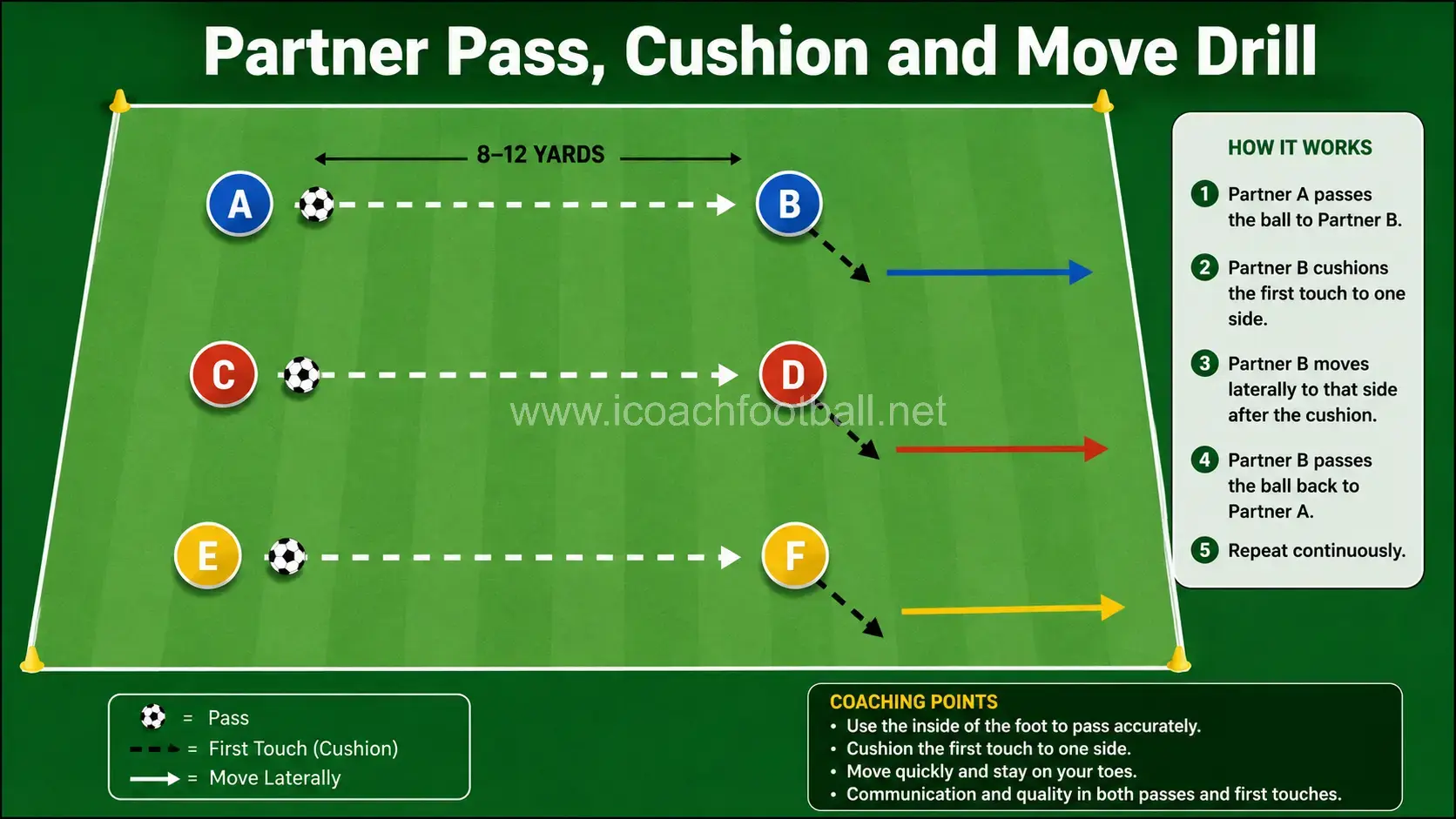
How to Play
- Player A passes firmly along the ground to player B.
- Player B cushions the first touch slightly to one side.
- Player B returns the pass and moves two or three yards.
- Player A adjusts the supporting angle before receiving again.
- Players continue moving laterally instead of remaining fixed.
- Change the receiving foot and movement direction regularly.
Coach’s note: Players must judge the speed of the ball before deciding how much force to absorb with the first touch. Encourage passes along the ground unless the surface contains unavoidable puddles.
Progressions: Use two touches, introduce a one-touch return, add a wall pass or require players to receive across the body before passing with the opposite foot.
For additional passing patterns, use our Y passing drills and third-player movements.
Drill 3: 4v2 Wet-Weather Rondo
This compact rondo develops short passing, movement and pressing without requiring long sprints. The area should be large enough for safe changes of direction but small enough to keep the activity controlled.
Setup
- Create a 13 × 13-yard square.
- Use four possession players and two defenders.
- Position the attackers around the outside.
- Keep additional players close for quick rotations.
- Use spare balls only when they can be kept dry and close to the area.
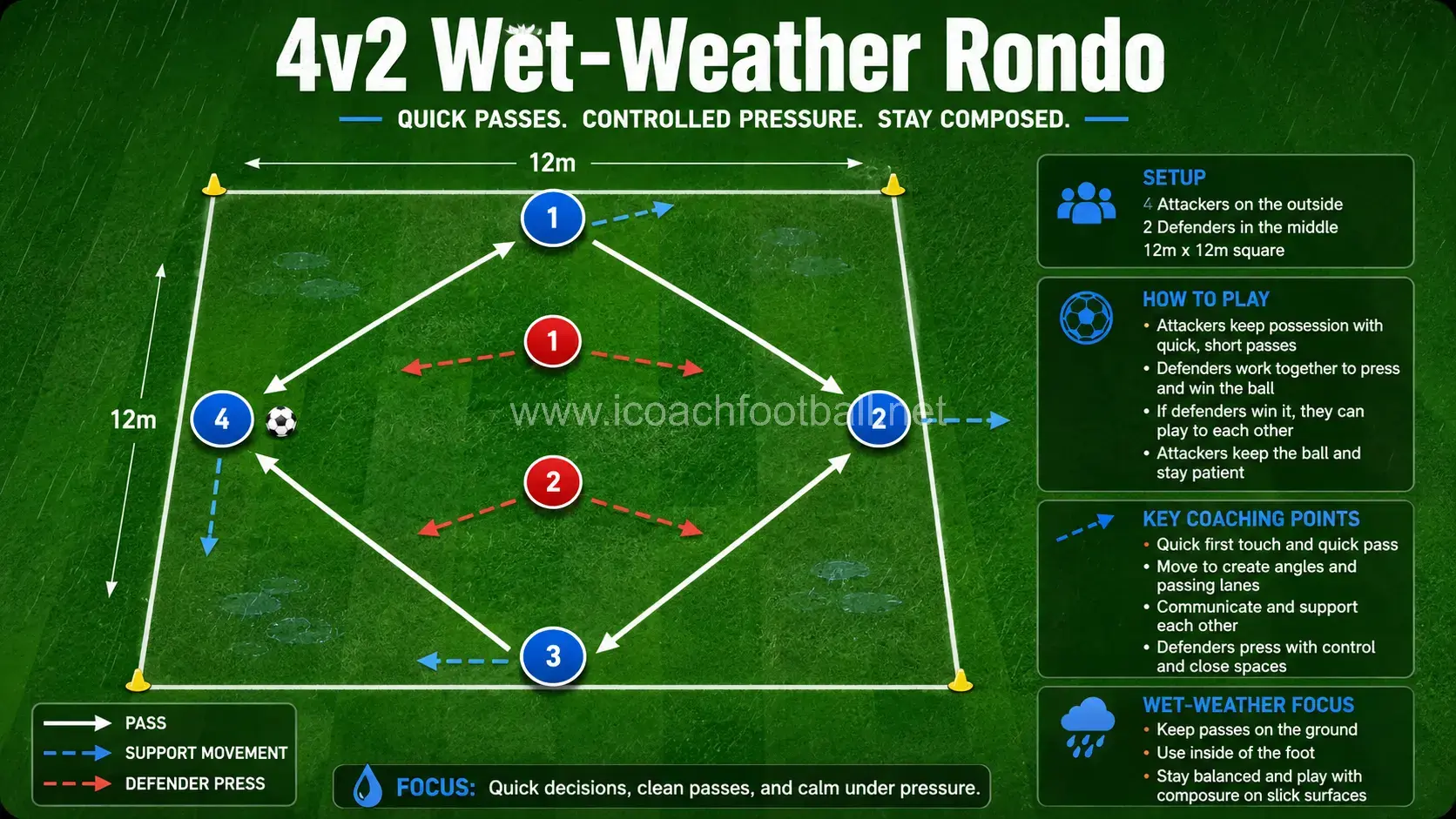
How to Play
- The four attackers maintain possession against two defenders.
- Five consecutive passes earn one point.
- A controlled pass between the defenders earns a bonus point.
- When possession is lost, the responsible attacker becomes a defender.
- The defender who has worked longest moves outside.
- Restart immediately when the ball leaves the area.
Coach’s note: Attackers should adjust their position before the ball arrives. Defenders should remain balanced and avoid uncontrolled lunges on a slippery surface.
Progressions: Limit attackers to two touches, require a one-touch split pass, reduce the area slightly or add one central attacking target.
Continue developing possession with our advanced soccer rondo blueprint.
Drill 4: 3v3 Plus Two End Targets
This directional possession game keeps eight players continuously involved. Target players give the game a clear objective without requiring powerful shots on a wet surface.
Setup
- Create a 22 × 16-yard rectangle.
- Play 3v3 inside the area.
- Position one target behind each end line.
- The target players remain outside the central field.
- Use flat markers or existing pitch lines for the boundaries.
- Rotate the targets regularly.
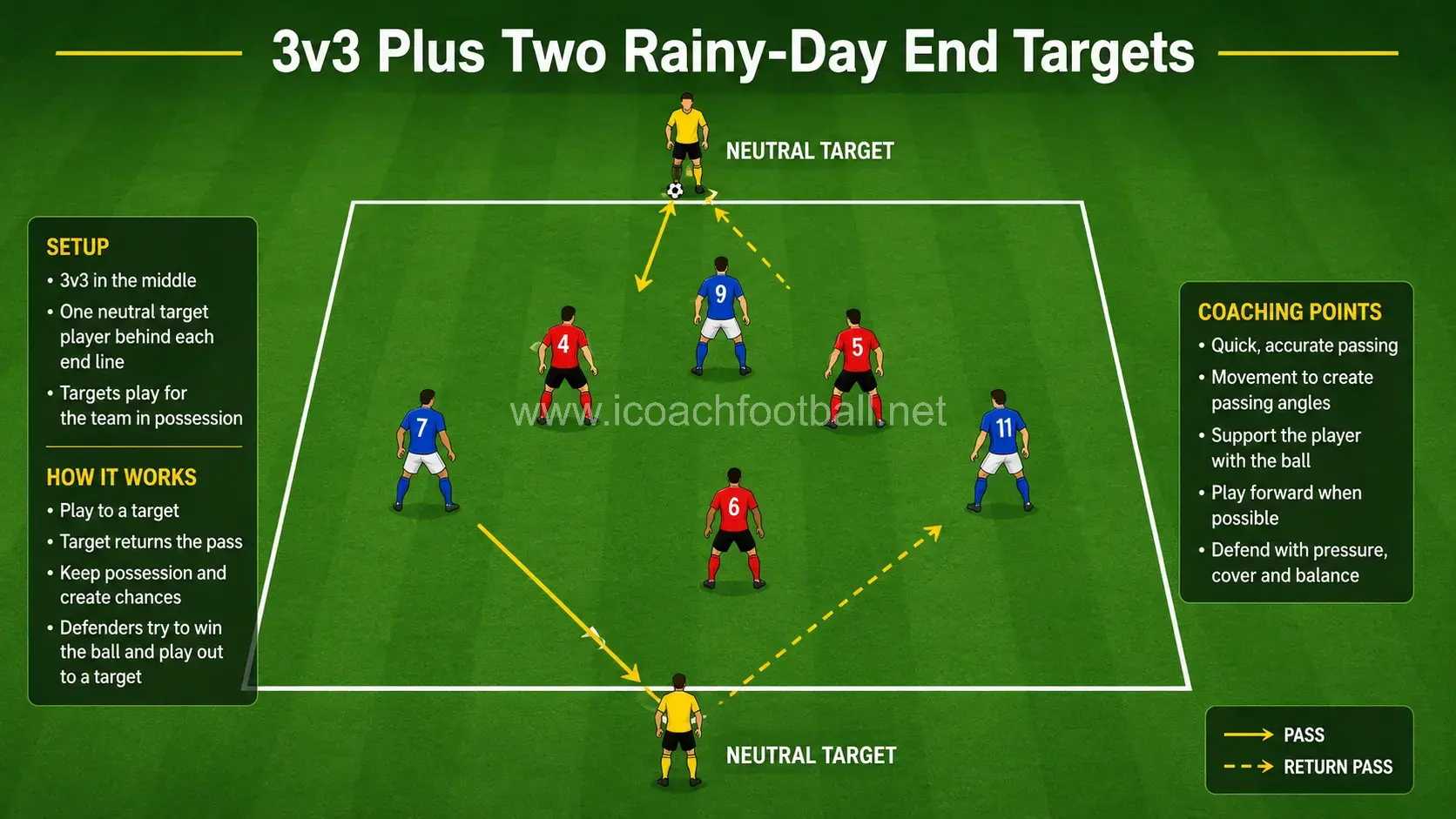
How to Play
- Each team attacks the target player at the opposite end.
- A point is scored by passing into the target and receiving the return pass.
- The target has a maximum of two touches.
- When possession changes, the new team attacks the other target.
- After scoring, the attacking direction reverses immediately.
- Play short rounds and rotate the targets.
Coach’s note: Communication becomes especially important when rain and wind make it harder to hear or see teammates. Encourage clear calls and early supporting movement.
Progressions: Limit targets to one touch, require a third-player movement after using the target or award two points when the final pass breaks between two defenders.
Drill 5: 4v4 Safe Line-Ball Game
This game replaces shooting with a controlled dribble across the opposition’s scoring line. It develops penetration and transitions while reducing repeated long shots and ball retrievals in wet conditions.
Setup
- Create a 26 × 20-yard field.
- Divide eight players into two teams of four.
- Each team attacks one end line.
- Use visible field lines or flat markers.
- Inspect both scoring areas for mud or standing water.
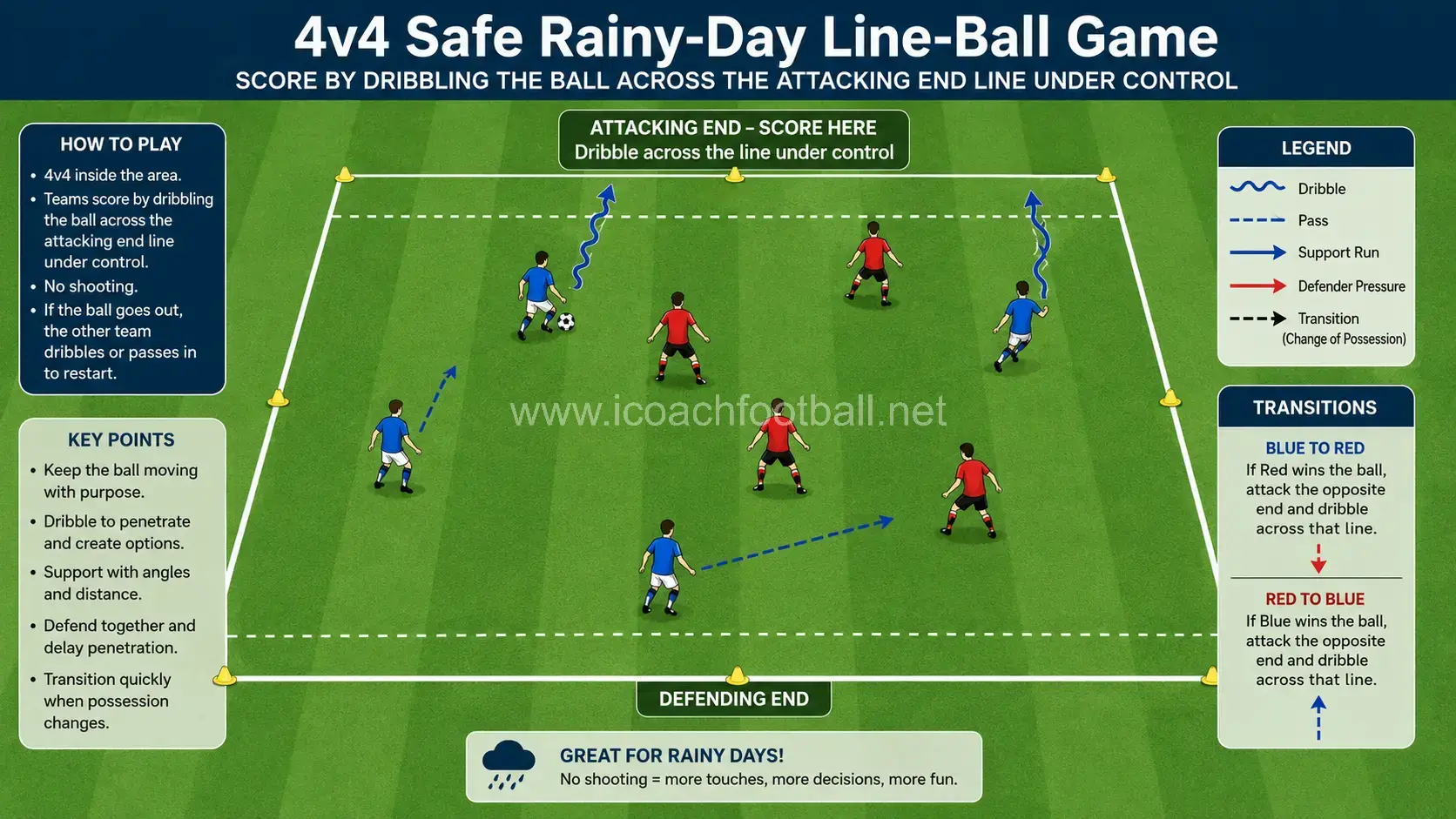
How to Play
- Teams compete for possession inside the playing area.
- A point is scored by dribbling across the attacking end line under control.
- The player must keep the ball within playing distance while crossing.
- After scoring, the player leaves the ball for the opposition.
- When possession changes, the new team attacks the opposite direction.
- Use short rounds of approximately two minutes.
Coach’s note: Encourage players to decelerate before sharp turns and remain balanced when protecting the ball. Sliding tackles should not be permitted.
Progressions: Score with a controlled pass across the line, add a five-second transition target or award two points for breaking the line after switching play.
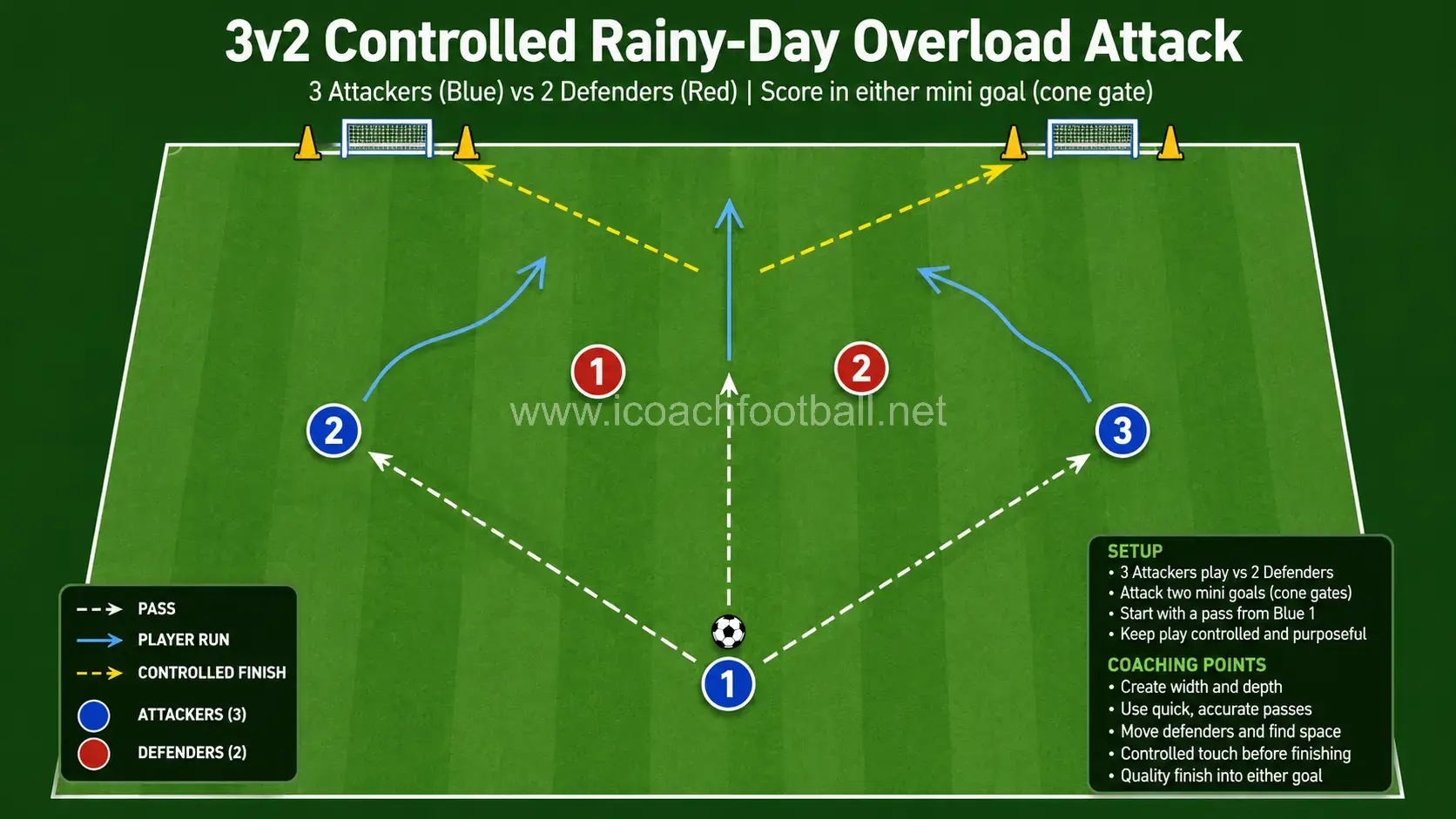
Drill 6: 3v2 Controlled Overload Attack
This attacking activity develops passing choices and accurate finishing. The emphasis is on creating a clear opportunity rather than striking the wet ball from long distance.
Setup
- Create a 28 × 20-yard field.
- Place two mini goals or narrow cone gates on the attacking end line.
- Three attackers begin with the ball.
- Two defenders start inside the field.
- Organize the remaining players behind the starting positions.
- Keep the goals away from puddles and damaged turf.
How to Play
- The three attackers attempt to score in either target.
- The two defenders protect both goals.
- If the defenders regain possession, they counter across the attackers’ starting line.
- The attack ends after a goal, successful counter or the ball leaving the field.
- Rotate attackers and defenders after each repetition.
- Begin the next attack only after the area is clear.
Coach’s note: The attackers should use width and move the defenders before attempting the final action. Encourage accurate side-foot finishes rather than uncontrolled powerful shots.
Progressions: Add a seven-second scoring limit, require a wall pass before finishing or introduce a recovery defender when the surface remains safe.
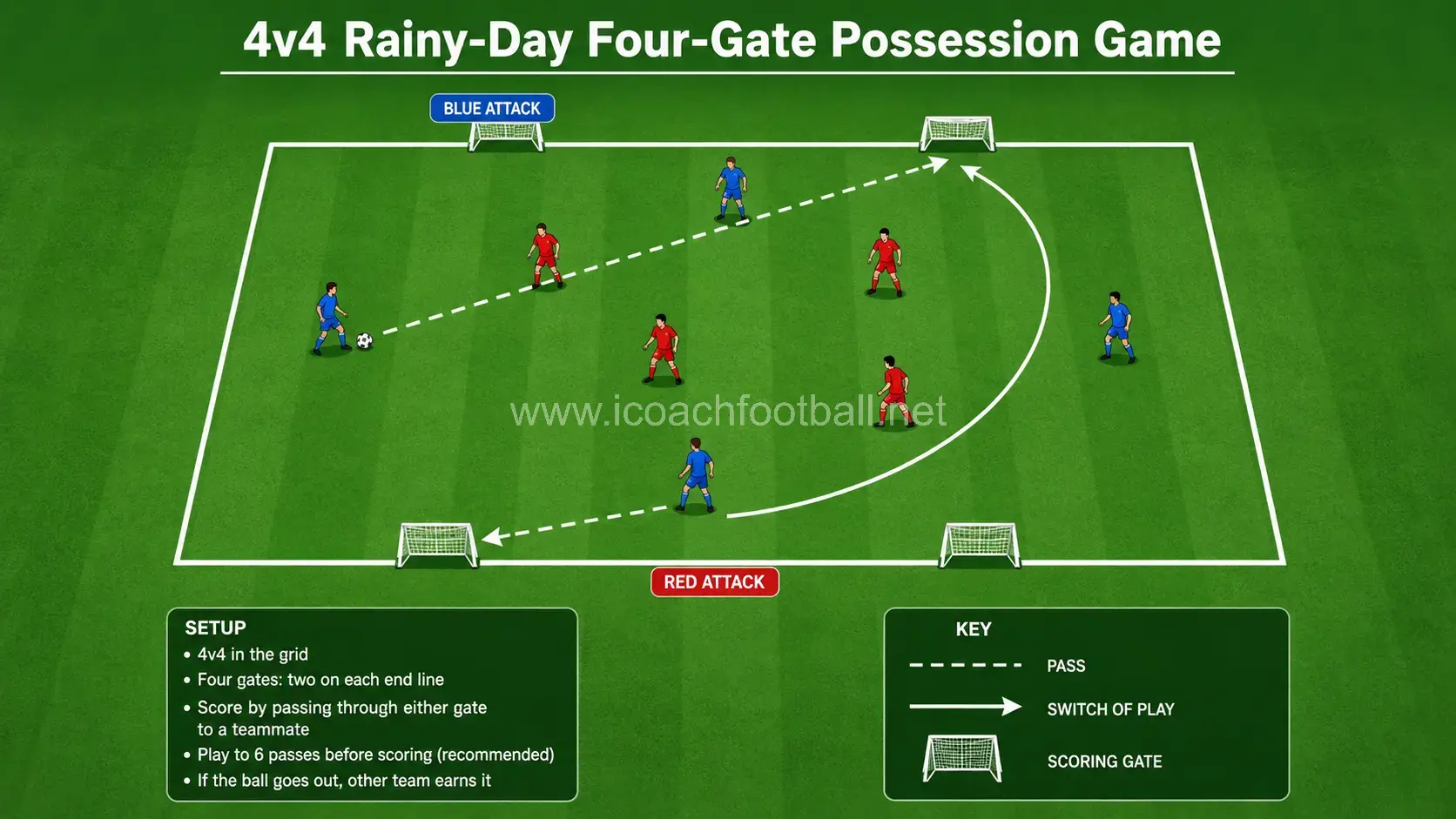
Drill 7: 4v4 Four-Gate Possession Game
This possession game gives each team two attacking gates. Multiple targets encourage scanning and switching play while keeping the activity compact and controlled.
Setup
- Create a 28 × 22-yard field.
- Place two three-yard gates on each end line.
- Divide eight players into two teams of four.
- Each team attacks the two gates on the opposite side.
- Use flat markers when tall cones are unstable in strong wind.
How to Play
- Each team attacks the two gates on the opposite end line.
- A point is scored by passing through a gate to a teammate.
- The receiver must control the ball on the opposite side.
- When possession changes, the new team immediately attacks the other direction.
- Restart quickly when the ball leaves the field.
- Play three short competitive rounds.
Coach’s note: The wet ball may travel more quickly through a gate. Passers should adjust the pace, while receivers prepare early and cushion the first touch.
Progressions: Narrow the gates, require a first-time scoring pass, add a transition deadline or award two points for switching from one side before scoring on the other.
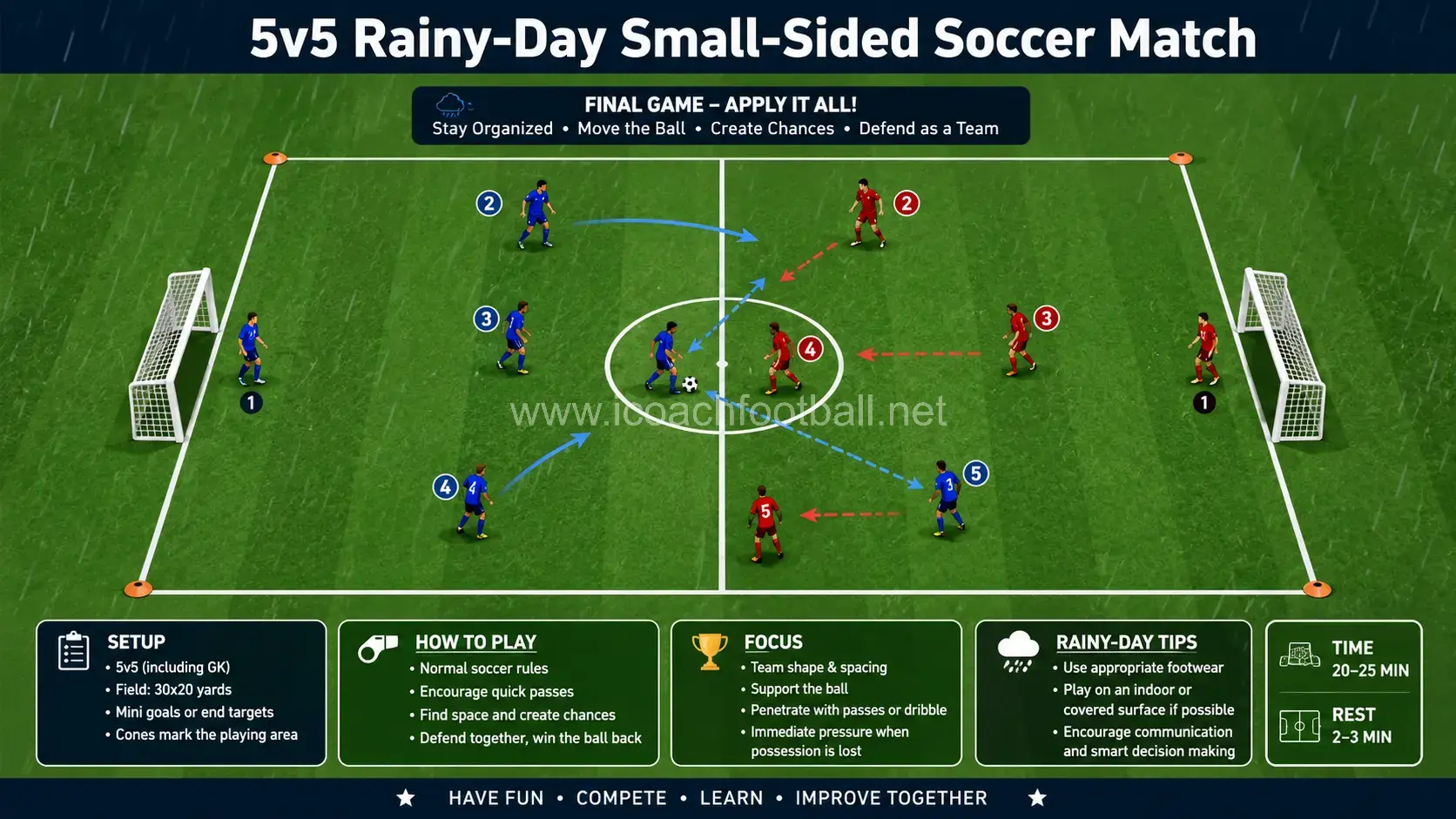
Drill 8: 5v5 Rainy-Day Small-Sided Match
Finish with a game that allows players to apply the session’s technical and tactical lessons. Keep the field compact, use quick restarts and monitor the surface throughout the match.
Setup
- Create a field measuring approximately 34 × 26 yards.
- Divide 10 players into two teams of five.
- Use mini goals, cone gates or end zones.
- Keep substitutes and spare equipment away from wet touchlines.
- Check the playing area again before the game begins.
- Stop if the surface deteriorates during play.
How to Play
- Play normal 5v5 using the selected scoring method.
- Use kick-ins or dribble-ins for quick touchline restarts.
- Do not allow sliding tackles.
- After a goal, the opposition restarts immediately.
- Play three rounds of approximately two minutes.
- Use the breaks to reassess the surface and player comfort.
- Keep the total score across all rounds.
Coach’s note: Allow the players to solve problems without stopping the game frequently. Use brief coaching interventions between rounds so players do not remain inactive in wet conditions.
Progressions: Award a bonus goal for five completed passes, reward a successful switch of play or give two points for scoring within six seconds of regaining possession.
Find more adaptable game-based activities in our small-sided soccer games library.
How to Adapt the Rainy-Day Session
When the field is becoming muddy: Reduce the number of sharp turns, move activities to a firmer area or finish the session early before the surface becomes unsafe.
When players are becoming cold: Reduce explanation time, use short active games and provide access to dry clothing and appropriate shelter.
When visibility is poor: Use brighter bibs, smaller groups and shorter passing distances. Stop when players cannot safely see one another.
When thunder or lightning occurs: Stop immediately and move everyone to safe shelter. Do not treat a pavilion, tent or isolated tree as adequate lightning protection.
Common Rainy-Day Coaching Mistakes
- Treating rain and lightning as the same condition: Light rain may allow training, while thunder and lightning require immediate shelter.
- Ignoring surface deterioration: Recheck the field during the session because safe grass can become waterlogged or unstable.
- Allowing sliding tackles: Wet conditions increase the distance and unpredictability of a slide.
- Using long explanations: Players cool quickly when standing still in wet clothing.
- Using repeated long-range shooting: Wet balls and surfaces make powerful strikes and rebounds less predictable.
- Leaving equipment near the touchline: Wet bags, bottles and loose clothing can become slipping or tripping hazards.
- Continuing because the session already started: Stop, shorten or relocate training whenever the conditions become unsafe.
Frequently Asked Questions
Can soccer players train in the rain?
Yes, when the field, visibility, temperature and weather conditions remain safe. Training should stop when thunder, lightning, flooding, dangerous wind or an unsafe surface develops.
What are the best soccer drills for rainy weather?
Useful options include close-control exercises, short passing activities, compact rondos, target-player games, line-ball games, controlled overloads and small-sided matches.
Should soccer practice stop when thunder is heard?
Yes. Stop outdoor activity immediately and move everyone to a substantial building or hard-topped vehicle. Do not resume until at least 30 minutes after the last thunder or lightning.
Is a wet soccer field safe?
A damp field may be usable, but standing water, deep mud, holes, damaged turf and unstable footing can make the surface unsafe. The coach should inspect and monitor the area.
Should sliding tackles be allowed during rainy practice?
No. Sliding tackles should be removed from a wet-weather training session because players may travel farther than expected and lose control of the challenge.
How can players stay warm during rainy training?
Keep players active, use short explanations, schedule brief working periods and ensure dry clothing and appropriate shelter are available before and after the session.
How long should a rainy-day soccer practice last?
A complete session can last approximately 60 minutes when conditions remain safe. Coaches should shorten or cancel training when players become cold or the surface deteriorates.
Continue the practice-plan series: Save this rainy-day session and compare it with our indoor soccer practice plan, small-space drills and practice without cones.