4 Progressive Drills to Coach Switching the Play Effectively
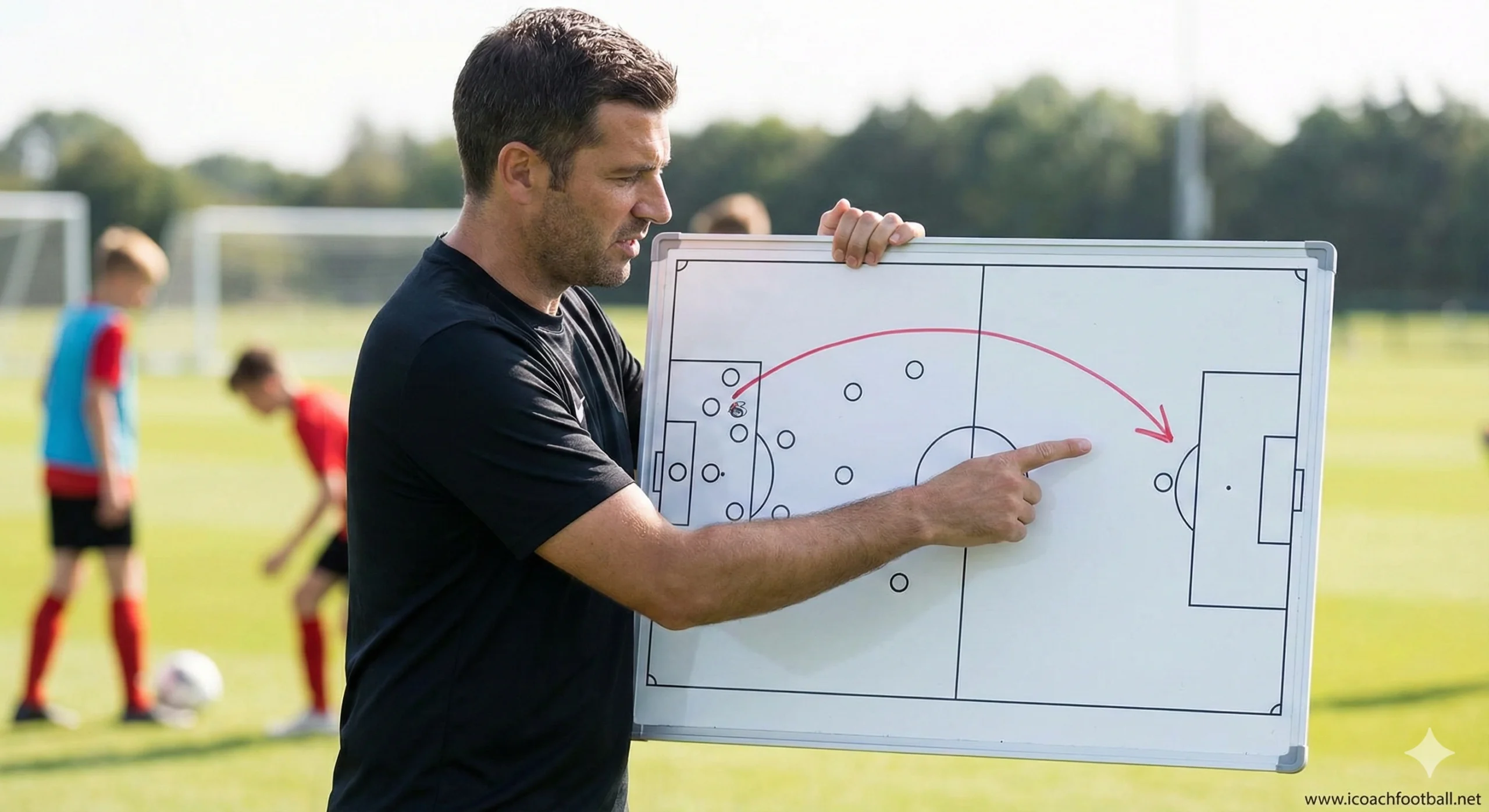
“Switching the play” (or attacking the weak side) is one of the most effective ways to disorganize a compact defense. The concept is simple: drag the opponent to one side of the pitch, then quickly transfer the ball to the other side where there is space.
However, coaching it requires more than just shouting “Switch it!” from the sidelines. Players need to understand the trigger (when to switch) and the technique (how to move the ball quickly).
This guide provides 4 progressive drills—from technical warm-ups to full-game scenarios—to teach your team how to switch the point of attack with speed and precision.
1. The “U-Shape” Passing Pattern (Technical Warm-Up)
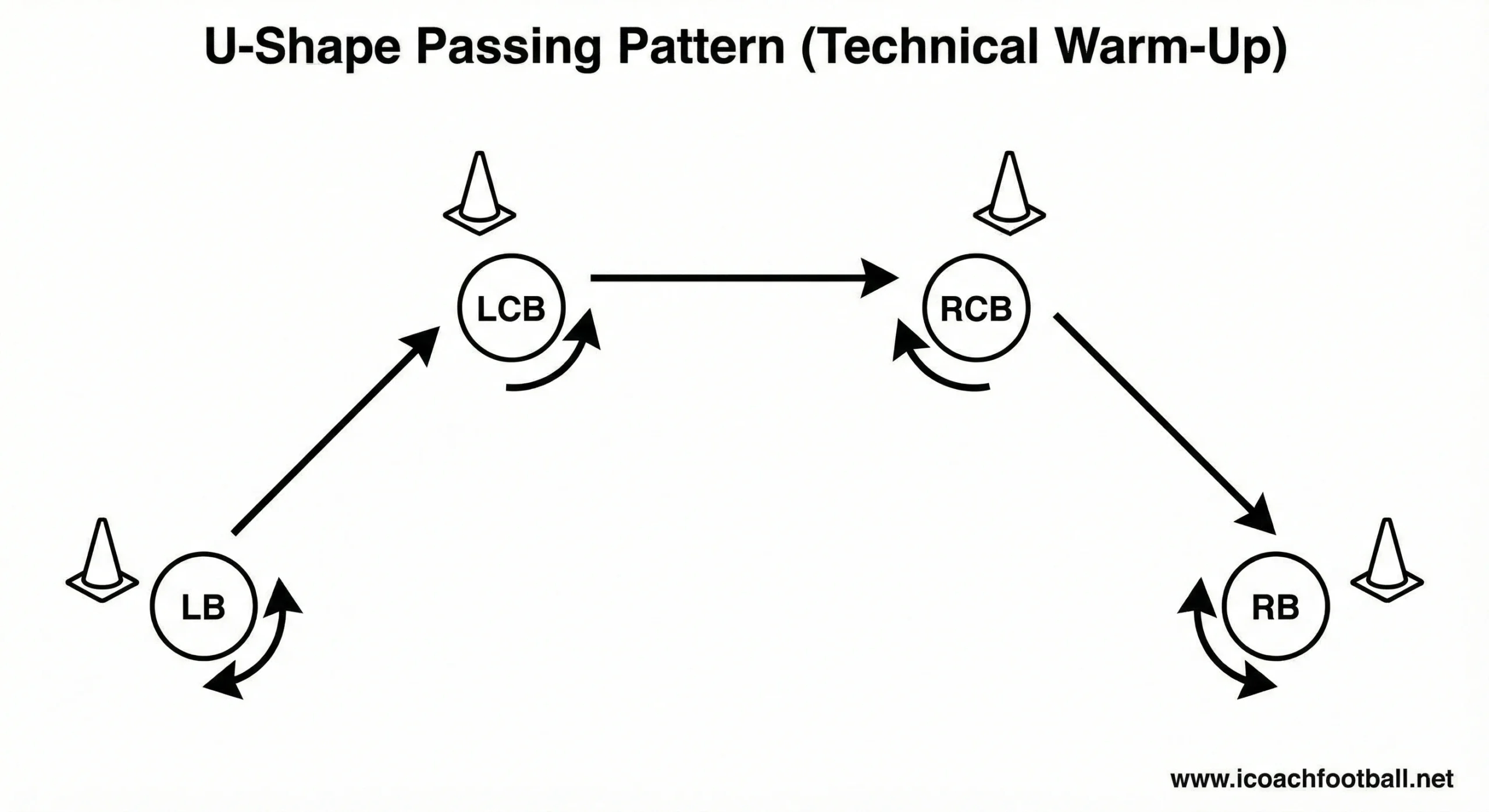
Before adding pressure, players must master the passing mechanics. This drill mimics the back-four circulation (LCB -> RCB -> RB).
Setup:
- Grid: 20×20 yards.
- Cones: 4 cones in a wide “U” shape (representing LB, LCB, RCB, RB).
- Players: 1 player at each cone.
Instructions:
- Ball starts at the “Left Back” cone.
- Pass to “Left Center Back” -> “Right Center Back” -> “Right Back”.
- The receiving player must open their body shape to see the next pass before the ball arrives (receive across the body).
- Progression: Add a second ball starting from the other side to increase cognitive load.
Coaching Point: The ball speed must be high. A slow switch allows the defense to shift. “Zip” the passes on the ground.
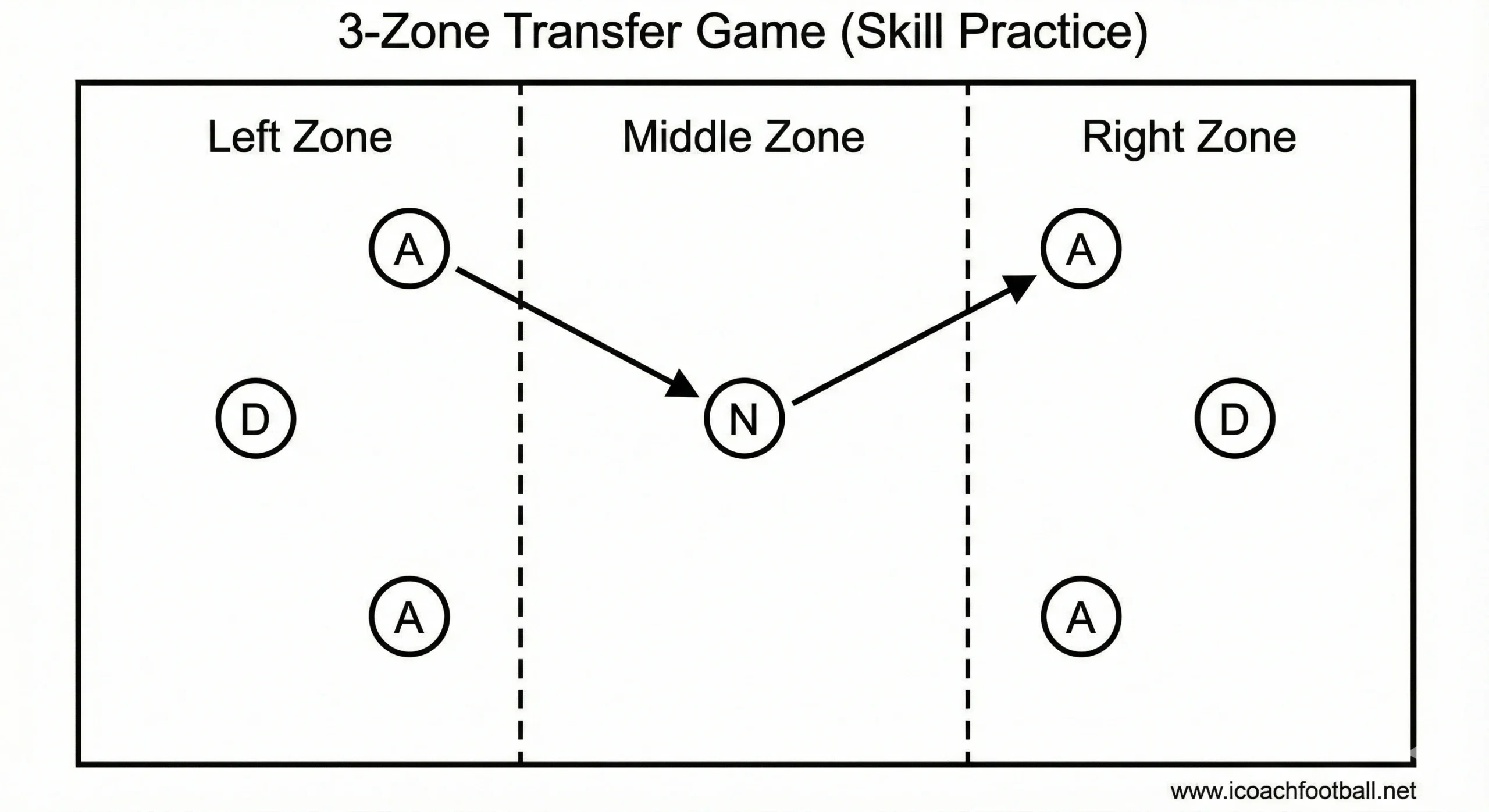
2. The 3-Zone Transfer Game (Skill Practice)
Now we add defenders to force decision-making. Can we play through the middle to switch, or do we need to go around?
Setup:
- Grid: 30×20 yards, divided into 3 vertical zones (Left, Middle, Right).
- Teams: 2 Attackers in Left Zone, 1 Neutral (Pivot) in Middle, 2 Attackers in Right Zone.
- Defenders: 2 Defenders who can move anywhere.
Instructions:
- Attackers start with possession in the Left Zone (3v2 overload with the Pivot).
- The goal is to complete 3 passes in the Left Zone, then transfer the ball to the Right Zone via the Neutral Pivot or a direct long pass.
- Once the ball is in the Right Zone, the Attackers there try to keep possession.
- Defenders chase the ball. If they win it, they score in mini-goals.
Coaching Point: The Pivot (CDM) is the link. They must constantly check their shoulder to “connect” the two sides.
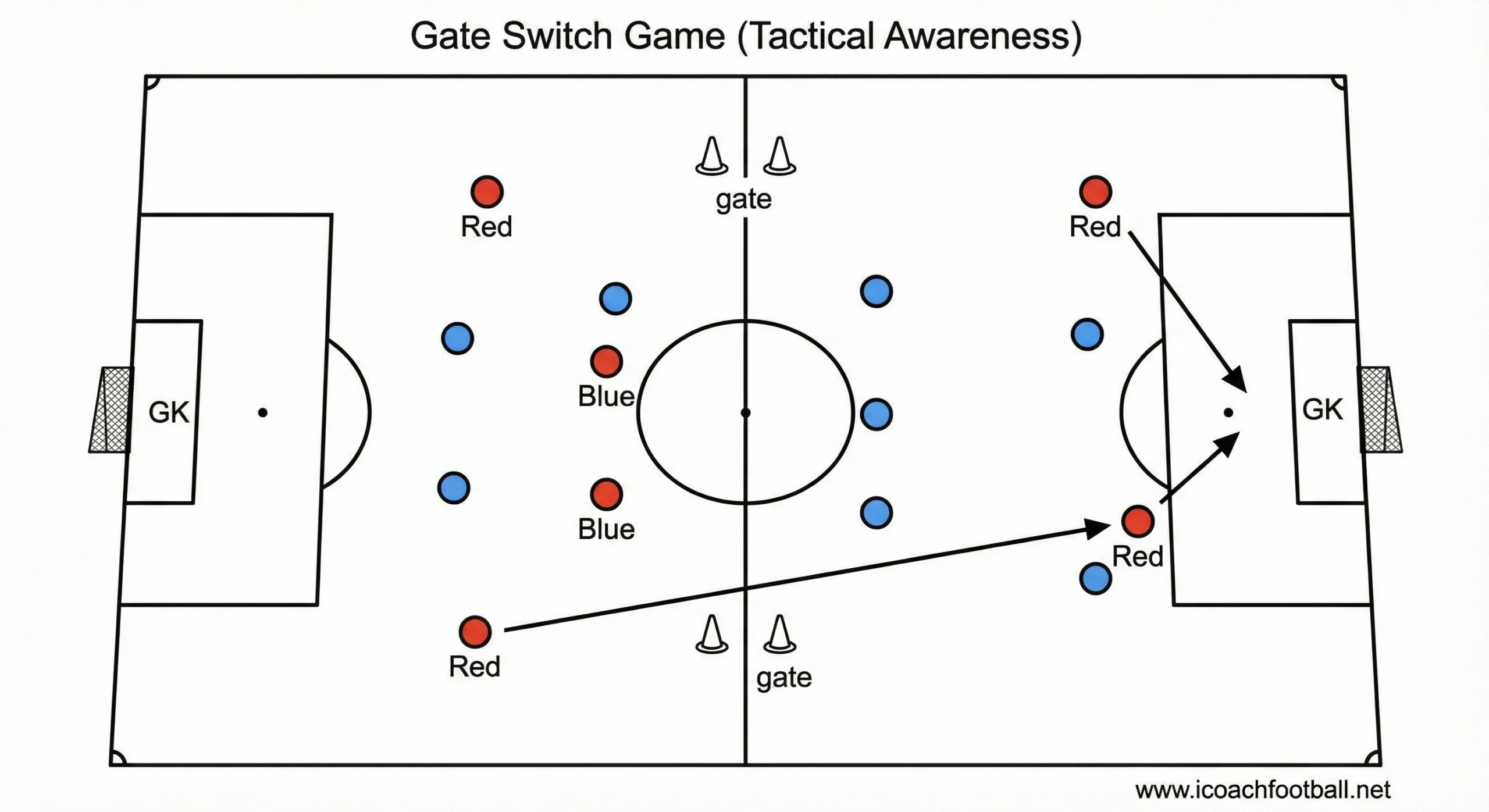
3. The “Gate Switch” Game (Tactical Awareness)
This drill rewards looking long and identifying space on the weak side.
Setup:
- Grid: 50×40 yards (Wide pitch).
- Goals: Two standard goals with GKs.
- Gates: Two wide gates (cones) placed on the touchlines at the halfway line.
- Format: 6v6 or 7v7.
Instructions:
- Normal game rules apply.
- Scoring Condition: A goal counts as 1 point normally. However, if a team passes the ball through either of the wide gates during the build-up before scoring, the goal counts as 3 points.
- This forces teams to look wide and switch the play before attacking the goal.
Coaching Point: Use the keyword “Overload to Isolate.” Draw the opponent to one gate, then quickly hit a long diagonal ball to the player at the opposite gate.
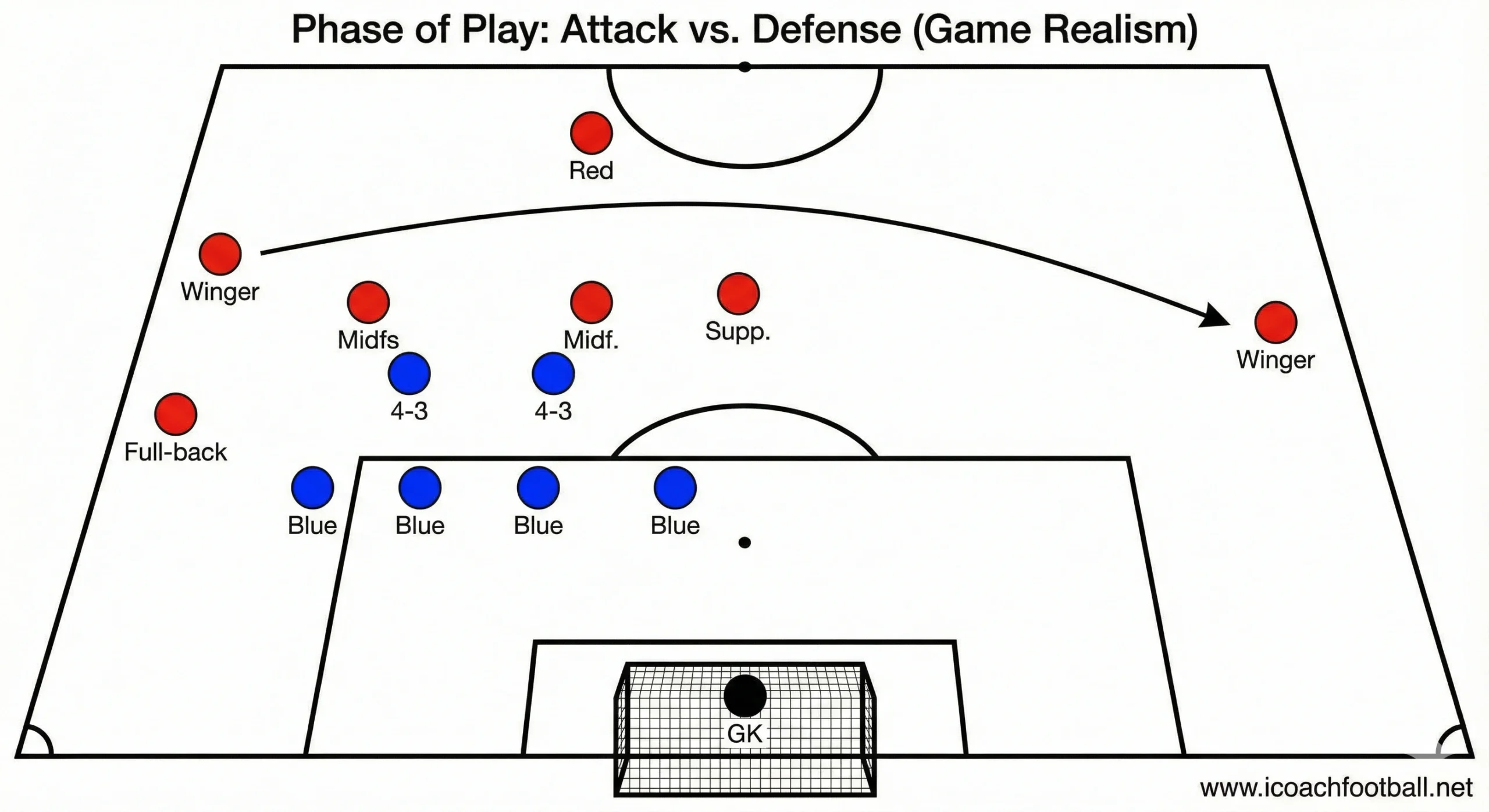
4. Phase of Play: Attack vs. Defense (Game Realism)
Finally, we train the switch in a realistic 8v7 scenario attacking a low block.
Setup:
- Area: Half pitch.
- Attackers (Red): Back 4 + 3 Midfielders + 1 Striker.
- Defenders (Blue): Back 4 + 3 Midfielders (defending the big goal).
Instructions:
- Play starts with the Red Center Back.
- The Blue defense shifts to the side of the ball to remain compact (Low Block).
- The Red team must circulate the ball quickly to move the Blue block.
- The Trigger: When the Red team sees the Blue defense is fully committed to one side, they must execute a rapid switch (via the #6 or a long switch from the CB) to attack the weak side full-back 1v1.
Summary: The 3 Rules of Switching
To switch play effectively, your players must follow these principles:
- Ball Speed: A slow pass kills the switch.
- Body Shape: Open up to see the whole field (scan the weak side).
- Patience: Don’t force it. Keep the ball on one side to attract the pressure before you switch.
- ➡️ Recommended: Improve your team’s passing accuracy for these drills with our Passing Drills Guide.
- ➡️ Next Step: Learn how to defend against these switches with our Defensive Shape Guide.
FAQ: Switching the Play
When should you switch the play?
You should switch when the opponent is “overloaded” on the ball side (e.g., they have 4 defenders shutting down your 2 attackers). This means there is huge space on the opposite wing.
What is the difference between “Circulation” and “Switching”?
Circulation is keeping the ball moving to find gaps. Switching is the deliberate, aggressive act of moving the ball from one touchline to the other to attack the weak side immediately.
What passes are used to switch play?
The Ping: A driven, lofted long ball (diagonal).
The Pivot: Quick short passes through the central midfielder (#6).
Around the Back: Passing through the CBs and GK (slower but safer).