11v11 Formations for U15: The Ultimate Transition Guide (4-3-3 & More)
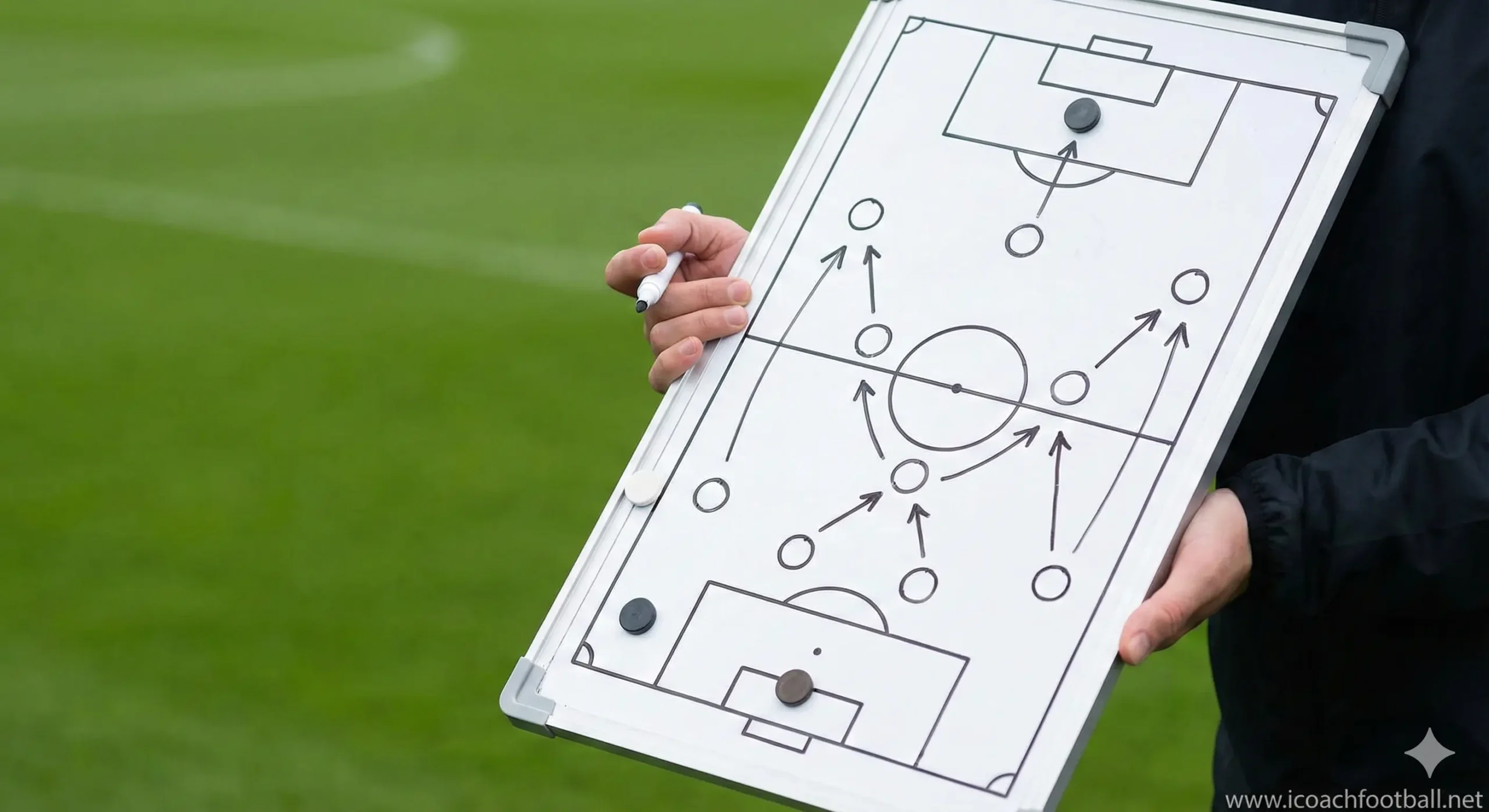
The jump from U12/U13 (9v9) to U14/U15 (11v11) is the biggest physical and tactical leap in youth football. Suddenly, the pitch is huge, the spaces are massive, and players often feel lost.
As a UEFA Pro Coach, my advice is simple: Do not choose a formation just to win games. Choose a formation that teaches your players how to play the game properly.
For 90% of U15 teams, the 4-3-3 is the gold standard for development. It teaches triangulation, spacing, and 1v1 dominance. This guide will break down the 4-3-3 and two effective alternatives for the 11v11 transition.
1. The Gold Standard: The 4-3-3 Formation
Why do academies like Barcelona, Ajax, and Man City use the 4-3-3 for youth? Because it covers the pitch evenly and creates natural triangles everywhere.
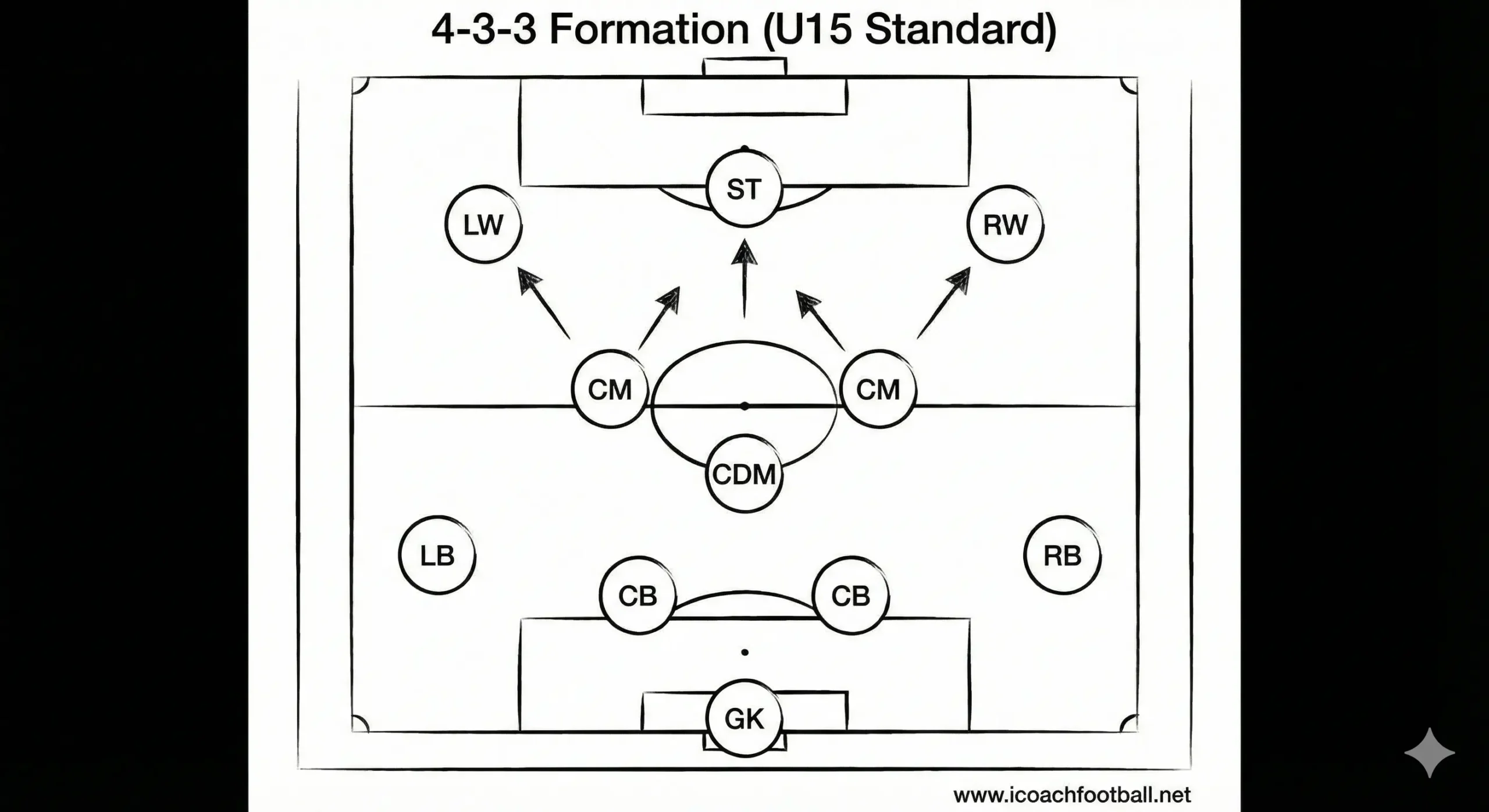
The Setup:
- Defense: 4 (RB, CB, CB, LB)
- Midfield: 3 (1 Defensive Pivot, 2 Attacking CMs)
- Attack: 3 (RW, ST, LW)
Why it fits U15s:
- Triangles: Every player has at least two passing options (left and right). This simplifies decision-making for young players under pressure.
- Wing Play: It encourages 1v1s on the wing, which is crucial for developing technical skills.
- High Pressing: The three forwards can easily press the opponent’s back line, teaching the modern style of “defense from the front.”
Tactical Tip: In possession, the full-backs push high, and the CDM drops deep (forming a diamond with the CBs/GK) to help build up play.
2. The Defensive Phase: The 4-1-4-1 Block
Young players often struggle to defend in a 4-3-3 because the wingers stay too high. The solution is teaching the 4-1-4-1 defensive shape.
How it works:
- When you lose the ball, the two wingers must drop back into the midfield line.
- The CDM sits in the “hole” between the defense and midfield to stop through-balls.
- The Result: You have a compact wall of 4 midfielders and 4 defenders.
Coaching Point: Shout “Shape!” or “Compact!” The wingers are the key—if they are lazy, the full-backs will get overloaded 2v1.
3. The “Solid” Alternative: The 4-2-3-1
If your U15 team is struggling defensively or getting overrun in the middle, the 4-2-3-1 provides more security.
The Setup:
- Defense: 4
- Midfield: 2 Defensive Midfielders (The “Double Pivot”), 3 Attacking Midfielders.
- Attack: 1 Striker.
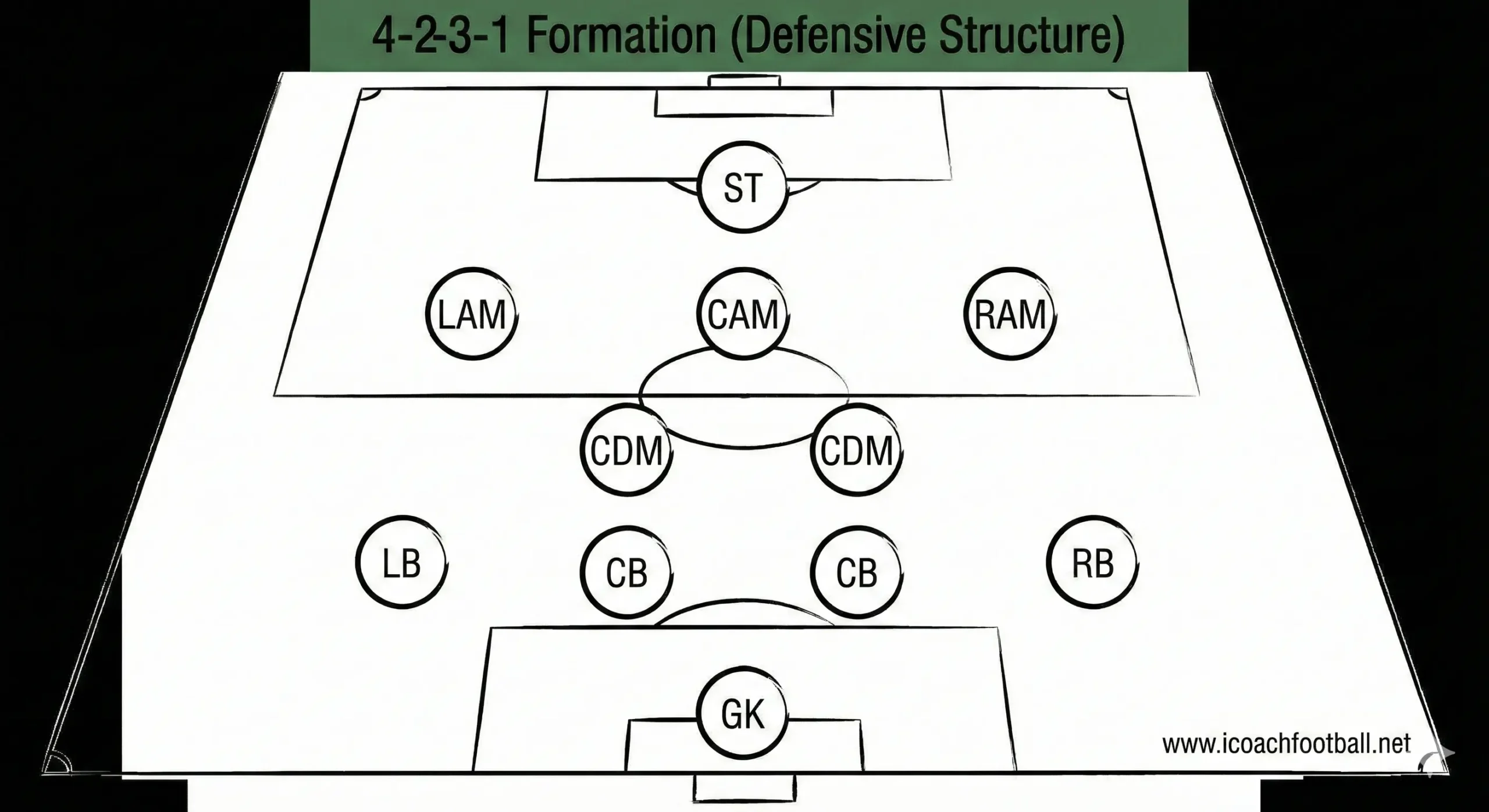
Why use it?
- Protection: Having two holding midfielders protects your center-backs better than the single pivot in a 4-3-3.
- The #10 Role: It allows you to play a creative “Number 10” in the hole behind the striker.
4. The “Modern” Alternative: The 3-5-2
This is becoming very trendy, but it is physically demanding. Use this only if you have athletic wing-backs.
The Setup:
- Defense: 3 Center Backs.
- Midfield: 5 (2 Wing-Backs, 3 Central Mids).
- Attack: 2 Strikers.
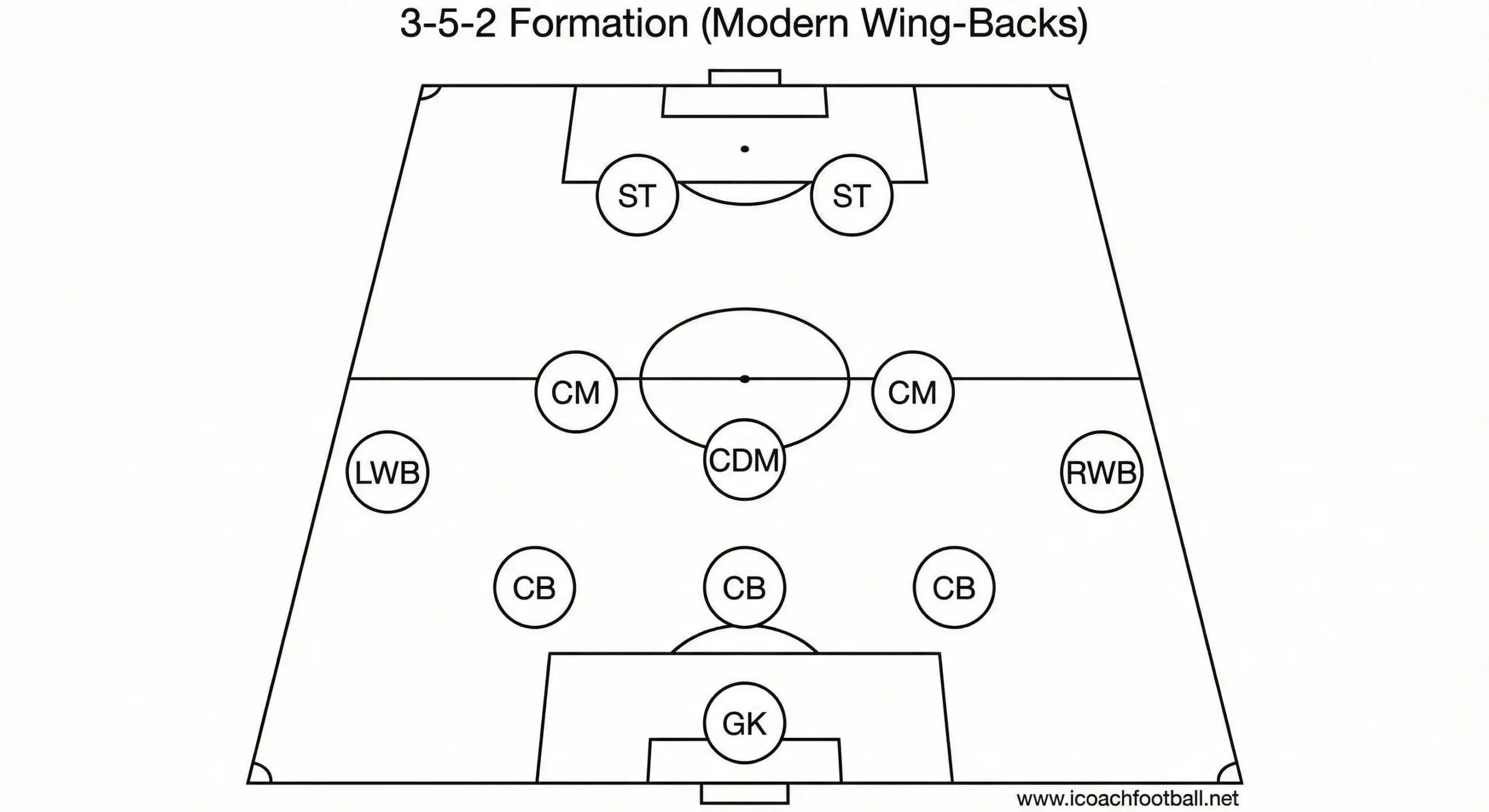
Why use it?
- Two Strikers: U15 defenders often panic when facing two strikers.
- Build-Up: Having 3 CBs makes it easier to play out from the back against one striker.
Summary: Which one should you pick?
- Choose 4-3-3 if: Your priority is player development, passing triangles, and teaching “Total Football.” (Recommended).
- Choose 4-2-3-1 if: You need defensive stability or have a brilliant #10 playmaker.
- Choose 3-5-2 if: You have athletic wing-backs and want to play with two strikers.
FAQ: U15 Formations
How long should a U15 game be?
Standard U15 matches are usually two halves of 35 or 40 minutes, depending on your country’s federation rules (e.g., US Youth Soccer vs. The FA).
Is 4-4-2 good for U15?
The flat 4-4-2 is simple, but it can be rigid. It often leads to “kick and rush” football. The 4-3-3 is generally better for teaching midfielders how to rotate and find space.
How do I teach offside to U15s?
Moving to the big field makes the offside trap harder. Teach your back four to move as a unit using the “rope” concept—if one steps up, they all step up.
How to Transition to 11v11 (3 Steps)
Step 1: Implement the 4-3-3. Establish a system based on triangles to help players find passing options on the larger pitch.
Step 2: Train the 4-1-4-1 Defensive Shape. Teach wingers to drop into midfield when possession is lost to create a compact block.
Step 3: Define the Single Pivot. Coach the defensive midfielder (CDM) to protect the back line and drop deep during build-up play.