Speed Work & Passing: A Dynamic Drill
Finding the balance between physical conditioning and technical ball work is a constant challenge for modern coaches. Running laps around the pitch builds endurance,…
The Roadmap to Player Development.
You cannot coach a 6-year-old the same way you coach an 18-year-old.
In this phase, tactical instructions are minimal. Our drills focus on Ball Mastery, 1v1 confidence, and basic motor skills (Agility, Balance, Coordination). We replace laps and lines with “Gamified” drills like Tag Games and Mazes to ensure every child gets maximum touches and maximum fun.
The Skill Acquisition Phase (U10 to U13). This is the “Golden Age” of learning. The nervous system is primed to learn complex movements, making it the perfect time to refine technique.
Our drills for this phase bridge the gap between individual skill and team play. We introduce Basic Tactics (width, depth, triangles) and Functional Skills (passing timing, first touch under pressure) without sacrificing creativity.
The Performance Phase (U14 to Pro). The focus shifts from “Learning to Play” to “Learning to Win.”
Training becomes tactically specific and physically demanding. In this section, you will find high-intensity Tactical Periodization drills that replicate specific match scenarios—such as breaking down a low block, pressing in the attacking third, or managing transitions. The goal is to develop autonomous decision-makers who can solve problems on the pitch.
Select your age group below to find session plans tailored specifically to their cognitive and physical needs.
No. In the Foundation Phase, players should rotate positions constantly. Locking a 7-year-old into a “Defender” role limits their ball contact and skill development. Encourage everyone to attack and defend.
The priority is “Technique under Pressure.” Players should master the core skills (passing, receiving, dribbling) in realistic game scenarios (2v1, 3v3) rather than static lines.
At this level, fitness should be integrated into the game model. Use High-Intensity Small Sided Games (e.g., 4v4) to build “Match Endurance” rather than isolating running. This improves tactical understanding and fitness simultaneously.
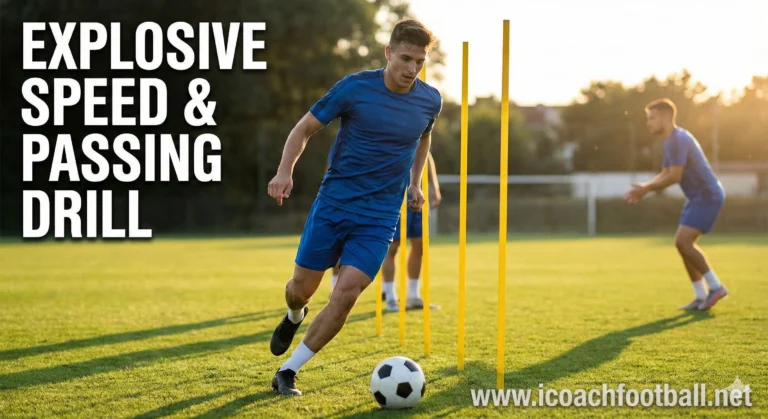
Finding the balance between physical conditioning and technical ball work is a constant challenge for modern coaches. Running laps around the pitch builds endurance,…

Breaking down a compact, organized defense is one of the hardest challenges in modern soccer. When the opposition parks the bus, relying on crosses…
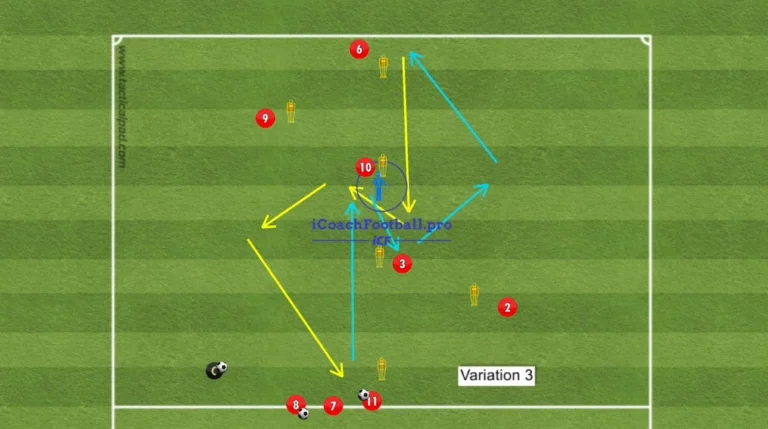
If you want to play like Man City or Barcelona, you must master the triangle. The Double Triangle Passing Pattern is one of the…

The “Square” is the most simple yet effective shape in football training. Used by elite academies like Ajax and Barcelona, Square Passing Drills (or…

Why invent new drills when you can train like the world’s best? Great coaching isn’t about guessing; it’s about applying proven methods. We have…
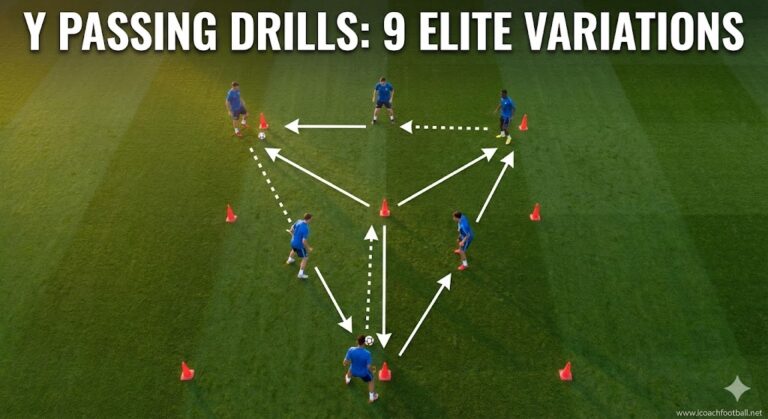
The “Y Passing Drills” is the Swiss Army Knife of midfield training. Used by elite academies like Benfica, Ajax etc. and now mostly in…
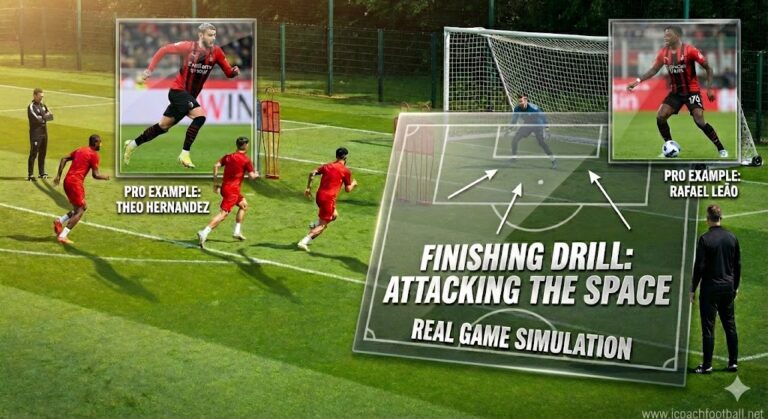
Scoring goals in training is easy. Scoring goals in a match is hard. Why? Because in a match, you are under pressure, the ball…
Passing is the heartbeat of football. It doesn’t matter how fast or strong your players are; if they cannot keep possession, they cannot control…

To develop elite players, you need elite training sessions. Whether you are coaching a youth academy or a senior squad, the blueprint for success…

It is 5:00 PM on a Tuesday. You have a bag of balls, a clipboard, and 12 kids looking at you. You are the…

If you are coaching beginners, you have one main job: Make them fall in love with the game. The quickest way to lose a…

The “Panic Kick” is the most frustrating habit in U9 soccer. Players receive the ball, feel pressure, and blindly boot it away. We often…