Football Heading Drills: “The Near-Post Run” (U12+)
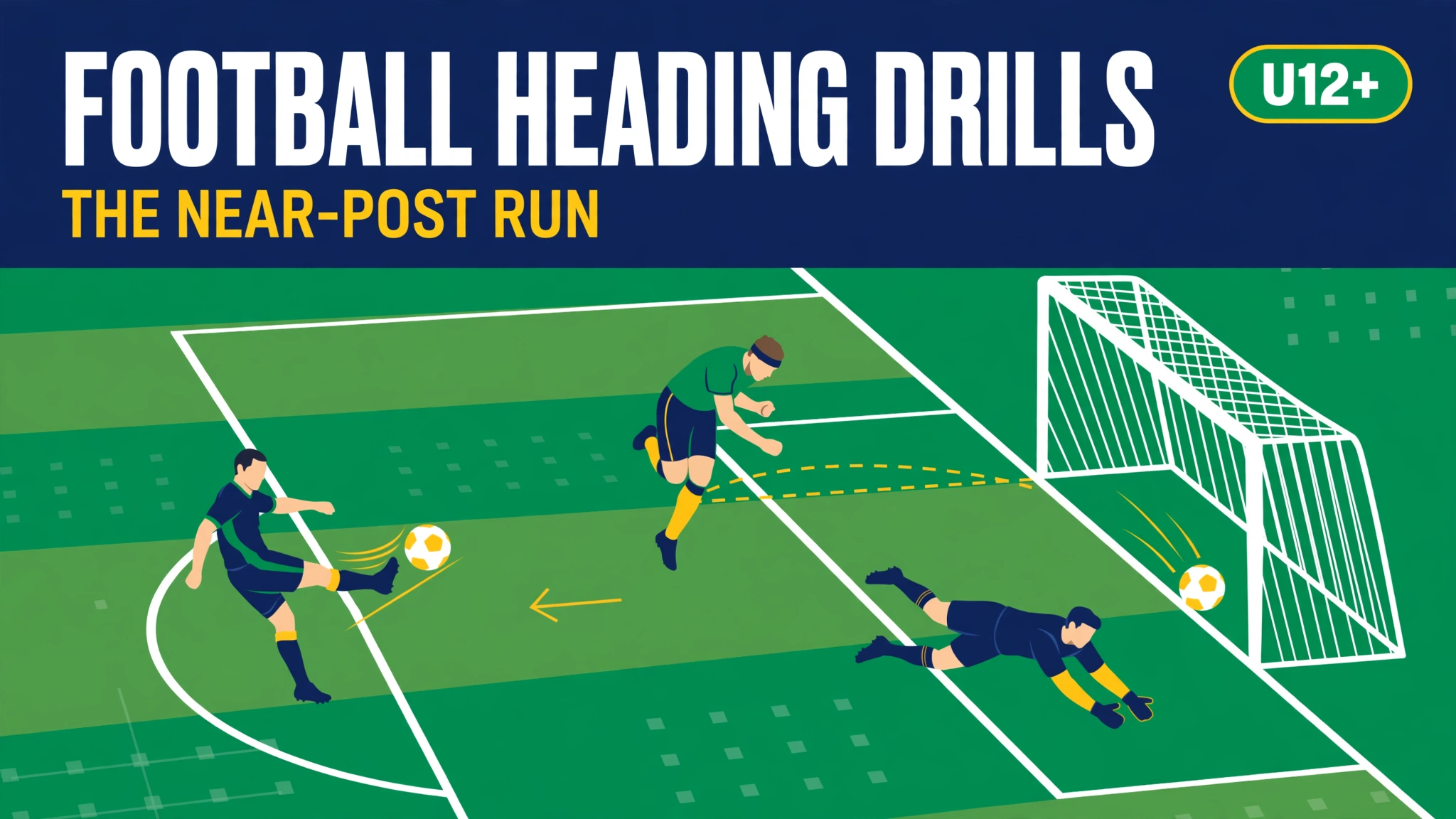
“The Flinch” is the most frustrating sight in youth football. Your winger delivers a perfect cross, your striker arrives at the near post — and turns their head away at the last moment. The ball loops harmlessly to the goalkeeper.
We usually call it a lack of bravery. But watch closely: most heading drills never teach players to attack the ball. Static “throw-head-catch” lines train them to let the ball hit them — the exact opposite of what a match header demands.
The fix? Teach the run before the header. Timing beats bravery every time.
“The Near-Post Run” is a crossing-and-finishing game that teaches players to time their arrival, attack the ball with the forehead, and direct it downward — the three ingredients of every good attacking header.
Table of Contents
Session Snapshot
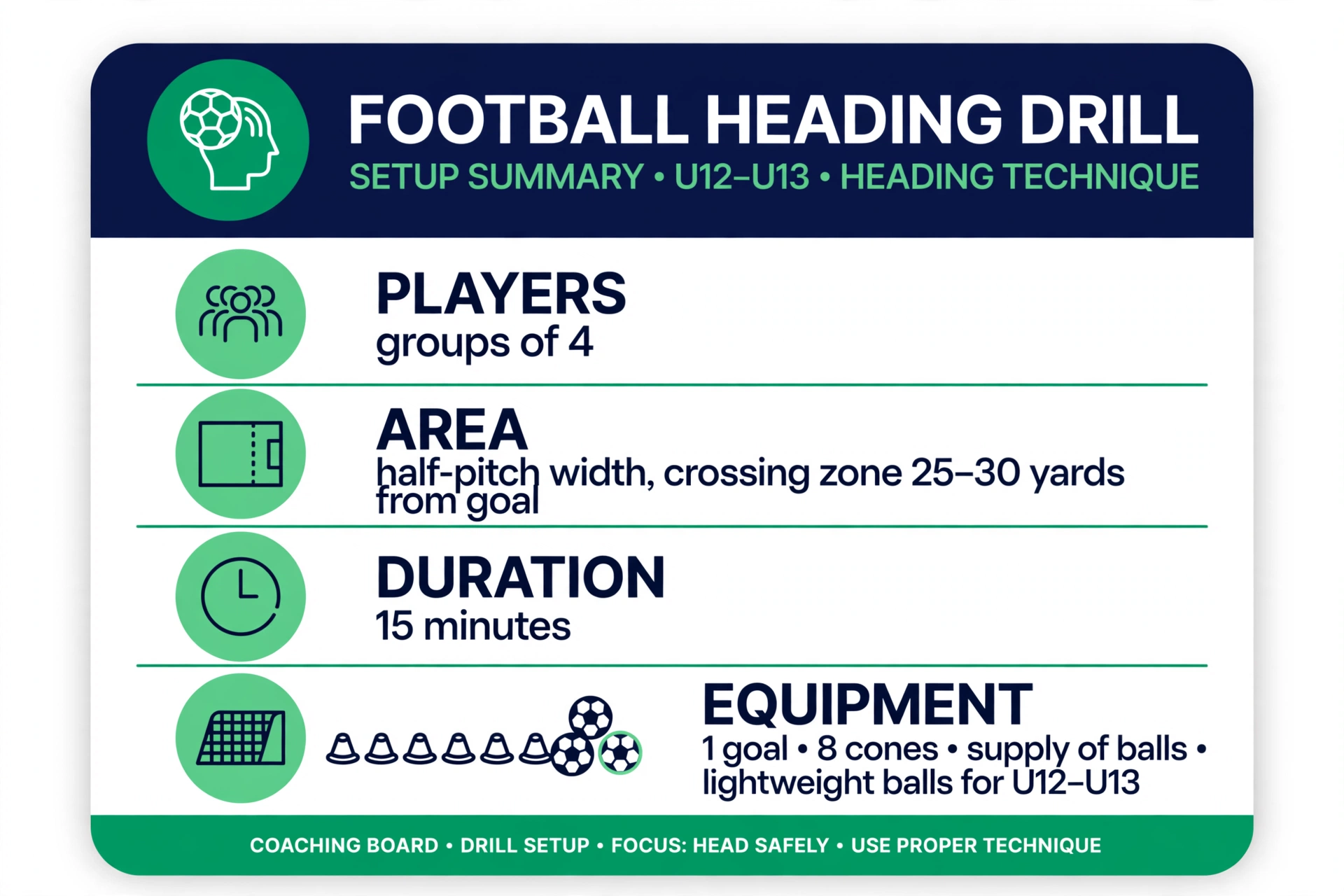
Players: groups of 4 (one crosser, one attacker, one passive defender, one goalkeeper) • Area: half-pitch width, crossing zone 25–30 yards from goal • Duration: 15 minutes • Equipment: 1 goal, 8 cones, supply of balls (lightweight balls for U12–U13) • Focus: attacking heading technique and timing, U12+
Safety first: Follow U.S. Soccer’s heading guidelines — no headers at U11 and under, and limit headers in practice for U12–U13. When introducing heading, use lightweight or foam balls and keep repetitions low. Players at U11 and under should work on chest and thigh control instead (see the age variations below). Heading rules exist for a reason: a 2024 study found the USSF youth header policy was associated with a 25.6% relative reduction in soccer-related concussions.
Why “Throw-Head-Catch” Lines Don’t Teach Match Heading
The classic drill: partners 5 yards apart, one throws, the other heads back.
The problem? It trains the wrong header.
- No timing: The ball arrives predictably. In a match, the header starts with the run.
- No bravery: Nothing is contested, so players never learn to attack the ball in traffic.
- No direction: Heading it “back” teaches players to cushion — but attacking headers must be directed downward, into the corners.
To score headers, players need a drill that rewards meeting the ball at full stretch and directing it down.
The Solution: “The Near-Post Run”
One crosser, one runner, one rule: meet the cross at the near post and head it down. Suddenly every header has intent.
Drill Setup
- Grid size: Half-pitch width. Place a full-size goal (or 2 mini-goals) with a goalkeeper; mark a crossing zone 25–30 yards from goal on the wing.
- Players: Groups of 4 — one crosser, one attacker, one passive defender, one goalkeeper. Rotate every 2 minutes.
- Equipment: 1 goal, 8 cones (crossing zone + start positions), supply of balls (use lightweight balls for U12–U13).
- Duration: 15 minutes.
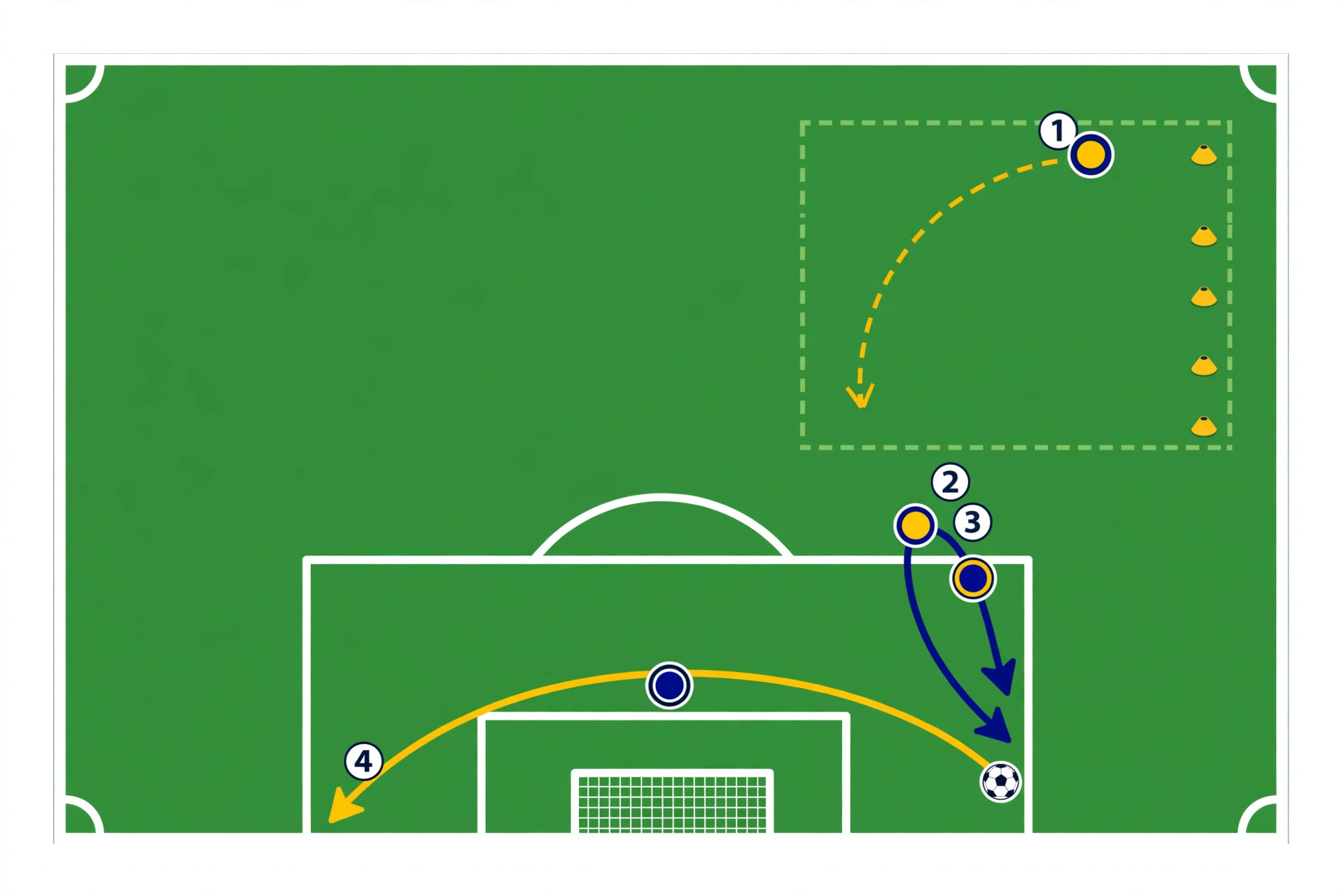
How it Works
- The cross: The crosser dribbles into the wide zone and delivers an early, driven cross toward the near post.
- The run: As the crosser approaches the zone, the attacker times a curved run to arrive at the near post as the ball arrives — not before, not after.
- The header: The attacker meets the ball in the air and heads it downward, aiming for the far corner.
- The pressure: The passive defender starts 2 yards behind and jogs toward the attacker — enough to force a real jump, not enough to contest dangerously. Rotate roles.
Why This Works
The curved run is the whole lesson: it creates separation and lets the attacker meet the ball moving toward goal, which is where heading power actually comes from. The near-post target keeps the header simple — one direction, one technique — while the passive defender adds just enough realism to kill the flinch.
Coaching Points: The Three Cheats
Don’t lecture between reps. Give attackers these three “cheats”:
1. “Attack the ball — don’t let it hit you”
The header happens 6 inches in front of the forehead. If the ball is hitting their face, they’re waiting too long. Move your feet to meet it.
2. “Forehead, eyes open”
Contact on the flat of the forehead, between the eyebrows and hairline — never the top of the head. Eyes stay open through contact so they can direct it. Research from Children’s Hospital of Philadelphia found frontal heading produces less angular head motion than oblique contact, so train the forehead-first technique.
3. “Head it down, aim low”
Nod the chin to the chest on contact to drive the ball downward. Keepers save chest-high headers all day; low headers into the corners score. Rehearse the finish with our finishing drills.
Pro Coach Tip: If a player keeps heading with the top of their head, the serve is too high. Drop the cross to chest height for a few reps — the correct contact point fixes itself when the ball arrives at the right height.
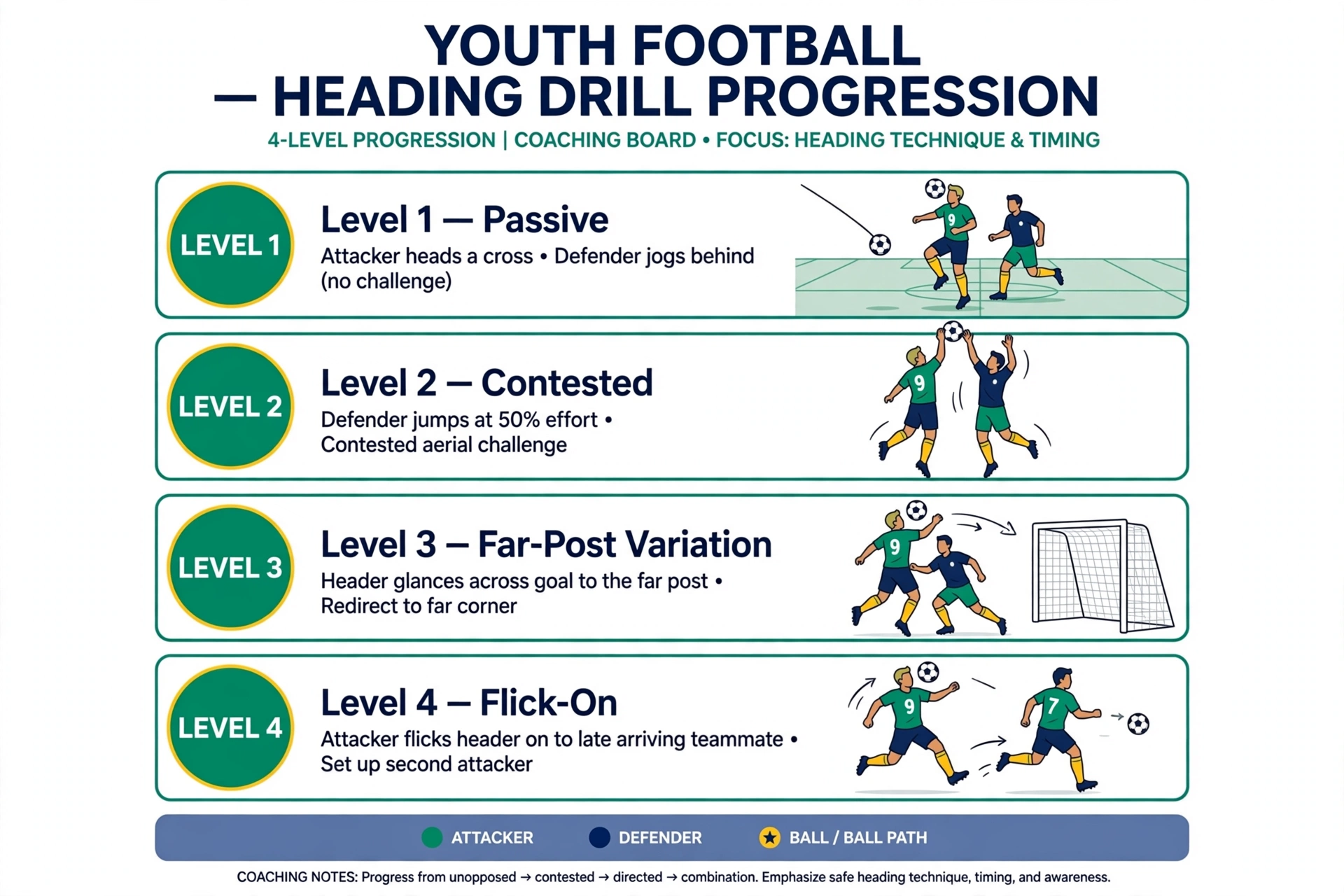
Progressions
- Level 2 – Contested: The defender goes from passive to 50% — they can jump but not barge. The attacker must now win the header, not just meet it.
- Level 3 – Far-post variation: Move the target to the far post. The attacker adjusts the run and glances the header across goal — a completely different skill.
- Level 4 – The flick-on: The attacker can’t score directly — they must flick the header on for a teammate arriving late. Trains directional control under pressure.
Age variations:
- U11 and under: No heading, per U.S. Soccer guidelines. Run the same drill but let attackers control with the chest or thigh and finish with the feet — the timing lesson transfers fully.
- U12–U13: As written, with lightweight balls and a hard cap on repetitions (2–3 sets max). Technique over volume.
- U14+: Full version with regulation balls and the contested progression.
Conclusion
If your players flinch at crosses, stop running static heading lines. The Near-Post Run teaches the two things that actually produce headed goals: arriving on time and attacking the ball downward.
Add it to the end of your next crossing session — 15 minutes is enough to change the habit.
Next Step: Headers start with crosses, so pair this with The Wide Channel Game to train the delivery — and use our 5 Soccer Scanning Drills to teach attackers to time their runs by reading the crosser’s body shape.
Frequently Asked Questions: Heading in Youth Football