Speed Work & Passing: A Dynamic Drill
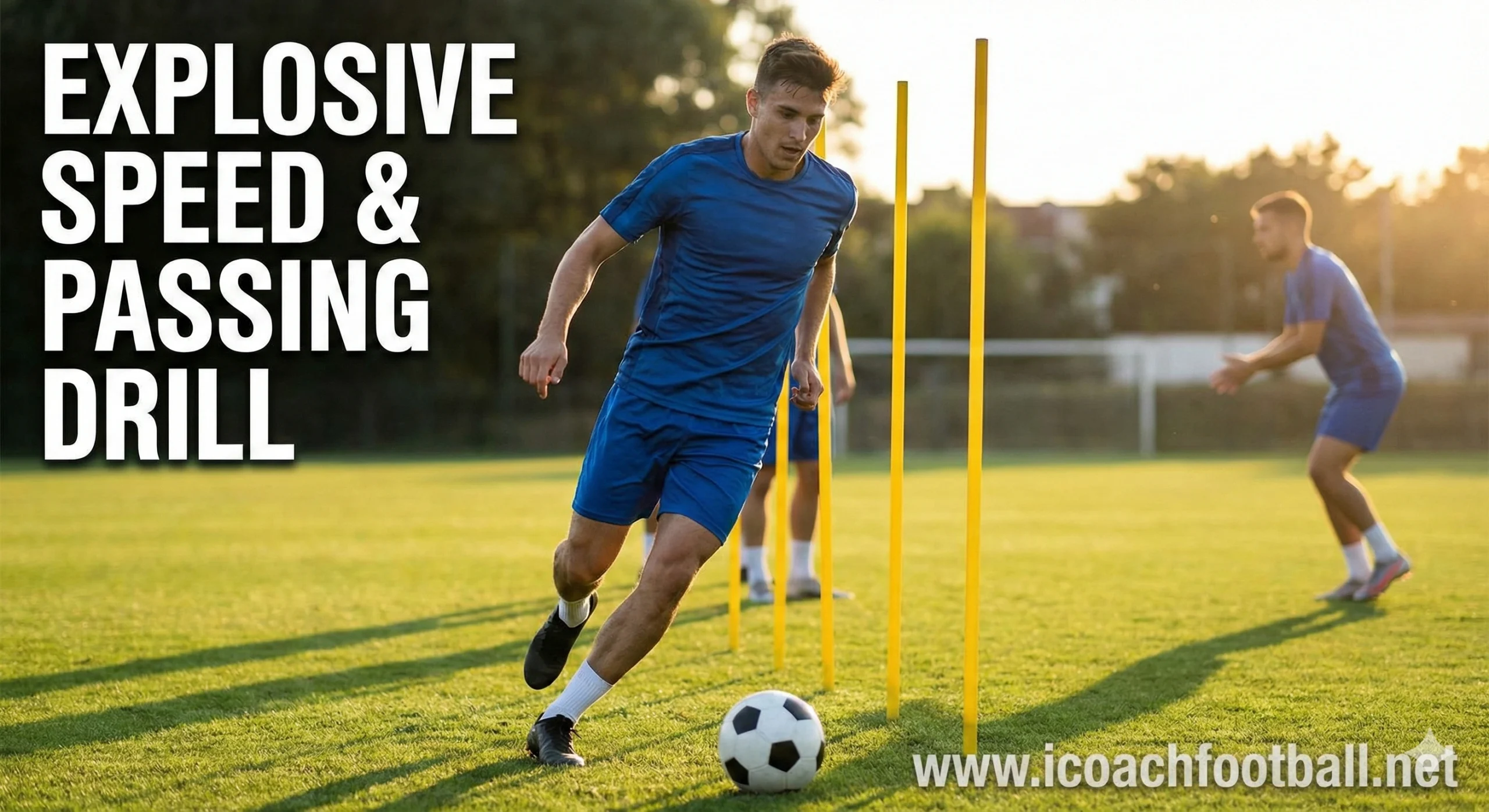
Finding the balance between physical conditioning and technical ball work is a constant challenge for modern coaches. Running laps around the pitch builds endurance, but it does not translate to the explosive, split-second actions required in a real match. To train match-realistic fitness, you need a soccer speed and passing drill that forces players to execute technical actions while physically fatigued.
This dynamic training session combines agility work, explosive sprinting, and crisp one-touch passing. By forcing players to process information and execute passes immediately after a physical exertion, you are simulating the exact demands of a 90-minute match.
📋 Drill Profile: At a Glance
Before diving into the setup, here is a quick snapshot of how and when to use this exercise in your training session:
- When to Use: Early in the main session (right after the dynamic warm-up). Players need to be fresh to hit maximum sprint speeds without risking muscle strain.
- Duration: 15 to 20 minutes total (including rest intervals).
- Intensity Level: High / Anaerobic.
- Target Age Group: U12 to Professional (Adjust sprint distances based on age).
- Primary Focus: Explosive acceleration, agility, and one-touch passing accuracy under fatigue.
(Need a proper warm-up before running this? Check out our Warm Up Exercises to get their muscles firing first.)
Watch the Drill in Action
Seeing the exact intensity and rhythm of this exercise is critical. Watch the full breakdown of this speed and passing combination below to see the required speed of play.
Why Combine Speed Work and Passing?
In the modern game, players rarely make a pass while standing completely still. They are constantly accelerating into space, decelerating to receive the ball, and exploding past defenders. Separating fitness from technical training wastes valuable practice time. Integrating agility poles, speed rings, and sprinting into a passing circuit trains the central nervous system to maintain technical precision even when the heart rate spikes.
Drill Setup & Essential Tools
This soccer speed and passing drill requires a precise setup to allow players to hit top sprinting speeds. Proper spacing is essential to replicate game-like physical exertion, similar to the high-intensity interval training (HIIT) protocols utilized by top professional academies.

Tools & Equipment Needed:
- 6 to 8 marker cones.
- 3 to 4 agility poles (or speed hurdles/ladders).
- A large supply of soccer balls (to keep the drill flowing without stoppage).
- 2 different colored training bibs (for the progressions).
Grid Dimensions & Setup:
- Set up a starting cone for the work line.
- Place the agility poles 2 yards apart, starting 5 yards in front of the start cone.
- Place the central receiving cone 10 yards away from the last agility pole (this is the sprint zone).
- Place the final target cone 5 yards beyond the central cone.
- Divide the players evenly: half in the working line, half as servers with the balls.
Step-by-Step Execution
The goal of this sequence is explosive movement followed by immediate technical control. Do not allow players to jog through the agility section.
- The Agility Work: Player A starts at the first cone and performs rapid footwork through the agility poles (e.g., side-steps, high knees, or slalom runs).
- The Acceleration: Immediately upon exiting the final pole, Player A triggers a 10-yard explosive sprint toward the central receiving cone.
- The Pass: As Player A arrives at the central cone, Player B (the server) plays a firm, grounded pass into Player A’s feet.
- The Technical Action: Player A plays a crisp, one-touch wall pass back to Player B.
- The Final Sprint: Player A immediately turns and completes a final 5-yard sprint to the end cone.
- Rotation: Player A takes Player B’s position as the server, and Player B jogs to the back of the starting line for their active recovery.
Drill Progressions (How to Make it Harder)
Once your players have mastered the basic rhythm, introduce these variations to challenge their cognitive reaction time and aerial control.
Variation 1: The Aerial Control Finish
Instead of a simple wall pass, challenge the player’s first touch out of the air.
- The Change: When Player A finishes the sprint, Player B serves a lofted ball or a firm bounce pass.
- The Execution: Player A must control the ball out of the air using their chest, thigh, or instep, returning it to the server before it hits the ground twice.
- The Benefit: Mimics receiving a difficult long ball while recovering from a high-speed run.
Variation 2: Visual Reaction Passing
Force the sprinting player to look up and make a split-second decision while moving at full speed.
- The Change: Place two servers (Player B and Player C) at the end of the sprint, each wearing a different colored training bib.
- The Execution: As Player A exits the agility poles, the coach yells out a color. Player A must quickly locate the server wearing that color, adjust their sprint angle, and play a one-touch pass with that specific server.
Key Coaching Points for the Manager
To get the maximum physical and technical output from this session, demand high standards throughout the circuit:
- Maximum Intensity: The speed work must be done at 100% effort. If players pace themselves, the drill loses its anaerobic conditioning value.
- Lock the Ankle: When making the pass after the sprint, players will naturally become sloppy due to heavy legs. Enforce a locked ankle and a firm follow-through on every single pass.
- Work-to-Rest Ratio: Monitor the rest periods. Ensure there are enough players in the line so that each player gets 30-40 seconds of active recovery before their next sprint.
Looking for more ways to improve your team’s ball movement? Browse our complete library of Passing Drills for variations suited for all ages and skill levels!
Frequently Asked Questions (FAQ)
How do you improve speed and agility in soccer?
Improving speed and agility requires explosive, short-distance exercises that mimic the movements of a match. Utilizing agility poles, hurdles, and reaction sprints trains the fast-twitch muscle fibers, while incorporating a ball ensures technical skills improve alongside physical fitness.
Can you combine fitness and passing drills?
Yes, combining fitness and passing is the most effective way to train soccer players. By integrating sprints and agility work into a technical passing circuit, coaches can simulate match-day fatigue and maximize the efficiency of their training sessions.
What is the best way to train one-touch passing?
The best way to train one-touch passing is to practice it while moving. Static passing drills do not translate to real games. Players must learn to adjust their feet, read the pace of the ball, and execute a one-touch pass while arriving at a space at high speed.
Get More High-Intensity Drills: Looking to push your team’s fitness to the next level? Join our community on Instagram for daily tactical breakdowns, or download our full season training plans today!