Hamstring Injury Prevention: 5 Essential Pre-Training Soccer Drills (UEFA Fitness Coach Guide)
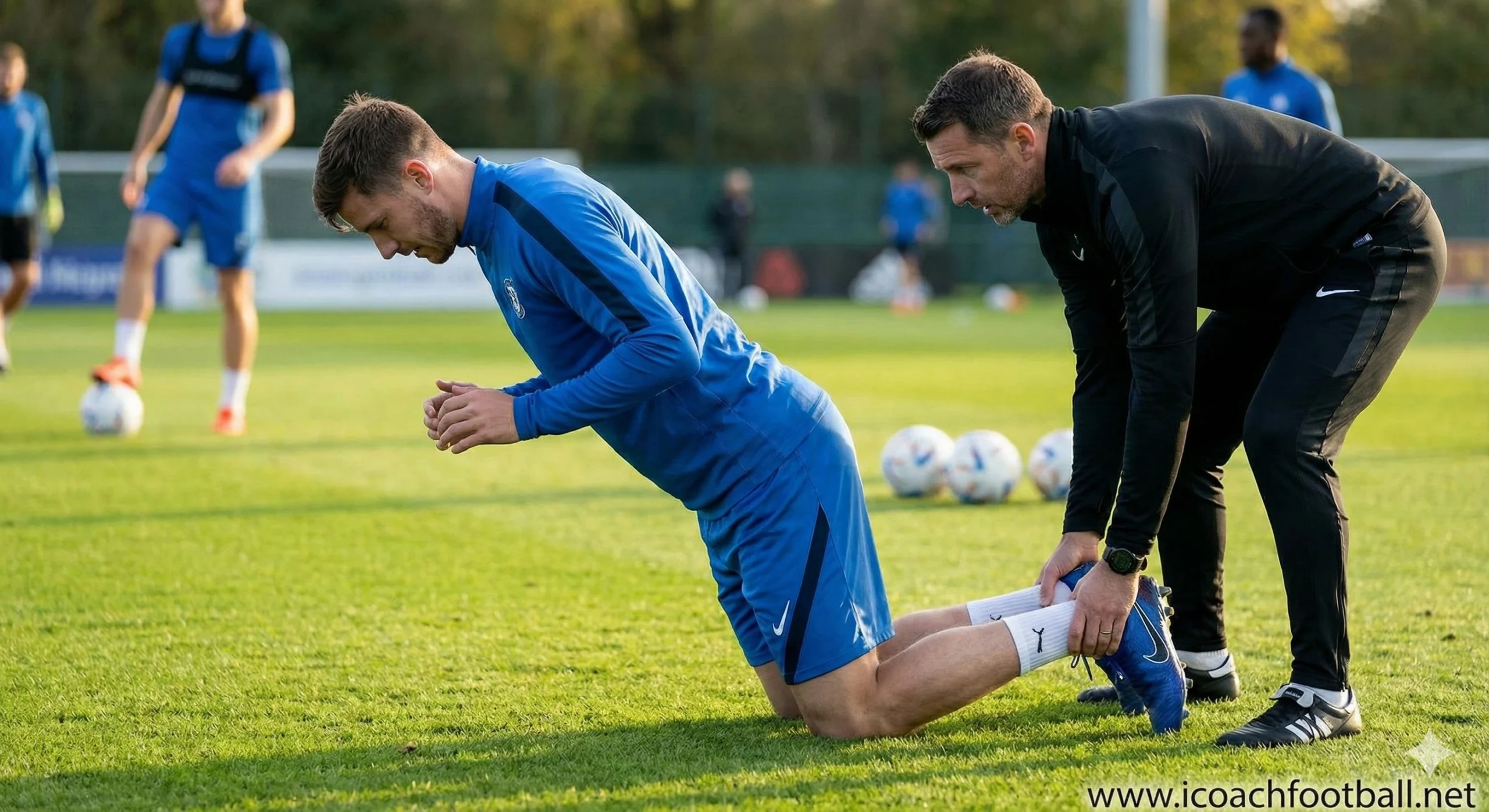
The hamstring strain is the single most common injury in modern soccer. It accounts for nearly 40% of all non-contact injuries. When a player pulls up grabbing the back of their thigh, it isn’t just bad luck—it is often a failure of preparation.
As a UEFA Fitness Coach, I teach that prevention is better than cure. Most hamstring injuries occur during the “eccentric” phase—when the muscle is lengthening under high tension (like slowing down a sprint or reaching for a ball).
To prevent this, we must “immunize” the muscle. This guide outlines 5 essential activation and strengthening drills that should be part of your weekly routine to bulletproof your players.
1. The Nordic Hamstring Curl (The “King” of Prevention)
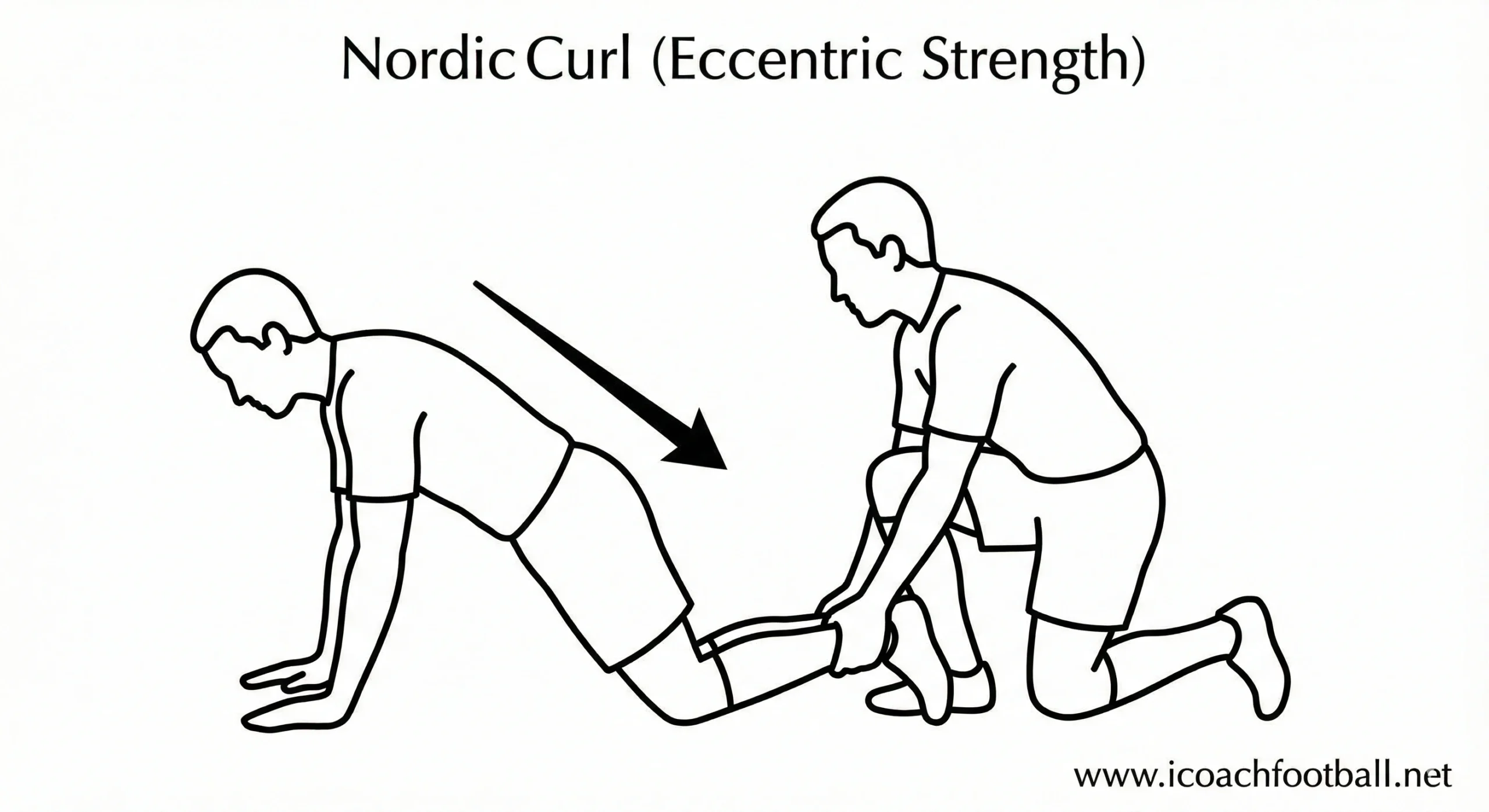
Research has shown that the Nordic Curl alone can reduce hamstring injuries by up to 51%. It focuses purely on eccentric strength (strengthening the muscle as it lengthens).
Setup:
- Players: Pairs (One working, one assisting).
- Equipment: None (or a soft pad for knees).
Instructions:
- Player A (Worker): Kneels on the ground, torso upright, hips locked forward (do not bend at the waist).
- Player B (Helper): Holds Player A’s ankles firmly to the ground.
- The Movement: Player A slowly lowers their chest toward the ground, resisting gravity with their hamstrings for as long as possible.
- The Catch: When they can no longer hold, they catch themselves with their hands in a push-up position.
- Return: Push back up explosively to the start position.
- Reps: Low volume! 3 sets of 4-6 reps.
UEFA Fitness Tip: Quality over quantity. If the hips break (bend), the rep doesn’t count. The straight line from knee to shoulder is non-negotiable.
2. Single-Leg Romanian Deadlift (RDL) (Balance & Stability)
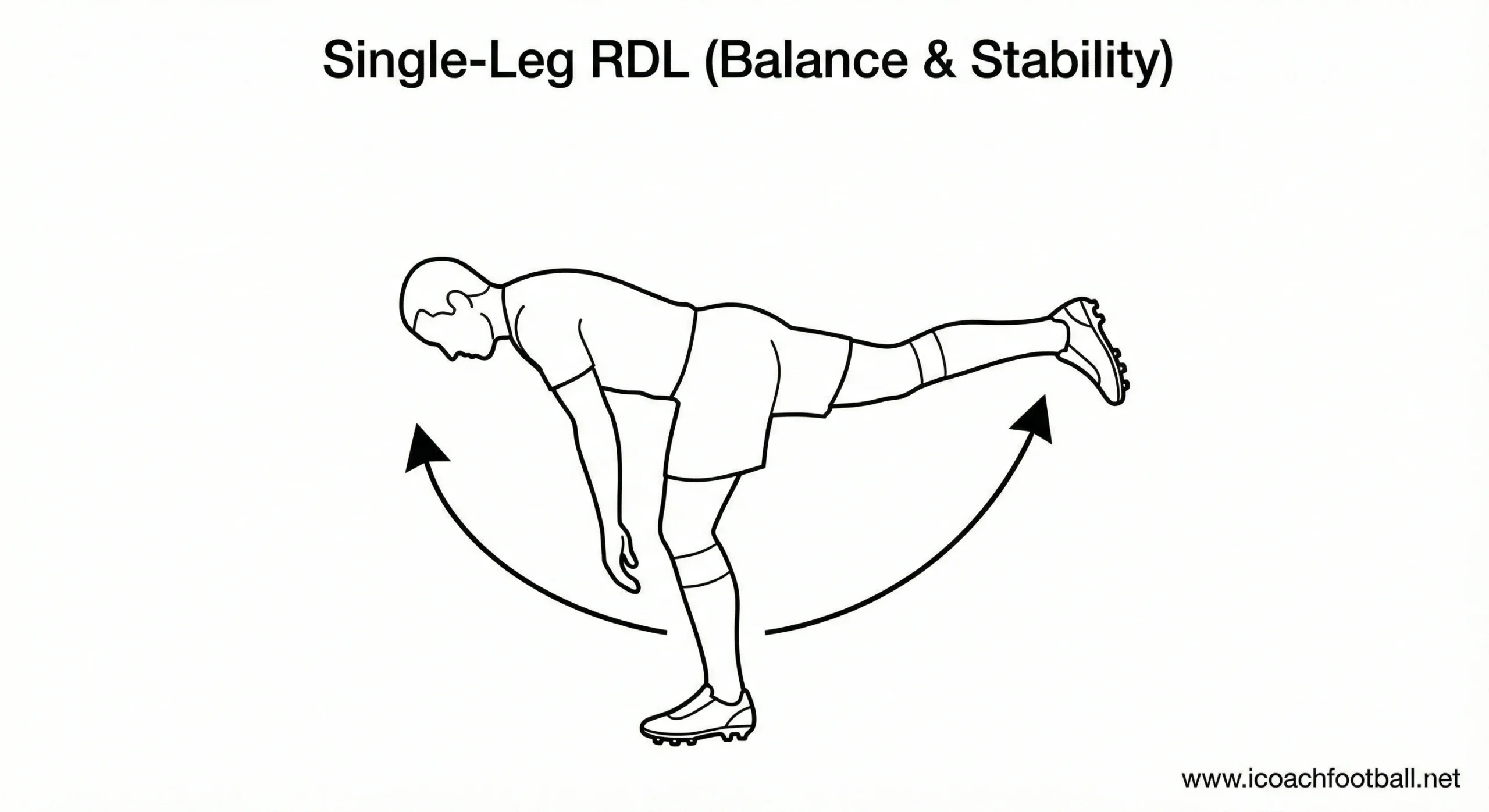
Soccer is played on one leg. This drill builds the “posterior chain” (glutes and hamstrings) while improving balance and knee stability.
Setup:
- Individual drill.
- Optional: Dumbbell or Kettlebell for advanced players.
Instructions:
- Stand on one leg (e.g., Right leg), knee slightly bent (soft knee).
- Hinge at the hips, extending the Left leg straight back while lowering the chest toward the ground.
- Your body should form a capital “T” shape.
- Keep the back flat and the hips square to the ground (don’t let the hip rotate open).
- Squeeze the Right glute/hamstring to pull yourself back up to standing.
Coaching Point: Imagine there is a glass of water on your lower back. Don’t spill it!
3. The “Askling” Glider (Lengthening Under Load)
Named after the famous hamstring researcher, this drill mimics the exact moment in a sprint stride where injuries happen.
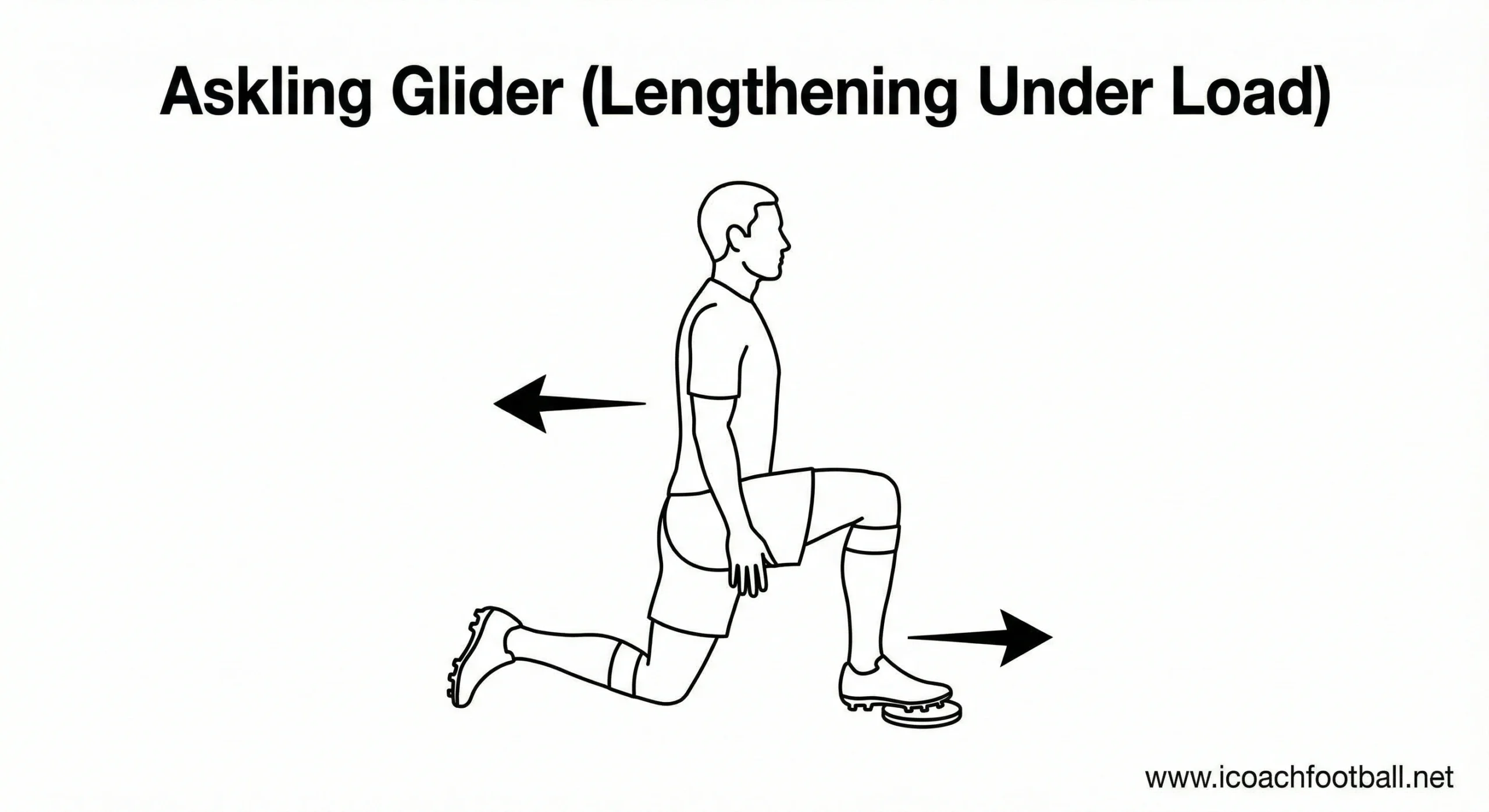
Setup:
- One “slider” disc (or a towel on a smooth floor/plastic bag on grass).
- Start in a split stance (lunge position).
Instructions:
- Place the front foot on the slider.
- Keep the back leg planted firmly.
- Slowly slide the front foot forward, lengthening the hamstring.
- Go as far as you can control, then pull the slider back using the heel.
- Keep the torso upright; do not lean forward.
(Diagram 3 will be generated below)
4. Dynamic “Frankenstein” Walks (Active Flexibility)
Static stretching before a game can actually weaken the muscle. Dynamic stretching prepares it for explosive movement.
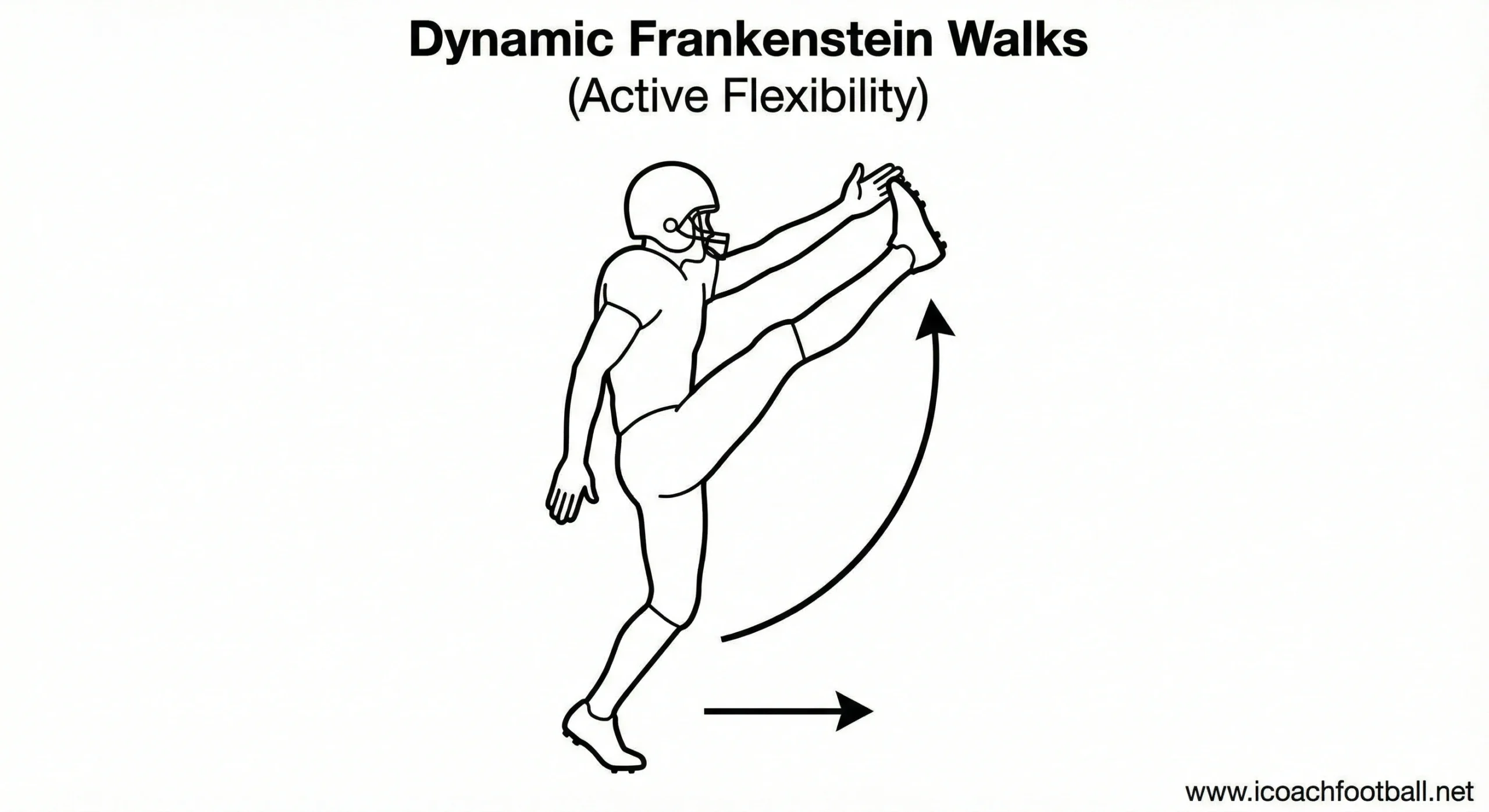
Setup:
- 10-yard lane.
Instructions:
- Walk forward, keeping the back straight.
- Kick one leg straight up in the air toward the opposite hand (Right Leg to Left Hand).
- Control the down-swing. Do not let the leg just drop; use the muscle to control it.
- Alternate legs with each step.
Coaching Point: Do not hunch the back to reach the toe. It is better to kick lower and keep the back straight.
5. The Long-Lever Bridge (Isometric Strength)
Isometric holds (holding a position) are excellent for tendon health and reducing pain in tired muscles.
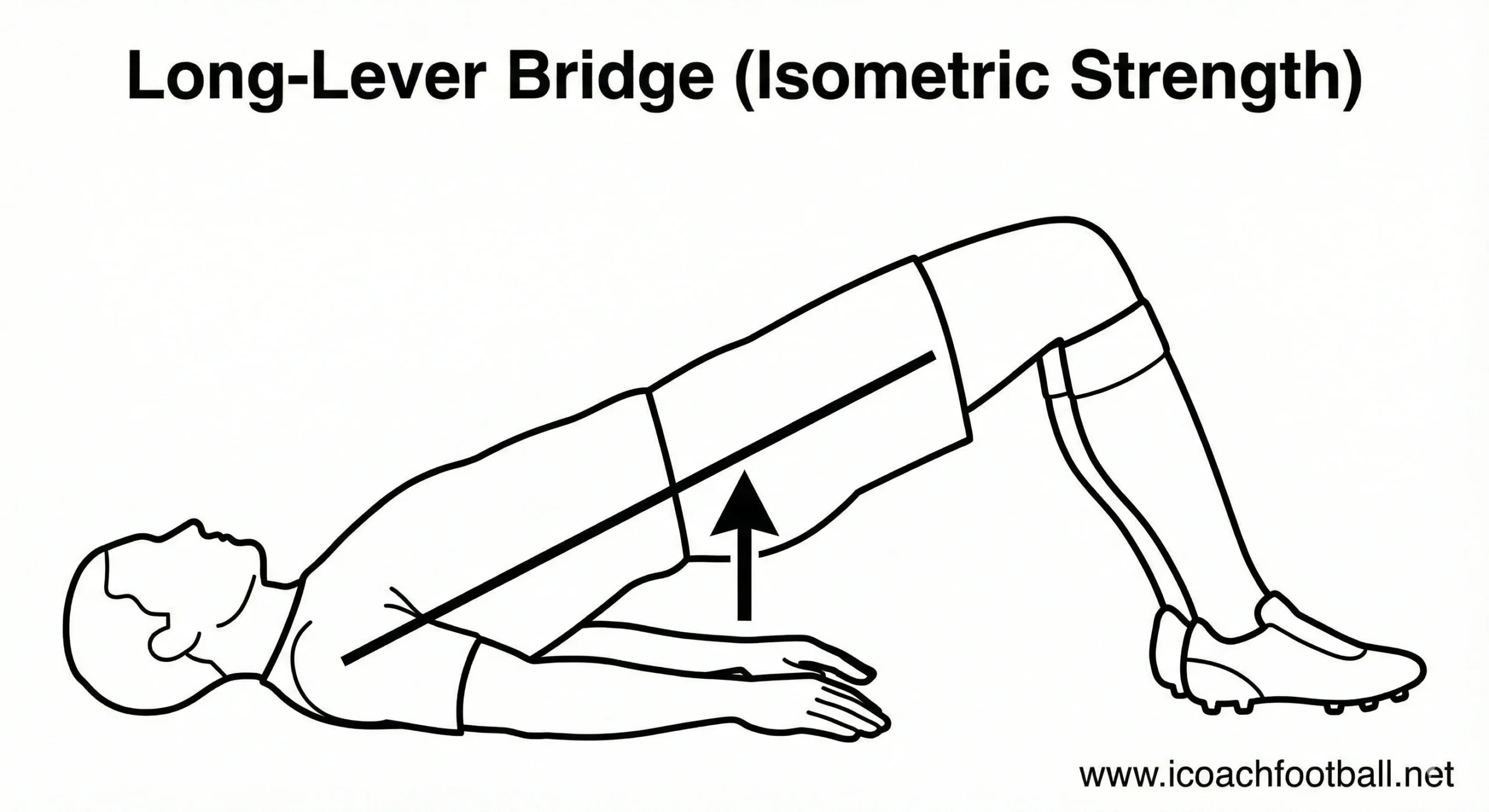
Setup:
- Lying on back.
- Knees bent slightly (heels further away than a normal bridge).
Instructions:
- Dig the heels into the ground.
- Lift the hips up until there is a straight line from shoulder to knee.
- Because the feet are further away (Long Lever), the load shifts from the glutes directly to the hamstrings.
- Hold for 30-45 seconds.
Summary: When to use these?
- Pre-Season: Perform Drills 1, 2, and 3 twice a week to build tissue tolerance.
- In-Season (Match Week):
- MD-3 (Strength Day): Nordics (Drill 1) and RDLs (Drill 2).
- MD-1 (Pre-Match): Dynamic Walks (Drill 4) and Isometrics (Drill 5) to activate without fatigue.
- Avoid: Do not do heavy Nordic curls (Drill 1) the day before a game. They cause soreness!
- ➡️ Next Step: Combine this with our 7 Cone Drills for Soccer Speed & Agility for a complete physical session.
- ➡️ Download: Get the PDF version of this injury prevention plan below.
FAQ: Hamstring Injuries
Why do my hamstrings keep getting tight?
“Tightness” is often a sensation of weakness. A weak muscle tightens up to protect itself. Stretching won’t fix it; strengthening (especially eccentric drills like the Nordic Curl) will.
Is static stretching bad before soccer?
Generally, yes. Holding a static stretch for 30+ seconds can reduce the explosive power of the muscle for up to an hour. Stick to dynamic stretching (Drill 4) before playing, and static stretching after the game.
Can hydration prevent hamstring strains?
Yes. Dehydration leads to muscle fatigue, and a fatigued muscle loses its ability to absorb energy, leading to tears. ensure players drink water during the session, not just before.
Title: 5 Drills to Bulletproof Soccer Hamstrings
Step 1: The Nordic Curl. Partner-assisted drill focusing on eccentric strength to resist gravity.
Step 2: Single-Leg RDL. Unilateral hinge movement to improve balance and posterior chain stability.
Step 3: The Askling Glider. Sliding lunge movement that strengthens the muscle at long lengths.
Step 4: Frankenstein Walks. Dynamic active stretching to prepare the muscle for explosive range of motion.
Step 5: Long-Lever Bridge. Isometric hold with extended legs to strengthen the tendons and reduce fatigue.