The Perfect First Soccer Practice: A Step-by-Step Plan for New Coaches
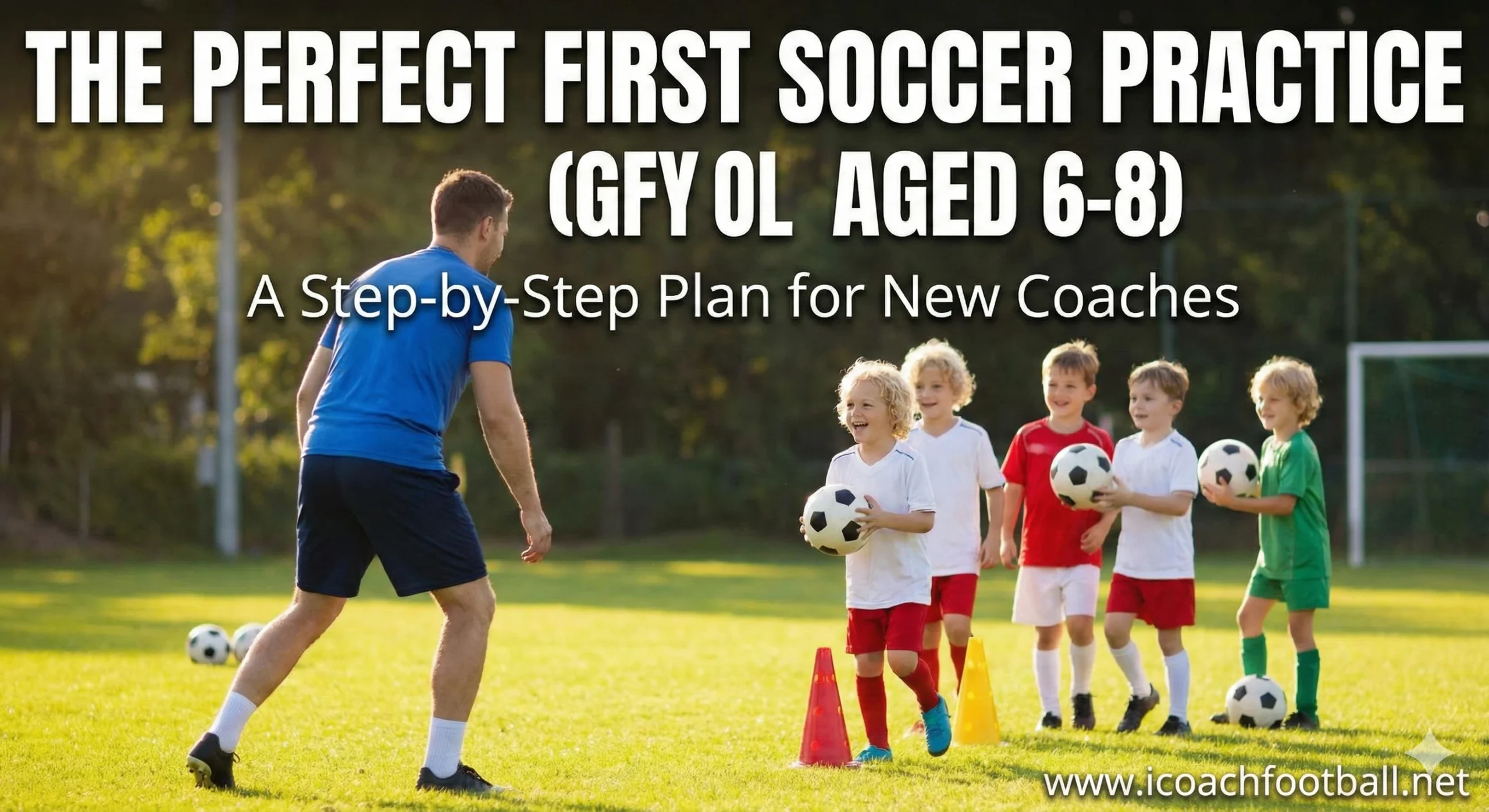
It is 5:00 PM on a Tuesday. You have a bag of balls, a clipboard, and 12 kids looking at you. You are the coach. Now what?
If you are nervous about your first soccer practice, you are not alone. Most volunteer coaches start exactly where you are. The secret to a perfect first session isn’t knowing complex drills or tactical formations—it is keeping them moving and keeping it fun.
This guide gives you a fail-proof 60-Minute Session Plan that works for almost any age group (U6 to U10). You don’t need to improvise; just follow the script.
The Golden Rules for Day One
Before we get to the drills, remember these three rules:
- No Lines, No Laps, No Lectures. Kids hate standing in lines. If they are standing still, they are getting into trouble.
- A Ball for Every Kid. If you have 12 kids, you need 12 balls. If they have a ball at their feet, they are learning.
- The “2-Minute” Explanation. If it takes longer than 2 minutes to explain the game, the game is too complicated.
The 60-Minute Timeline (Printable Version)
0:00 – 0:10 | Arrival Activity: “The Buffer Zone”
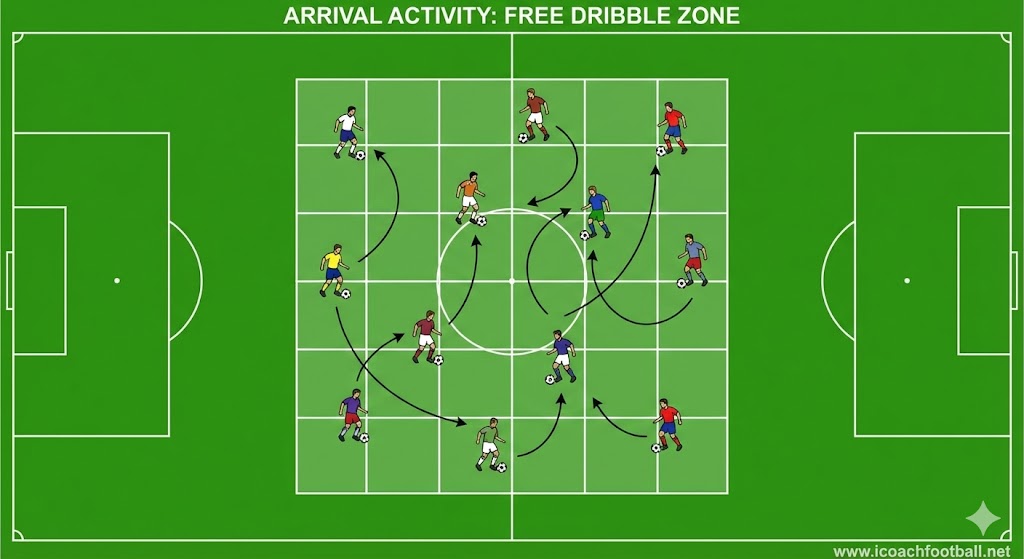
Do not wait for everyone to arrive before you start. If you wait, the kids who arrived on time will get bored and start wrestling.
- The Drill: Free Dribble / “Knockout”
- Setup: Create a large square with cones. Dump all the balls inside.
- Action: As soon as a player arrives, tell them: “Grab a ball, get inside the square, and practice your tricks. Don’t bump into anyone!”
- Why it works: It manages the chaos of arrival. The “start” of practice is seamless.
0:10 – 0:25 | Warm-Up: “Body Part Dribbling”
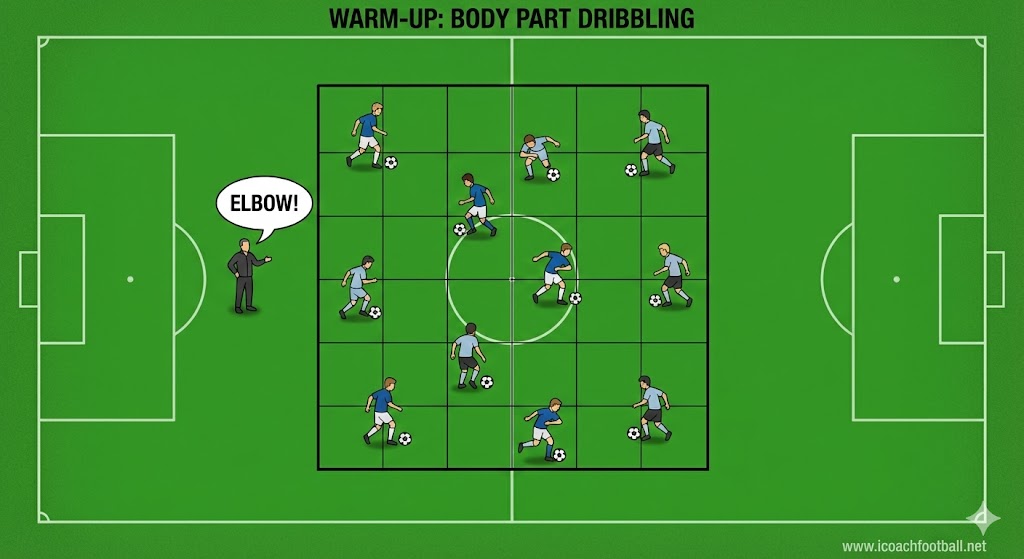
Get them listening to your voice and moving.
- Setup: Everyone inside the grid with a ball.
- Action: Players dribble around. You yell out a body part (e.g., “ELBOW!”). Players must stop the ball and put that body part on the ball immediately.
- The Twist: Make it silly. “Nose!”, “Ear!”, “Belly Button!”, “Bottom!”.
- Coaching Point: “Keep the ball close so you can stop it instantly.”
0:25 – 0:40 | Main Game 1: “Sharks and Minnows”
This is the classic dribbling game that teaches shielding and awareness.
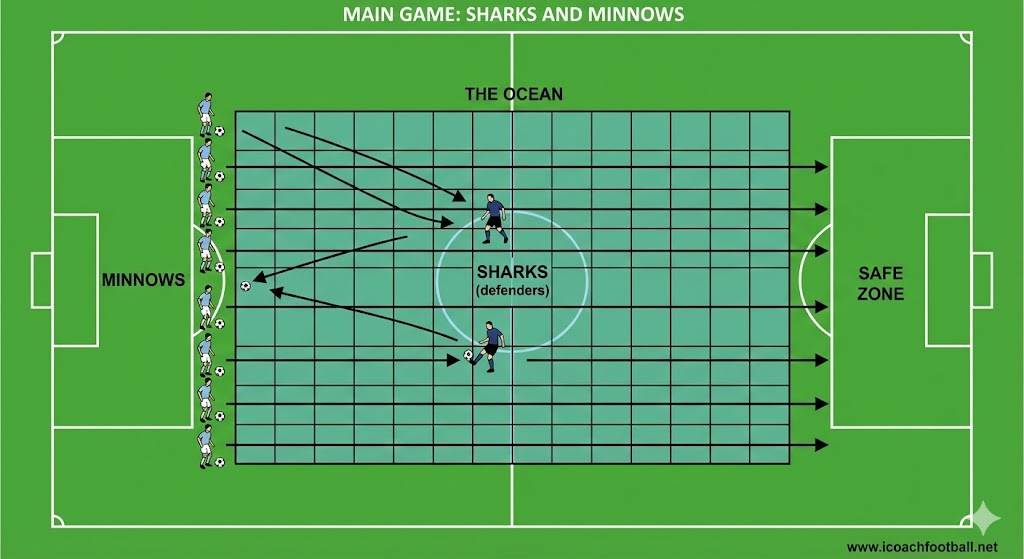
- Setup: Mark a large rectangle (The Ocean). Pick 2 players to be “Sharks” (no ball). Everyone else is a “Minnow” (with ball).
- Action: Minnows must dribble from one end of the ocean to the other. Sharks try to kick their ball out. If your ball is kicked out, you become a Shark.
- Why it works: It’s high energy and teaches kids to keep their head up to avoid defenders.
0:40 – 0:50 | Main Game 2: “Cops and Robbers”
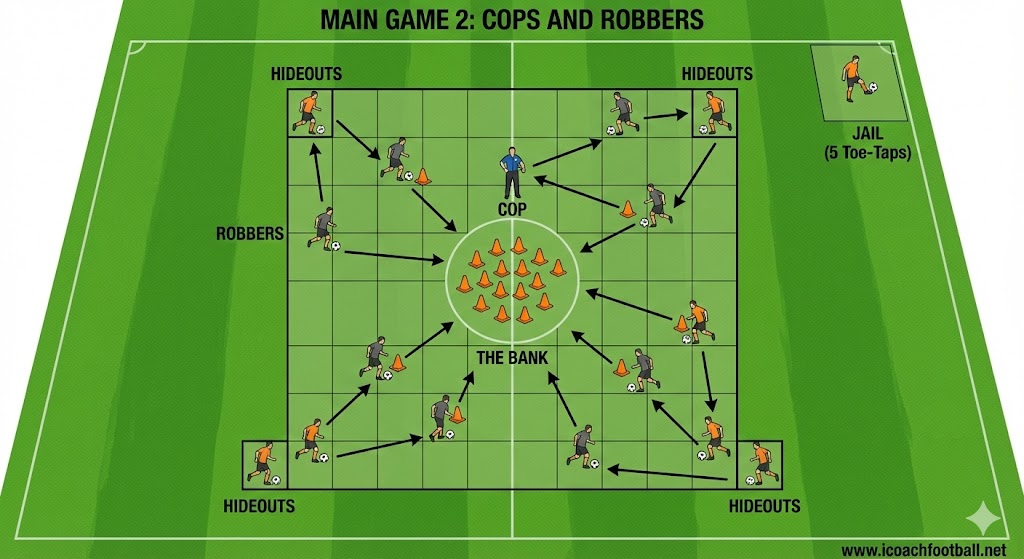
A fun variation to keep the energy high.
- Setup: Coach is the “Cop.” All players are “Robbers.”
- Action: Players dribble around the grid trying to “steal” jewels (cones) and dribble them back to their hideout. The Coach tries to tag them. If tagged, they have to do 5 toe-taps to get back in.
- Why it works: It builds a “Us vs. The Coach” mentality, which bonds the team together.
0:50 – 1:00 | The Scrimmage (The Match)
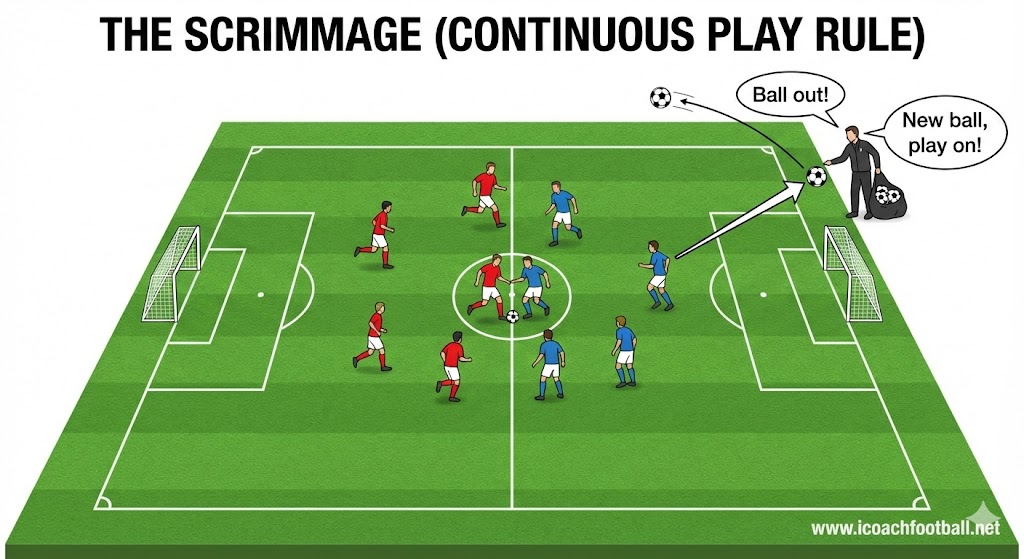
Every kid just wants to play the real game. Give them the last 10-15 minutes.
- Setup: Split the team into two. Set up two small goals.
- Rule: If the ball goes out, the coach (you) instantly rolls a new ball onto the field.
- Why: No throw-ins, no goal kicks, no stopping. Just 10 minutes of continuous play.
Quick Tips for “that” Kid
- The Crier: If a child is crying or shy, don’t force them. Let them sit with their parents for 5 minutes. Usually, seeing the “Body Part Game” makes them want to join.
- The Distractor: If a child is goofing off, ask them to demonstrate the drill for the group. “Johnny, show us how fast you can dribble.” Give them a job, and they will focus.
Common Questions About the First Soccer Practice
What equipment do I need for the first practice?
Keep it simple. You absolutely need one soccer ball per player (plus 2-3 extras). You also need about 20 cones (or disc markers) to mark out your grids. A whistle is optional—many coaches find it easier to just use their voice so they don’t scare the younger kids.
How do I handle a child who refuses to participate?
This is very common on day one. Do not force them. Invite them to sit with their parents or be your “special assistant” (helping you hold the cones). usually, once they see the other kids playing a fun game like “Sharks and Minnows,” their fear of missing out (FOMO) kicks in and they will join on their own.
What if I run out of drills before the hour is up?
If you finish your plan early, do not panic. The best “backup plan” is always The Scrimmage. Kids love to play the actual game. If you have 15 minutes left, just let them play a match. They will be happier than if you tried to teach a complex new drill.
Should I introduce positions (Defenders/Strikers) at the first practice?
No. For beginners (U6-U8), positions are confusing and restrictive. On day one, you want everyone moving and chasing the ball. Introducing “defenders” too early often leads to kids standing still on the goal line doing nothing. Let them all chase the ball for now.
The Final Whistle: Focus on Fun, Not Perfection
Your first practice isn’t about making them better players instantly; it’s about making them want to come back for the second practice. If they leave the field sweating and smiling, you have done your job perfectly.
Next Step: Need to organize your players for the next game? Discover our Free Fair-Play Substitution Rotation Sheet Here