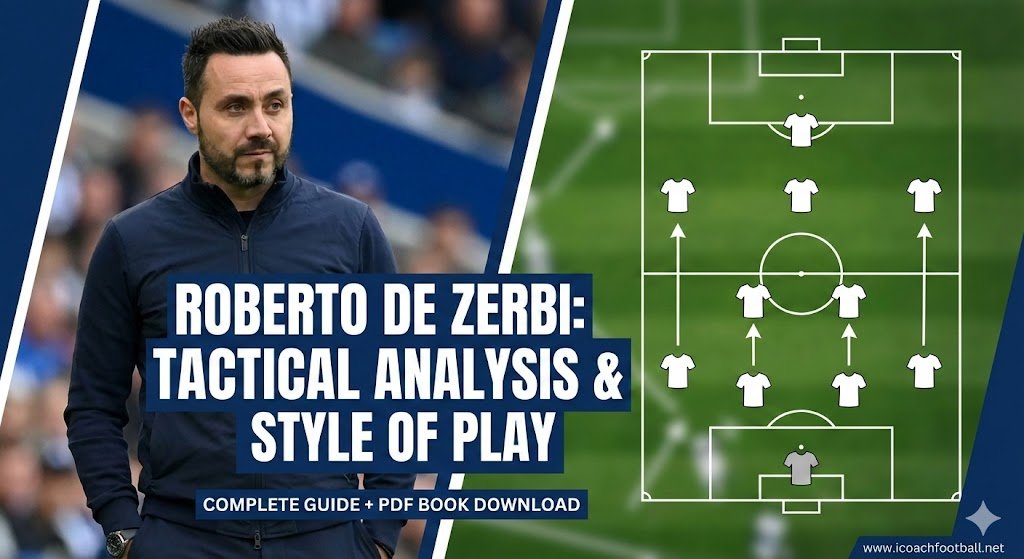
Roberto de Zerbi Tactical Analysis PDF
Roberto de Zerbi, the Italian football manager, has gained recognition for his innovative and dynamic approach to tactics. His teams are known for their fluid style of play, characterized by a well-structured build-up, intricate combination play, and effective attacking in the final third.
Roberto De Zerbi has established himself as one of the most innovative minds in modern football. From Sassuolo to Brighton and beyond, the Roberto De Zerbi style of play—often dubbed “De Zerbismo”—has revolutionized how teams build out from the back.
In this Roberto De Zerbi tactical analysis, we break down the key pillars of his philosophy, his coaching style, and provide you with a comprehensive De Zerbi book in PDF format to download and study.
Get and Analyze the Roberto De Zerbi Book (Free PDF)
For coaches, analysts, and fans who want to study these concepts in granular detail, we have compiled a complete tactical document.
This De Zerbi book (PDF) covers training drills, specific match scenarios, and a deeper look at the movements required to execute this style of play. It is an essential resource for anyone looking to implement these concepts.
Click the link below to get the full analysis:
📥 Download the Roberto De Zerbi Tactical Analysis PDF Book
(This PDF contains English translation of key tactical diagrams and sessions)
The Roberto De Zerbi Style of Play: “De Zerbismo”
To understand the Roberto De Zerbi tactics, you must first understand the intent. Unlike possession-based coaches who circulate the ball to move the opponent side-to-side, De Zerbi’s style is vertical.
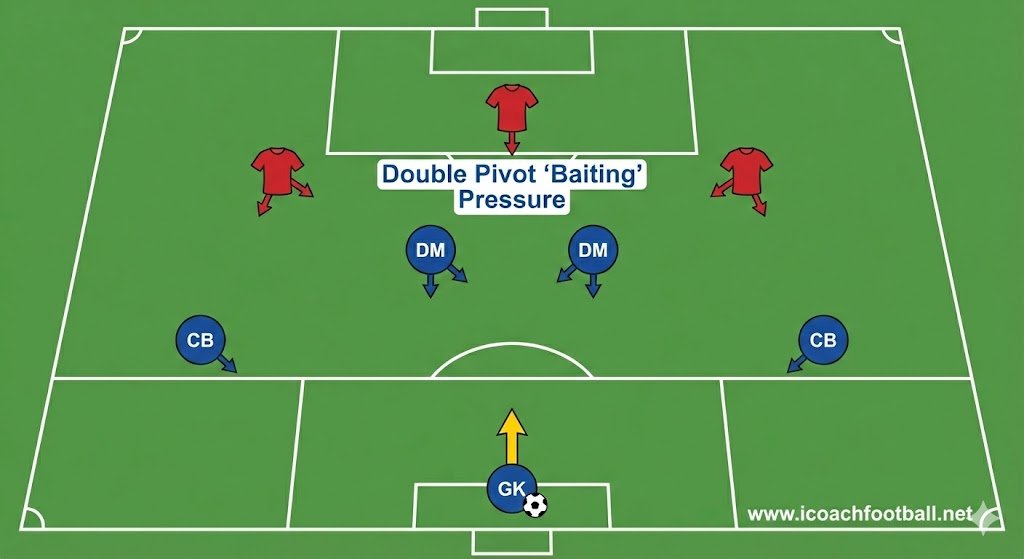
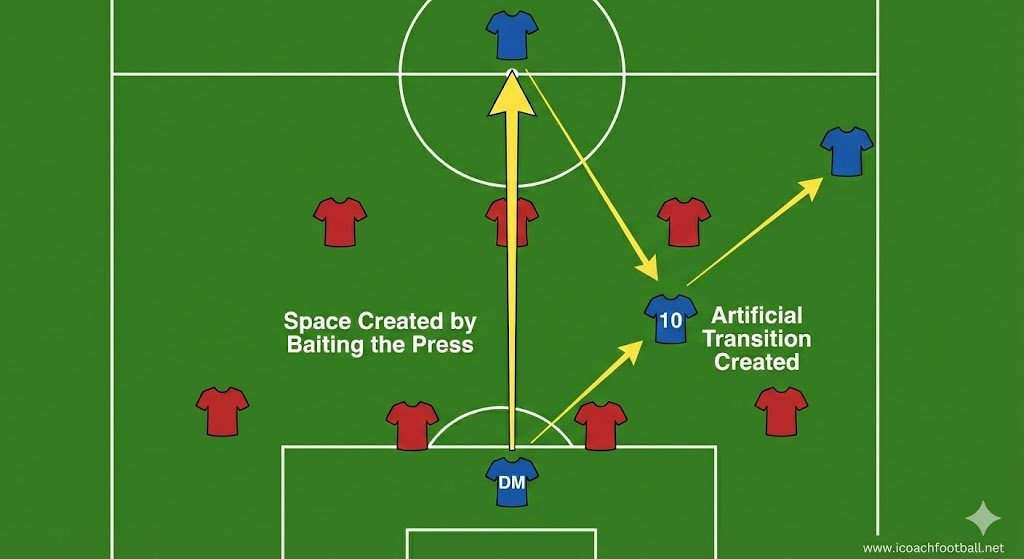
The core principle is provocation. His teams hold the ball deep (often with the goalkeeper and center-backs) to “bait” the opposition into pressing. Once the opponent jumps to press, De Zerbi’s team exploits the space left behind, creating what is known as an “artificial transition.”
Roberto De Zerbi Coaching Style & Philosophy
The Roberto De Zerbi coaching style is defined by immense attention to detail and bravery. He demands high technical proficiency from his goalkeeper and defenders.
A key biomechanical detail in his coaching is the use of the sole of the foot (studs). By controlling the ball with the sole, the player stops the ball completely. This signals to the opponent that the ball is stationary, inviting them to press. This micro-tactic is the trigger for the entire offensive phase.
Key Principles of De Zerbi’s Tactics:
- The Double Pivot: De Zerbi almost exclusively uses a 4-2-3-1 structure where the two holding midfielders play very close to the center-backs, forming a box or a trapezoid shape.
- The “Third Man” Concept: When the opponent presses the ball carrier, the pass often goes to a “third man” (usually a dropping #10 or a full-back) rather than directly to the open player, creating a cleaner angle for progression.
- Isolation on the Wings: By baiting the press centrally, the Roberto De Zerbi style forces the opponent to narrow their shape. This leaves the wingers (like Mitoma or Berardi) 1v1 against their full-backs with huge space to attack.
Tactical Breakdown: Phases of Play
1. Build-up Structure
De Zerbi’s build-up is a masterclass in numerical superiority (+1). The goalkeeper is essentially an extra center-back. The central defenders split wide, and the double pivot drops deep. This structure forces the opponent to commit significant numbers forward if they want to win the ball, leaving them vulnerable at the back.
2. Combination Play & Breaking Lines
Once the first line of pressure is broken, the speed of play increases drastically. Roberto De Zerbi tactics rely on “Up-Back-Through” combinations. A vertical pass is played into a forward, who sets it back to a midfielder facing forward, who then plays a through ball to a runner.
3. The Attacking Third
In the final third, the rigid structure dissolves into individual brilliance. Because the build-up phase has already eliminated 4-6 opponents, the attackers often find themselves in equal numbers (3v3 or 4v4) against the defensive line, allowing for high-quality scoring chances.
Summary
Whether you are analyzing the Roberto De Zerbi style for academic purposes or looking to implement his build-up traps in your own team, understanding the risk-reward balance is crucial. His football is not just about possession; it is about control, manipulation, and verticality.
Related Post: What is Position Game in Football or “Juego de Posicion” and how to work on it?
FAQ About Roberto De Zerbi Book & Tactics
What is Roberto De Zerbi’s style of play?
Roberto De Zerbi’s style of play, often called “De Zerbismo,” is defined by baiting the opposition to press high. His teams use the goalkeeper and center-backs to hold the ball, inviting pressure to create space behind the opponent’s midfield lines for quick, vertical attacks. It is a high-risk, possession-based style focused on creating “artificial transitions.”
What is unique about the Roberto De Zerbi coaching style?
The Roberto De Zerbi coaching style is unique for its extreme attention to technical details, such as demanding players control the ball with the sole of their foot (studs). This small detail signals to the opponent that the ball is stationary, serving as the trigger to invite pressure.
What formation does De Zerbi use?
Roberto De Zerbi predominantly uses a 4-2-3-1 formation. The key feature is the “double pivot” (the two defensive midfielders) staying very deep and central during build-up, almost standing on the toes of the center-backs to attract central pressure.
Is there a book about Roberto De Zerbi’s tactics?
Yes, you can download our comprehensive Roberto De Zerbi Tactical Analysis PDF Book directly on this page. It contains detailed diagrams, coaching points, and a breakdown of his build-up phases from his time at Sassuolo, Shakhtar Donetsk, and Brighton.




Nice Tactical Analysis of Roberto de Zerbi
thanks