Goalkeeper Distribution: 5 Drills to Improve Footwork and Accuracy
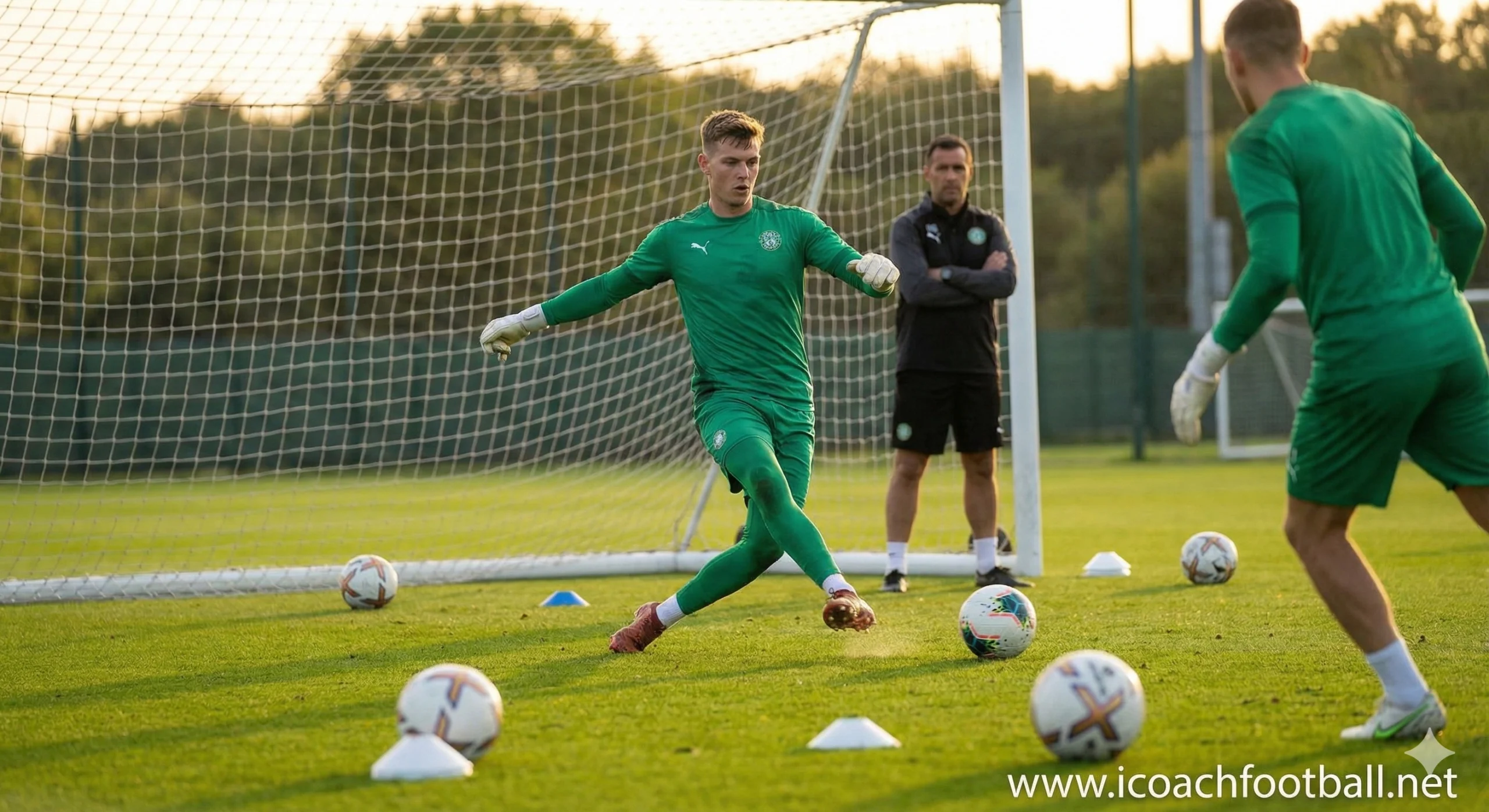
In modern football, the goalkeeper is the first attacker. The days of just kicking the ball long are over. Today’s keepers must be comfortable on the ball, able to pass under pressure, and initiate attacks with precision.
As a UEFA Pro Coach, I see many young goalkeepers with great hands but poor feet. This is often because training focuses too much on shot-stopping and not enough on distribution.
This guide provides 5 progressive drills focused specifically on improving footwork, passing accuracy, and decision-making for goalkeepers playing out from the back.
Drill 1: “The Pendulum” (First Touch & Passing Angles)
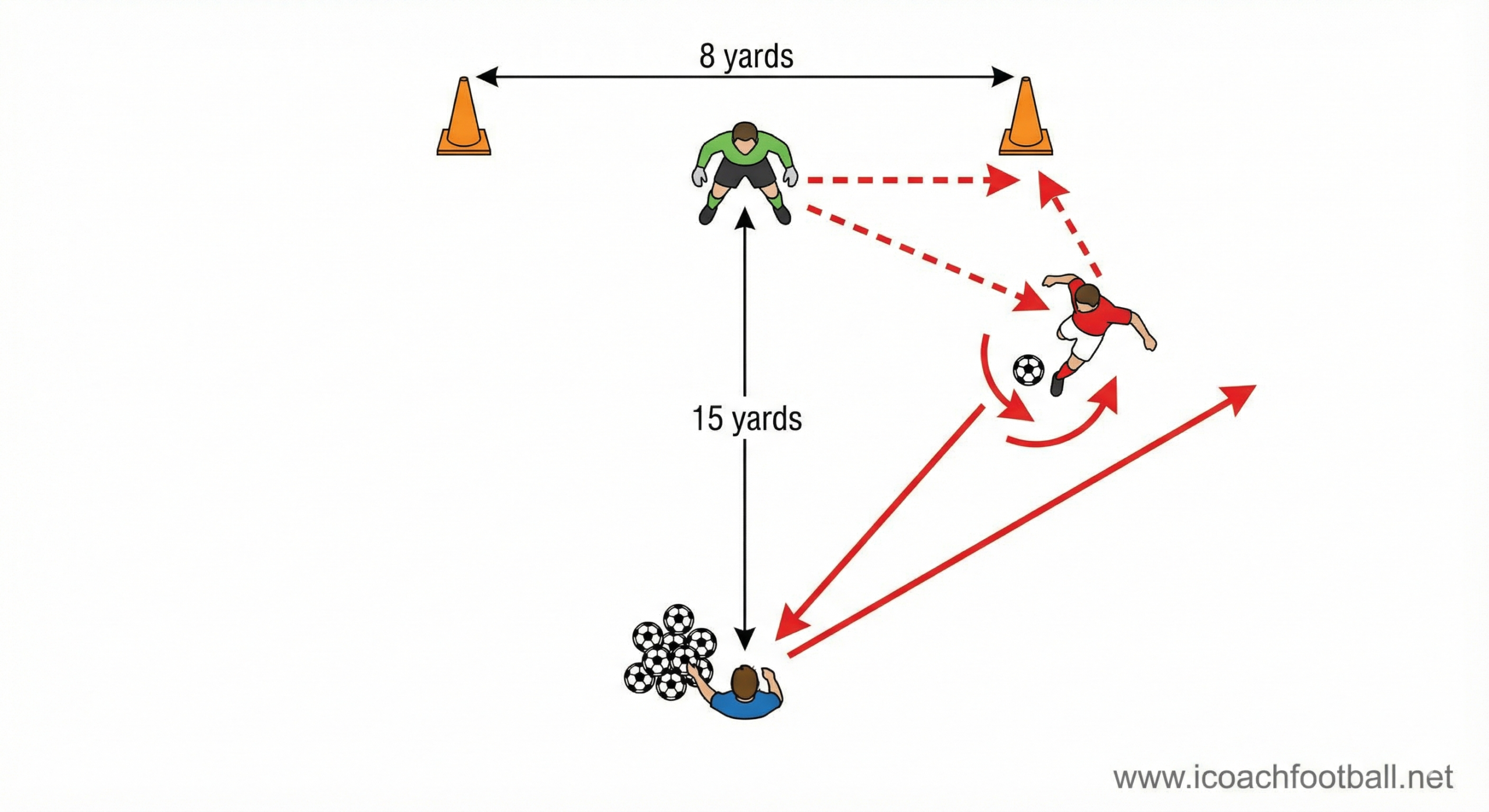
This warm-up drill focuses on receiving the ball across the body and opening up the hips to play forward quickly. It builds the crucial habit of never receiving the ball standing still.
Setup:
- Two cones placed 8 yards apart (the “Goal Line”).
- A server (Coach or Player) with footballs, standing 15 yards away, centrally.
- The Goalkeeper starts in the middle of the two cones.
Instructions:
- The Server passes the ball firmly to the Goalkeeper’s right side.
- The Goalkeeper must shuffle quickly to the right, behind the cone.
- Receive the ball with the back foot (right foot), taking a touch forward and across the body.
- Pass the ball back to the server with the second touch using the inside of the right foot.
- Immediately shuffle back to the center.
- The Server then passes to the left side, and the keeper repeats the action with the left foot.
- Reps: Perform for 90 seconds, resting for 45 seconds. Repeat 3 times.
Coaching Point: The first touch must take the ball out from under the keeper’s feet. A bad first touch leads to a blocked pass in a game.
Drill 2: The “Escape Valve” (Support Angles)
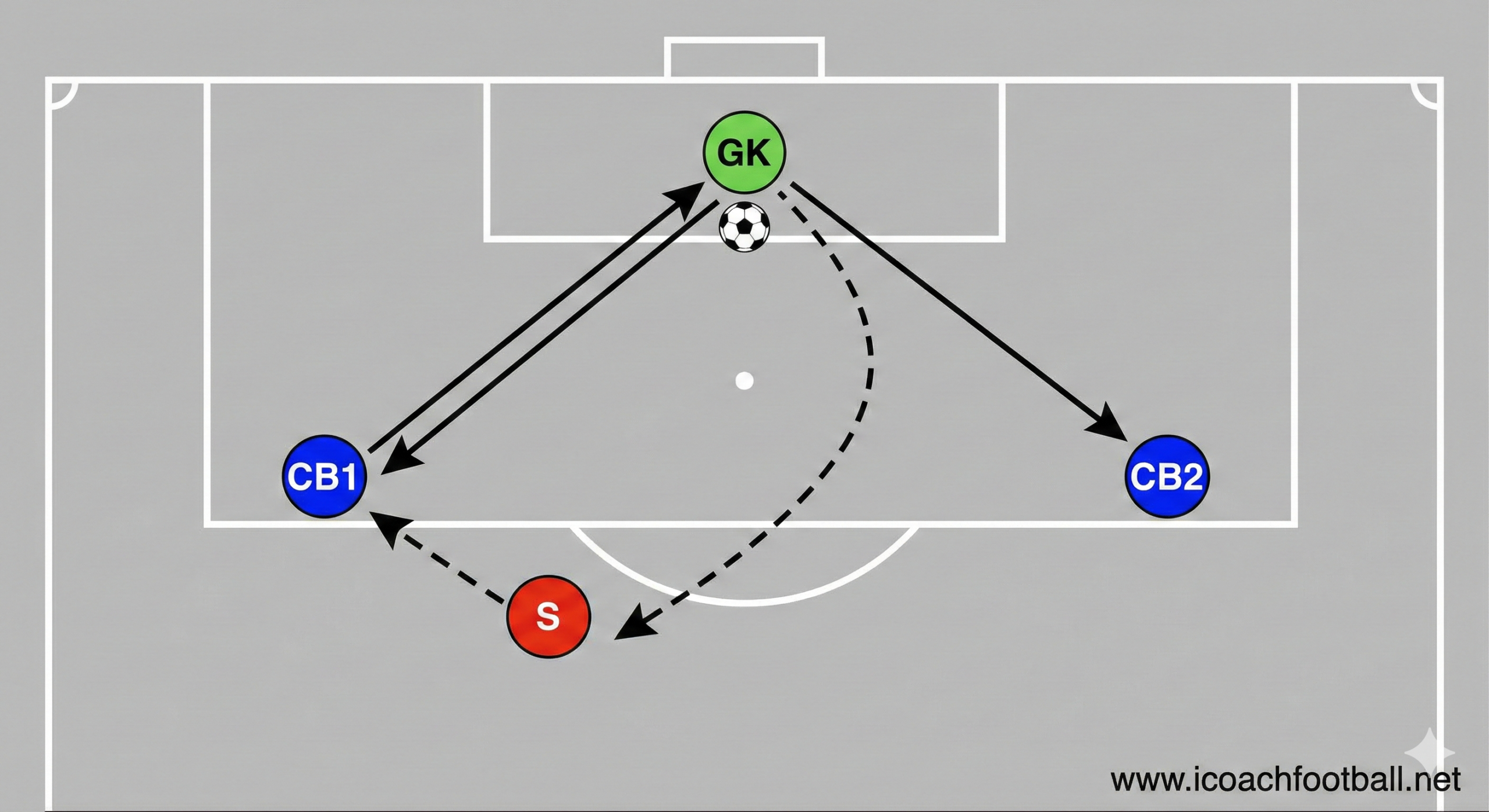
Goalkeepers often get caught on the ball because they don’t have a “safe” passing option. This drill trains the GK to create a triangular support angle with their center-backs to bypass a pressing striker.
Setup:
- Use the penalty area.
- Players: 1 Goalkeeper (GK), 2 Center Backs (CB), 1 Striker (S).
- Start with the ball at the GK’s feet.
Instructions:
- The GK passes to a CB.
- The Striker presses the CB immediately.
- The CB passes back to the GK.
- Crucial Step: As the ball travels back, the GK must move to the opposite side of the striker to create a passing lane to the other CB.
- The GK plays a one-touch or two-touch pass to the open CB (the “Escape Valve”).
Coaching Point: The Goalkeeper must be the “third man.” If the Striker blocks the line, the GK must drop deeper or wider to reopen it.
Drill 3: The “Switch of Play” (Long Range Distribution)
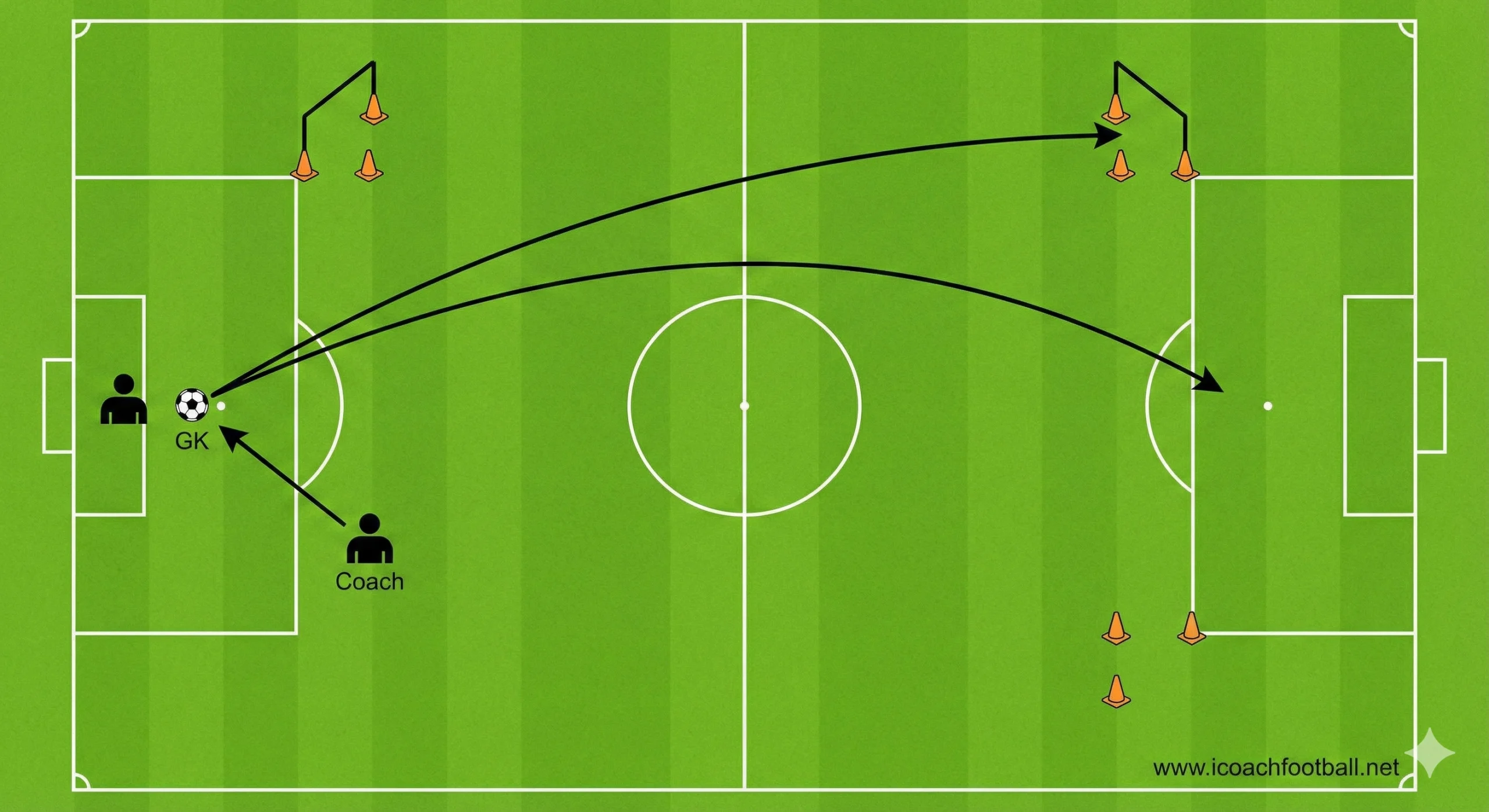
Modern goalkeepers like Ederson or Alisson are masters of skipping the midfield line. This drill focuses on the technique of the “driven clip” pass to the full-backs.
Setup:
- Place a “Gate” (2 cones) on both touchlines near the halfway line (representing Full-Backs).
- Place a “Gate” centrally (representing a Holding Midfielder).
- GK starts in the 6-yard box.
Instructions:
- Coach passes the ball back to the GK from the edge of the box (simulating a back-pass).
- The Coach shouts a color or side (e.g., “RIGHT!”).
- The GK must take one touch to set the ball out of their feet and hit a lofted, driven pass through the target gate on the sideline.
- Progression: Add a passive defender rushing the GK to force quicker decisions.
UEFA Pro Tip: Watch the GK’s plant foot. It should point directly at the target. If they lean back too much, the ball will float and hang in the air (easy interception). The pass needs to be driven.
Drill 4: Goal Kick Targets (Precision)
Goal kicks are restarts that should be possession guarantees, not 50/50 battles. This drill gamifies accuracy.
Setup:
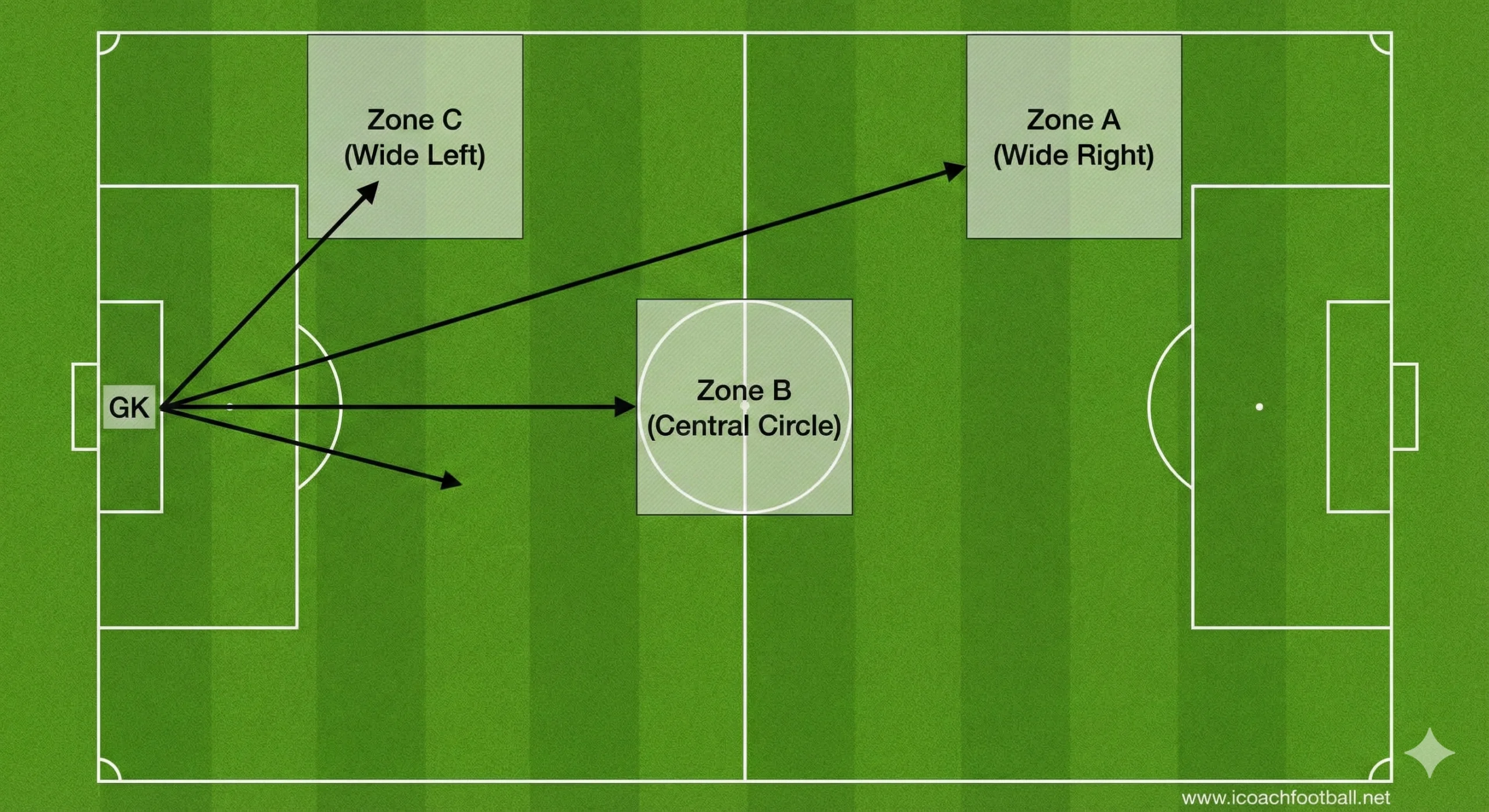
- Set up 3 distinct zones using cones:
- Zone A: Wide Right (Full Back area).
- Zone B: Central Circle (Target Man area).
- Zone C: Wide Left (Full Back area).
- GK places the ball on the 6-yard line.
Instructions:
- The GK has 5 balls.
- The Coach calls out a sequence (e.g., “A, then B, then C”).
- The GK must strike the ball into the designated zones in order.
- Scoring: 1 point if it lands in the zone; 3 points if it hits a small target goal inside the zone.
Coaching Point: Focus on the “side-volley” technique for the wide zones (Zones A and C) to keep the trajectory flat and fast.
Drill 5: The “Pressure Box” (6v4 Rondo)
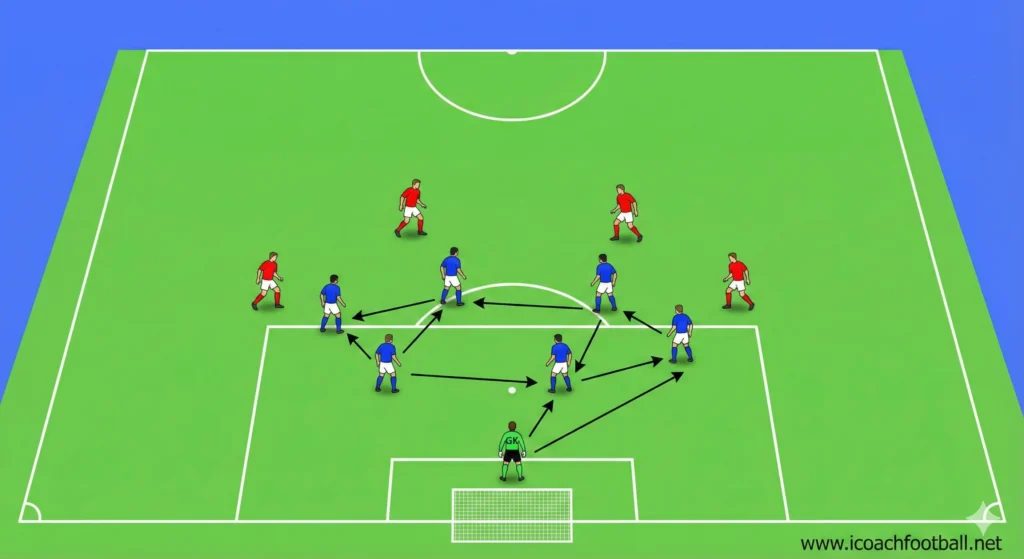
This is the ultimate game-realistic drill. It forces the goalkeeper to act as an outfield player under high pressure.
Setup:
- Use the penalty box (18-yard box) as the playing area.
- Team In Possession (Blue): GK + 4 Defenders (Back 4) + 1 Holding Midfielder.
- Pressing Team (Red): 4 Attackers.
Instructions:
- Play starts with the GK.
- The Blue team must complete 6 consecutive passes inside the box to score a point.
- The Red team presses aggressively to win the ball and score in the main goal.
- Rule: The GK cannot pick the ball up. They must play with feet only.
Coaching Point: The GK must provide constant communication (“Man on!”, “Turn!”, “Drop!”). They are the eyes of the defense.
Summary: Integrating the GK
A goalkeeper who is confident with their feet changes the entire dynamic of your team. It allows your defenders to split wider, creates overloads in midfield, and makes you harder to press.
Use these drills twice a week—not just with the GK coach, but integrated into your main team sessions—to build trust between your keeper and your back line.
- ➡️ Next Step: Check out our The Best 9v9 Soccer Formations and Tactical Strategies to see how the GK fits into your tactical setup.
How can I improve my goalkeeper’s goal kick distance?
Technique is more important than power. Focus on the plant foot being next to the ball (not behind it) and striking through the center of the ball with the laces, keeping the ankle locked.
Should youth goalkeepers always play short?
A: At U10-U12, yes—encourage playing out from the back to develop skills. However, at U13+, they must learn to recognize when to play long (e.g., when the defense is under heavy pressure).
What is the “side volley” distribution?
The side volley is a technique where the keeper drops the ball and kicks it sideways. It creates a flat, fast trajectory that is easy for teammates to control and hard for defenders to intercept.
5 Drills to Master Goalkeeper Distribution
A progressive training session to improve a goalkeeper’s footwork, passing accuracy, and decision-making under pressure.
Step 1 Name: The Pendulum (Warm-Up)
Description: The GK shuffles laterally between cones, receiving the ball across their body and returning the pass to improve first-touch efficiency.
Step 2 Name: The Escape Valve
Description: The GK works with two center-backs to create a triangular passing option, moving to the opposite side of a pressing striker to find the open man.
Step 3 Name: Switch of Play
Description: The GK practices long, driven passes from the 6-yard box to wide gates on the touchline, simulating distribution to full-backs.
Step 4 Name: Goal Kick Targets
Description: A precision game where the GK attempts to hit specific zones (Left, Center, Right) on the pitch to improve goal kick accuracy.
Step 5 Name: The Pressure Box
Description: A 6v4 possession game (Rondo) inside the penalty area where the GK acts as an outfield player to build confidence under high pressure.