29 Soccer Training Tips to Master Your Game (The Ultimate Guide)
Are you looking to elevate your game from average to elite? Whether you are fighting for a spot in the starting XI or aiming to get recruited for college, the difference is made on the training ground. Real improvement doesn’t happen by accident. It requires a holistic approach involving technical skill, physical fitness, game intelligence, and mental toughness. Below are 29 essential soccer training tips, categorized to help you build a complete development roadmap.
Pillar 1: Technical Mastery & Ball Control
You cannot implement tactics if you cannot control the ball. These tips focus on your relationship with the ball.
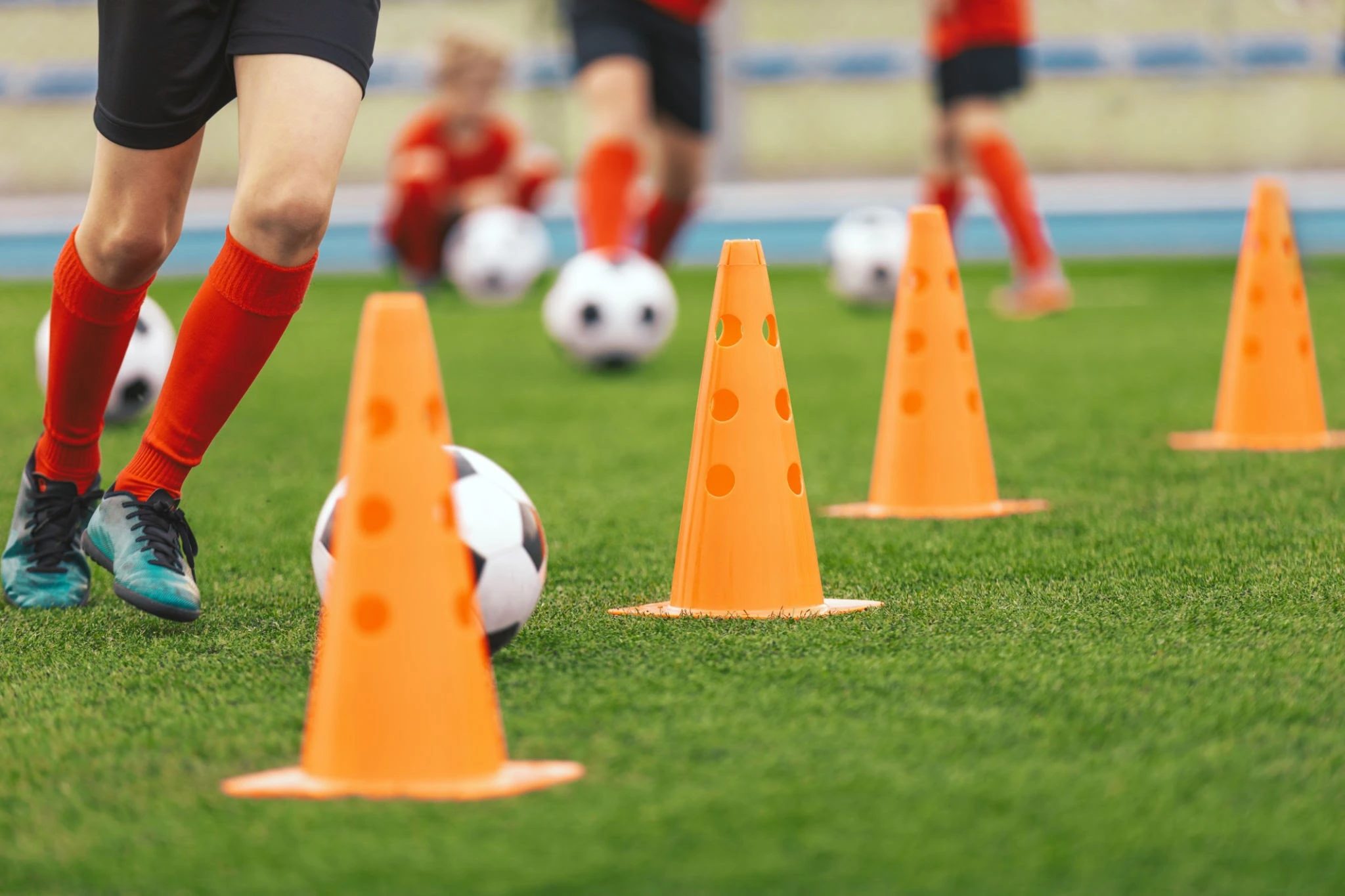
1. Become Dominant With Both Feet
This is the quickest way to double your effectiveness. If you are one-footed, defenders can easily predict your movement.
-
Action Step: Dedicate 10 minutes of every practice to your weak foot. Wall passing and shooting drills using only your weak foot will make you unpredictable.
2. Polish Your First Touch
A bad first touch kills attacks; a great first touch creates time. You must be able to kill the ball dead or direct it into space immediately.
-
Pro Tip: Practice receiving the ball from different heights (chest, thigh, foot) and speeds to simulate match chaos.
3. Master Tight Spaces
Modern soccer is played at breakneck speed. You rarely have time. You must get comfortable holding the ball when defenders are breathing down your neck.
-
Drill: Play small-sided games (3v3 or 4v4) where space is limited. This forces you to think and react faster.
To avoid panicking and losing your composure in the face of their aggressiveness, make sure to practice for these situations in training. Playing small sided games in training in a limited area will be frustrating for players at first, but they will quickly see improvements to their game. For more specific actions, check out 5 essential tips and drills to improve close control.
4. Learn to “Lose” Your Opponent
You don’t always need a fancy step-over to beat a player. Often, a drop of the shoulder or a quick change of pace is enough to create separation.
-
Focus: Work on body feints and “checking to” the ball, then spinning away into space.
5. Improve Passing Accuracy Under Fatigue
Anyone can make a perfect pass when they are fresh. The best players can thread a through-ball in the 89th minute.
-
Challenge: Practice your long-range and short passing drills at the end of your workout when your legs are heavy.
6. Diversify Your Shooting
Great goal scorers can score from anywhere. Don’t just practice the perfect curled shot.
-
Variety: Practice volleys, one-touch finishes, headers, and long-range power shots.
7. Tackle With Precision
Defending is an art. It isn’t just about sliding; it’s about timing. Learn to stay on your feet, shepherd the attacker, and tackle only when necessary.
8. Head the Ball With Confidence
Many players shy away from aerial duels. If you can dominate the air, you are an asset in both the attacking and defending box. Work on your vertical leap and timing.
Pillar 2: Tactical Intelligence (Game IQ)
The game is played with the feet, but won with the mind. These soccer training tips focus on your brain.
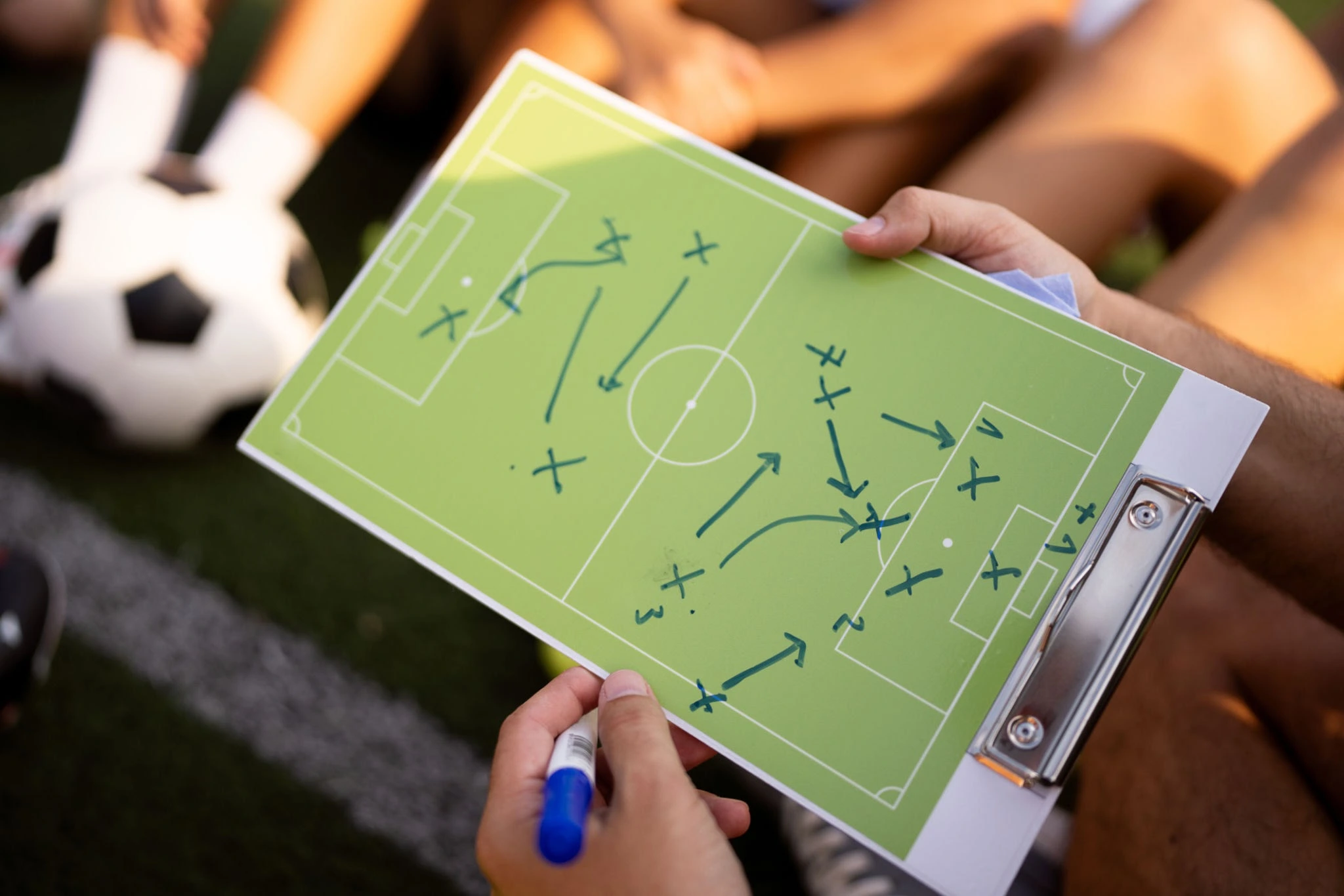
9. Always Scan the Field
This is the hallmark of a pro. Before the ball arrives, you should already know your next move.
-
The Habit: Constantly “check your shoulder” to map out teammates, opponents, and open space.
10. Understand Positioning
Being one meter out of position can cost a goal. Understand where you need to be relative to the ball and your teammates.
-
Study: Watch professional players who play your position. Watch where they go when they don’t have the ball.
To truly master the defensive line, study the official rules and interpretations of positioning and offside from FIFA.
11. Develop in Your Specific Position
While you should be versatile, you need to master the specific demands of your role. A winger needs different training (crossing/sprinting) than a center-back (heading/long passing).
12. Communicate Constantly
A quiet team is a losing team. Use your voice to organize the defense, call for the ball, or warn a teammate of a “man on.”
-
Rule: “It’s only half a pass if it doesn’t have a name on it.”
13. Study Tactics and Strategy
Don’t just play; learn the game. Understand formations, pressing triggers, and defensive lines.
-
Resources: Watch tactical analysis videos, read coaching books, and listen to podcasts.
14. Be Aware of Surroundings
Tunnel vision is your enemy. Peripheral vision allows you to see the through-ball that others miss.
Pillar 3: The Mental Edge
Your mindset determines your ceiling. These tips ensure you are mentally ready to compete.
15. Give 100% Match Intensity
If you train at 50% effort, you will play at 50% ability. Treat every drill, sprint, and scrimmage as if it were a cup final.
16. Master Your Emotions
Bad calls happen. Mistakes happen. The best players have a “short memory.”
-
Mindset: Do not let frustration lead to a yellow card or a drop in performance. Stay cool, stay focused.
Learning the principles of mental toughness and emotional control in competitive sports is a huge advantage.
17. Take Responsibility
Don’t blame the pitch, the boots, or the coach. Ask yourself: Did I prepare? Did I work hard? Owning your development is the only way to improve.
18. Know When to Focus
Training can be fun, but there is a time to joke and a time to work. When the drill starts, lock in. Focus is a muscle—train it.
19. Seek Constructive Criticism
Your ego is not your friend. Ask your coach, “What is my biggest weakness?” and then thank them for the answer. Use that feedback to build your training plan.
20. Evaluate Yourself Honestly
Periodically sit down and list your top 3 strengths and top 3 weaknesses. Be honest. This list becomes your training schedule for the next month.
Pillar 4: Physical Conditioning
Talent without fitness is wasted potential. You need the engine to last 90 minutes.

21. Increase Stamina
You can’t impact the game if you can’t breathe.
-
Mix it up: Combine long-distance aerobic running with high-intensity interval training (HIIT) to mimic the stop-start nature of soccer.
Combine long-distance aerobic running with high-intensity interval training (HIIT) for footballers to mimic the stop-start nature of soccer.
22. Build Strength and Agility
You don’t need to be a bodybuilder, but you need core strength to hold off defenders and leg strength for explosive power.
-
Routine: Incorporate squats, lunges, and planks into your weekly routine.
23. Be Willing to Put in the Work
There are no shortcuts. The players who make it are the ones doing sprints when no one is watching.
Pillar 5: Lifestyle & “The Invisible Training”
What you do off the pitch is just as important as what you do on it.

24. Fuel Your Body Correctly
You wouldn’t put cheap gas in a Ferrari. Avoid junk food. Prioritize complex carbs for energy and lean protein for muscle repair.
-
Hydration: Drink water before, during, and after training.
25. Prioritize Sleep and Recovery
Muscles grow when you rest, not when you train. If you are overtraining or sleeping 5 hours a night, your performance will crash, and injury risk will skyrocket.
26. Warm Up and Cool Down
Never skip this. A dynamic warm-up prepares the muscles for explosive movement, and a cool-down aids recovery. It is the cheapest insurance against injury.
27. Make Training a Priority
Consistency compounds. Missing one session might not hurt, but missing one a week creates a massive gap over a year. Show up. Every time.
28. Play Anywhere (Street Soccer)
Structured coaching is great, but “pickup” games foster creativity. Playing in the street or park with friends allows you to try new tricks without fear of failure.
29. Record and Analyze Your Matches (Bonus Tip)
Last but not least, this is crucial for modern players.
What you feel you did in a game is often different from what you actually did.
-
The Secret: Ask a friend or parent to film your game. Watch the footage back. Look at your movement off the ball. Did you track back? Did you scan the field? Video analysis is the fastest way to fix bad habits.
To understand how the pros use this data, check out academic research on advanced video analysis in football.
Conclusion: Commit to the Process
You now have 29 actionable soccer training tips at your disposal. But reading them isn’t enough.
You cannot master all of these in a single week. Pick one from each category (Technical, Tactical, Mental, Physical) and focus on them for the next month. Improvement is a marathon, not a sprint. If you commit to the process, the results will show on the pitch.
Ready to take your game to the next level? Check out our guide on Pre-Game Nutrition Secrets.