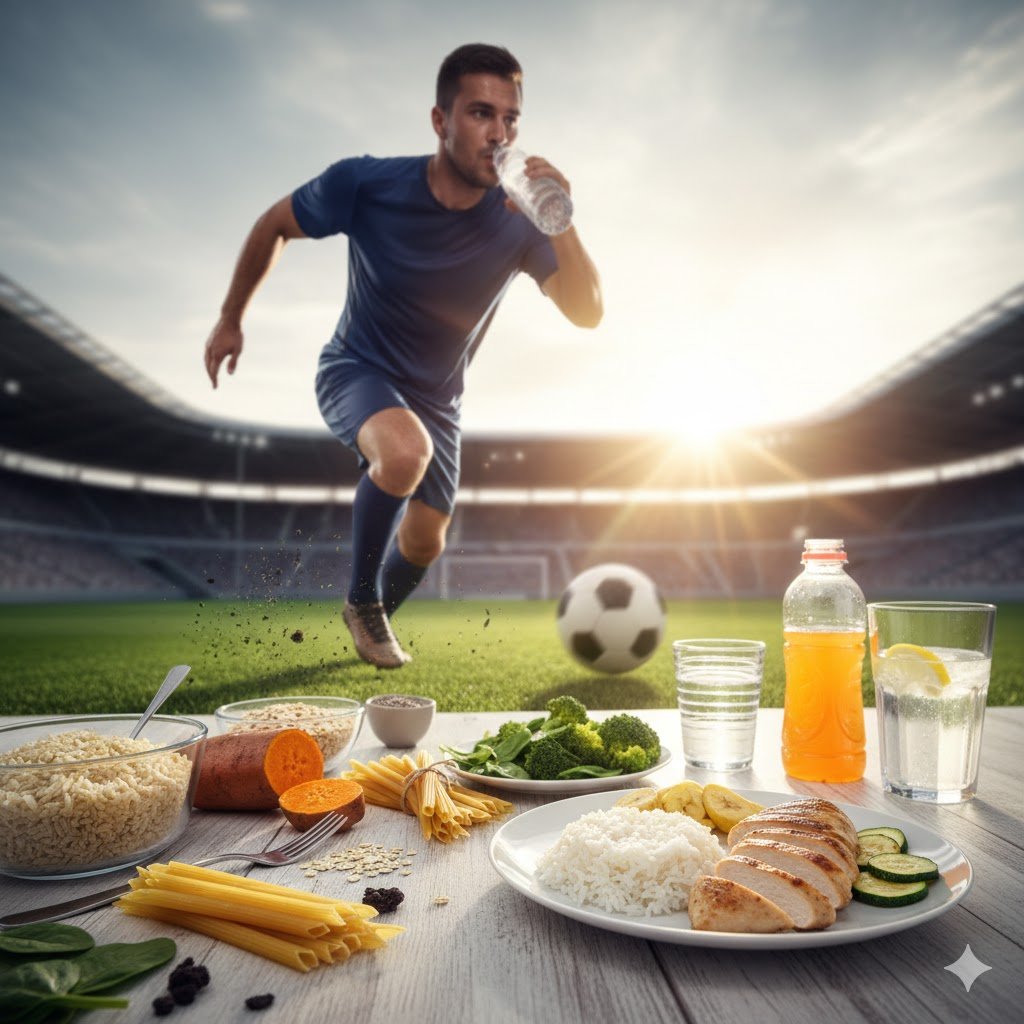
🥗 Pre-Game Nutrition Secrets for Soccer Players: The Ultimate Fueling Guide
Soccer is a high-intensity, stop-start sport that demands sustained explosive energy for 90 minutes. If you haven’t mastered your pre-game nutrition, you are sacrificing speed, endurance, and mental clarity long before the final whistle. Poor fueling can be the difference between a game-winning sprint and hitting the dreaded “wall.”
The foundation of your performance lies in your carbohydrate stores—the primary fuel your muscles and brain rely on. This ultimate, science-backed guide breaks down the precise timing and type of food needed to ensure you step onto the pitch fully optimized, giving you a competitive edge.
Pillar 1: The 48-Hour Fuel-Up (Strategic Glycogen Loading)
Preparation for peak performance begins two days before kickoff, not just hours. The primary goal during this window is Glycogen Supercompensation, aiming to maximize the stored carbohydrates in your muscles and liver. These glycogen stores are your body’s readily available energy reserves.
1. Elevate Complex Carbohydrate Intake (60-70% of Calories)
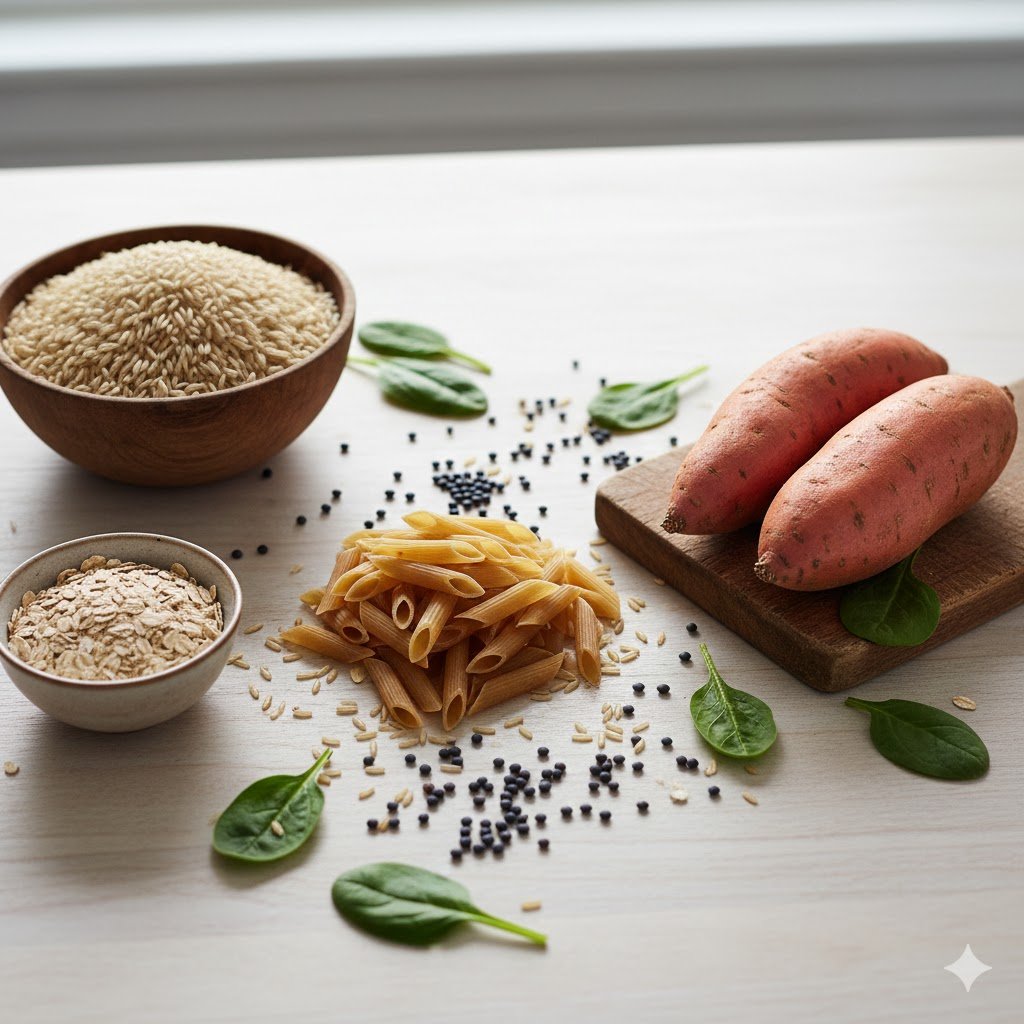
Your standard diet likely contains sufficient carbohydrates, but for this 48-hour window, you need to deliberately increase the percentage of your total calories from carbs to 60-70%. This ensures your glycogen “tanks” are overflowing.
-
Focus on Low to Moderate Glycemic Index (GI) Complex Carbs: These provide a sustained release of glucose into your bloodstream, preventing energy spikes and crashes.
-
Recommended Sources: Brown rice, whole-wheat pasta, oats, quinoa, sweet potatoes, white potatoes, whole-grain bread, lentils.
-
-
Why Complex Carbs? They contain longer chains of sugar molecules that take longer to break down, offering a steady supply of energy over time.
-
Optimal Timing: Spread your carb intake throughout the day with regular meals and snacks to maximize absorption and storage.
[Image Suggestion: A visually appealing meal prep spread featuring brown rice, sweet potatoes, lean protein, and a small portion of steamed greens.]
(Alt Text: Healthy meal prep featuring complex carbohydrates for a soccer player’s 48-hour pre-game nutrition strategy.)
2. Strategically Reduce Fiber Intake (The Day Before)
While fiber is generally healthy, excessive amounts in the 24 hours leading up to a match can cause gastrointestinal distress (bloating, gas, cramps) which can severely hamper performance.
-
Recommended Action: On the day before the match, switch from high-fiber whole grains to slightly more refined options if you are sensitive. Reduce large portions of raw vegetables, beans, and legumes. Cooked vegetables are generally easier to digest.
-
The Goal: Minimize digestive workload so your body can focus on energy production and performance.
3. Maintain Impeccable Hydration Levels
Carbohydrate loading is intrinsically linked with hydration. For every gram of glycogen stored, your body also stores approximately three grams of water.
-
Action: Sip water consistently throughout the day, ensuring your urine is pale yellow. Consider adding natural electrolytes (e.g., a pinch of sea salt to water, coconut water) to aid absorption, especially in warmer climates.
To deepen your understanding of how hydration impacts performance, consult the official guidelines on hydration for sport from leading sports dietitians.
Pillar 2: The Pre-Match Meal (3-4 Hours Before Kickoff)
This is perhaps the most critical meal. Its purpose is to top off your energy reserves and ensure your stomach is settled and digestion is well underway before kickoff. This meal should be high in easily digestible carbohydrates, moderate in lean protein, and very low in fat and fiber.
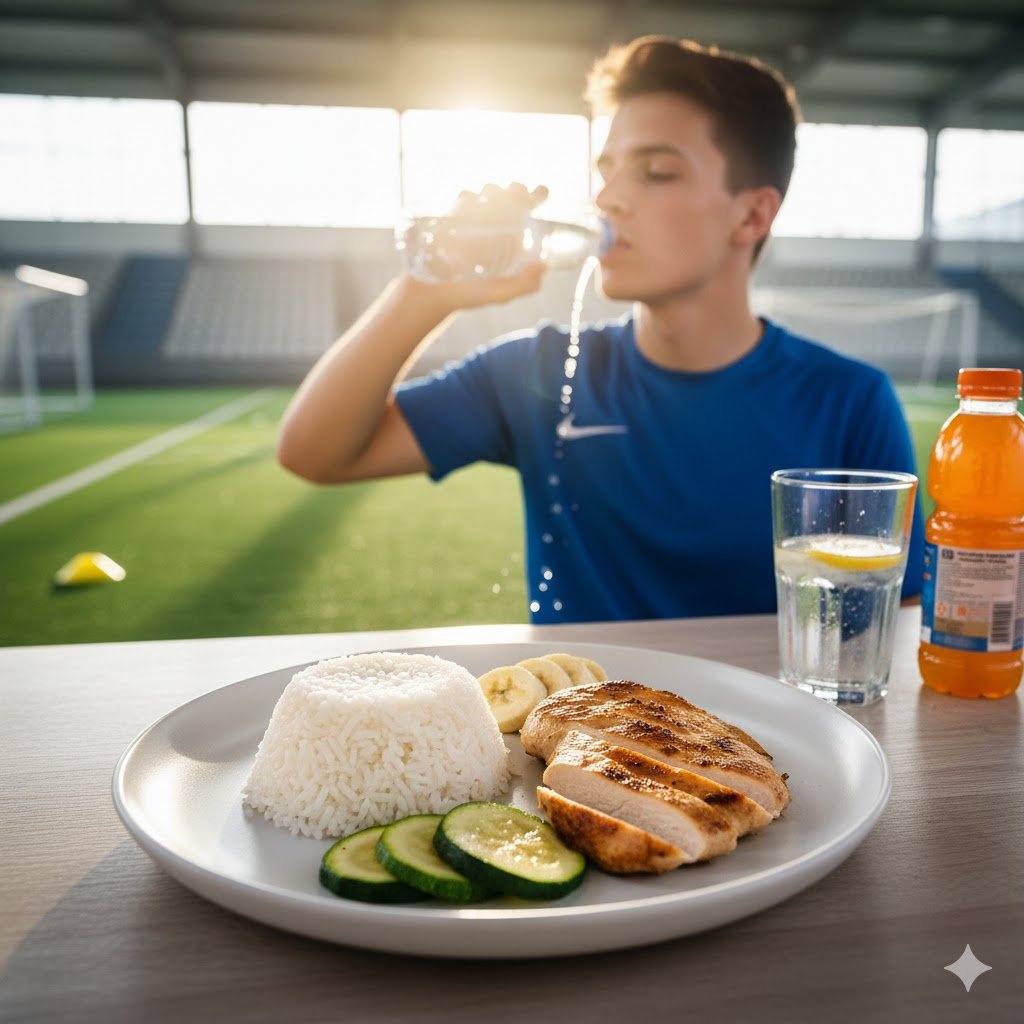
Key Components of Your Optimal Pre-Match Meal:
-
High Glycemic Index (GI) Carbs (but not simple sugars): Unlike the 48-hour window, for this immediate pre-match meal, white rice or plain pasta are often preferred over whole-grain versions due to their faster, yet sustained, glucose release and lower fiber content.
-
Why? They minimize the risk of digestive issues and ensure rapid absorption of glucose into the bloodstream, available for the upcoming match.
-
-
Lean, Easily Digestible Protein (Moderate Amount): Protein aids in muscle repair and offers satiety without slowing digestion too much.
-
Best Choices: Plain grilled chicken breast (skinless), white fish (like cod or tilapia), a small serving of scrambled eggs (using mostly egg whites), or a low-fat dairy option like Greek yogurt (if tolerated).
-
Avoid: Red meat, high-fat dairy, fried meats, or heavily spiced dishes.
-
-
Very Low Fat: Fat slows gastric emptying significantly, meaning food sits in your stomach longer. This can lead to a heavy, bloated feeling and can divert blood flow from muscles to the digestive system during the match.
-
Very Low Fiber: As mentioned, fiber can cause digestive upset. Choose peeled fruits (like a banana) or very lightly cooked, low-fiber vegetables if you must have them.
| Optimal 3-4 Hour Pre-Match Meals | Why it Works |
| Grilled Chicken & White Rice: Plain, grilled chicken breast with a generous serving of white rice. | Provides clean energy (rapidly available glucose from rice) and necessary muscle support (lean protein) with minimal digestive load. |
| Plain Pasta with Light Tomato Sauce: Boiled pasta with a simple, non-creamy tomato-based sauce (no meat or heavy cheese). | Excellent high-carb load, very easy to digest, delivers sustained energy. |
| Oatmeal with Honey & Banana: Large bowl of instant oatmeal (made with water or skim milk), a drizzle of honey, and sliced banana. | Provides both quick and sustained energy, easily digestible. |
Common Mistakes to Avoid:
-
Trying new foods: Stick to what you know works for your body.
-
Eating too much fat: This is the #1 culprit for feeling heavy and sluggish.
-
Eating too close to kickoff: Give your body ample time to digest.
Pillar 3: The Pre-Kickoff Snack (60 Minutes Before Kickoff)
The final feeding opportunity is strategically timed to provide an immediate glucose boost right before the physical demands of warm-up and the match. At this stage, you want rapid, simple energy.
1. Focus on High GI, Simple Carbohydrates
Your goal is to quickly elevate blood sugar without initiating a heavy digestive process. Avoid protein, fat, and fiber completely at this stage.
-
Best Options: Banana (easily digestible, quick energy), energy gels, a small handful of dried fruit (raisins, dates), a small sports energy bar (ensure it’s low in fat/fiber), or even a few rice cakes with jam.
-
Why Simple Carbs? They are rapidly absorbed into the bloodstream, providing quick fuel for your muscles and brain.
2. Strategic Use of Sports Drinks
A sports drink (containing 6-8% carbohydrates and electrolytes) is ideal during the final hour and throughout warm-ups.
-
Benefits: Provides quick energy (glucose, fructose), replaces electrolytes lost through sweat, and encourages fluid intake.
To understand the critical role of electrolytes and carbohydrates during exercise, delve into sports science exchange articles on carbohydrate and fluid intake during soccer
Pillar 4: The Hydration Strategy (Your Performance Multiplier)
Even the most meticulously planned nutrition will fail if you are dehydrated. Dehydration of just 2% of body mass can significantly reduce your performance output by up to 20%, impacting endurance, speed, cognitive function, and even increasing injury risk. Hydration is the most overlooked element of pre-game nutrition for soccer players.

1. Monitor Your Urine Color (The “Pee Test”)
This is your simplest and most effective hydration indicator.
-
Action: Two to three hours before the match, your urine should be pale yellow or clear. If it is dark yellow or amber, you are already behind and need to increase your fluid intake immediately.
2. Implement a Structured Hydration Timeline
Fluid intake needs to be consistent and strategic leading up to kickoff. Don’t wait until you’re thirsty; by then, you’re already dehydrated.
| Timeline | Action | Recommended Amount | Benefit |
| 24-48 Hours Pre-Match | Consistent sipping of water and electrolyte-rich fluids. | Minimum 64-80 ounces (1.9-2.4 liters) daily, more if exercising or in heat. | Ensures full cellular hydration and efficient glycogen storage. |
| 2-3 Hours Pre-Match | Slowly sip fluids (water/diluted sports drink). | 16–20 ounces (450–600 ml) | “Topping off” body fluid levels before significant sweat loss. |
| 15 Minutes Pre-Match | Final top-off before warm-up. | 5–10 ounces (150–300 ml) | Ensures immediate fluid availability as warm-up begins. |
| During Warm-Up | Sip intermittently, focus on replacing sweat. | 3–5 ounces (90-150 ml) every 15 minutes | Minimizes early dehydration from strenuous warm-up. |
Pro Tip: In hot or humid conditions, adding a pinch of sea salt to your water the day before and sipping electrolyte drinks can significantly aid in fluid retention and prevent hyponatremia (low sodium levels).
Conclusion: Consistency is the Ultimate Performance Enhancer
Mastering these pre-game nutrition secrets for soccer players is not about trying a new meal the day before a big game; it’s about developing a consistent routine. Your body thrives on predictability. By prioritizing complex carbs 48 hours out, precisely timing your pre-match meals and snacks, and staying ahead of hydration, you eliminate the possibility of fatigue and ensure your body and mind are ready to execute every single training tip you’ve worked so hard to master.
Your fueling strategy is as vital as your fitness regimen and technical skill. Don’t leave your performance to chance.
Related Resources to Boost Your Game:
-
Maximize Your Training: Learn 29 essential soccer training tips to maximize your speed, skill, and game IQ.